


11 min read
The Housing Industry's Starting Signal Into Tomorrow's Digital World – The New Telecommunications Act
The Housing Industry's Starting Signal Into Tomorrow's Digital World – The New Telecommunications Act In the association magazine for northern German housing companies – Betriebskosten aktuell, June 2022 issue – there are always interesting, useful articles on the subject of housing costs. On the currently much-debated Telecommunications Modernisation Act, PLANATEL has set out its assessment and recommendations for action, printed from page 18…
The Housing Industry's Starting Signal Into Tomorrow's Digital World – The New Telecommunications Act
In the association magazine for northern German housing companies – Betriebskosten aktuell, June 2022 issue – there are always interesting, useful articles on the subject of housing costs.
On the currently much-debated Telecommunications Modernisation Act, PLANATEL has set out its assessment and recommendations for action, printed from page 18 in the magazine. The article is available online either by downloading the PDF file of the June issue 77 or you can read it directly here:

Last May, the Bundesrat passed the amendment to the revised Telecommunications Act (TKG). The predominant reaction from the housing industry was rather sceptical. Entirely understandable, since it also abolishes the so-called ancillary-costs privilege that has applied to landlords until now. But a closer look at the Telecommunications Modernisation Act, which finally came into force on 1 December 2021 and sounds a little unwieldy written out in full, reveals many new opportunities. It sets important impulses for a faster, more consistent expansion of gigabit networks – the basic infrastructure for digitalisation – in the housing industry too.
Since new opportunities always also carry risks, it is first important to understand the key content and intentions of the law, and the consequences that follow from it. Only in this way is it possible to make advantageous use of the changes and avoid future mistakes. Here are a few insights on this:
What specifically is changing?
Until now, landlords have been able to pass on to tenants both the operating costs for the building's internal broadband infrastructure and the costs for TV provision – the so-called ancillary-costs privilege. The new TKG regulates this apportionability afresh – with a transitional period for old, existing infrastructures until 30 June 2024. After that, an entirely new procedure applies, the so-called fibre-optic provision charge. Incidentally, for newly built internal building network infrastructure, the new apportionment and refinancing procedure has applied exclusively since 1 December 2021.
Consequence:
Landlords who have concluded existing contracts for broadband provision of their buildings with telecommunications companies, with terms running beyond 30 June 2024, will no longer be able to pass on the fee payable for this as part of ancillary rental costs to tenants from the end of the transitional period. So that landlords are not left sitting on these costs unilaterally – unless this has already been addressed in corresponding contract clauses – the new TKG provides for a right of termination with effect from 1 July 2024, which does not entitle the other contracting party to compensation.
Anyone who wants to avoid financial disadvantages should therefore closely examine existing contracts for broadband-TV provision and, where applicable, make use of their special right of termination. There is also the option of adjusting the contract with the existing supplier so that the supplier takes over the direct collection of payments from tenants while continuing to operate the broadband network as before …
Sounds good at first; all problems solved?
Through a crude extension as described above, the technical challenges are by no means solved. A "spoilsport" here is the considerably strengthened consumer right in the new TKG: citizens' entitlement to self-determined, individual digital participation in economic and social life, and, related to this, the entitlement to high-performance, broadband internet access. Because of this, once the transitional period ends, tenants can choose their own contracts for receiving TV signals. They can choose between any provider and transmission technology (aerial, cable, satellite, IP and web TV).
Consequence:
You may have averted the "ancillary-costs trap", but you run the risk of uncontrolled proliferation across the housing stock: sales teams from providers, satellite dishes on facades, roofs or balconies, and individual supply (tapping) of flats via different media and providers are the result.
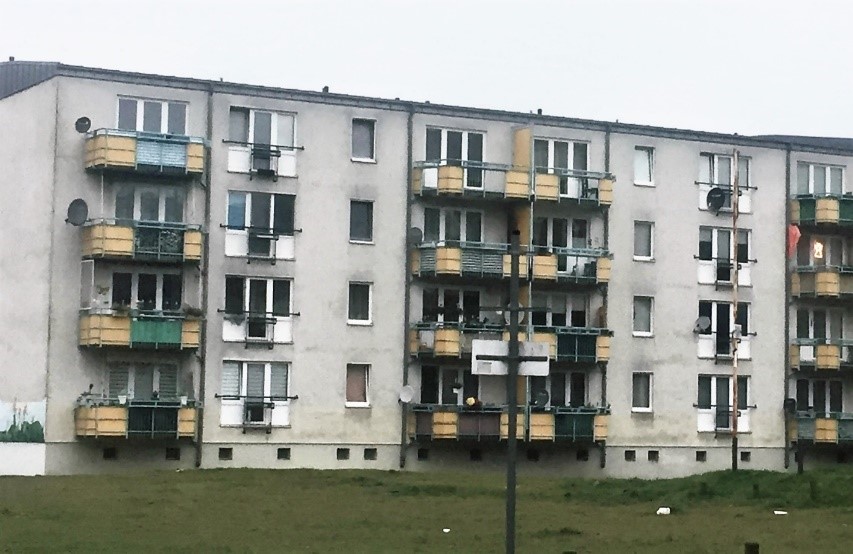
This can largely be prevented by raising the building's internal network infrastructure to a future-proof fibre-optic gigabit standard, so that tenants can fully meet all their future requirements with it, and their offer is thus preferentially used of their own free will. To build this infrastructure, certain conditions must be met, and these are precisely described in section 72 of the new TKG and are supported in the form of a time-limited fibre-optic provision charge.
The open-access model
To understand the new TKG and what it does or does not support or regulate, it is first essential to understand the intent behind the law:
To advance the expansion of digital fibre-optic infrastructure as much as possible, the open-access model plays a decisive role in all considerations. Open access means that a network that has been built can be co-used by all other market participants. This makes expansion more efficient, and the market more transparent and often more affordable for consumers.
A strict distinction is also drawn between infrastructure – the physical layer – and services. This is the reason why neither the TV service nor other services are supported, but only the infrastructure itself. Billing is also completely decoupled.
That this model can work very well has already been proven by Scandinavian countries such as Sweden. Their lead over Germany in nationwide broadband expansion is largely attributable to the use of the open-access model.
One possible refinancing model: the fibre-optic provision charge
From this model, and from the enhanced consumer rights, a number of conditions now arise that must, at a minimum, be met for the construction of the network and for levying the fibre-optic provision charge and apportioning it to tenants (all details are set out in the respective applicable legal texts):
- The building is fitted, by the operator of a public telecommunications network, with an internal network infrastructure that consists entirely of fibre-optic components.
- The network infrastructure built is connected to a very high-capacity public network
- Every provider of publicly available telecommunications services receives free access to the building's internal network infrastructure at the building handover point.
- The operator responsible for the building's internal network infrastructure must meet all complex transparency requirements in the billing of the fibre-optic provision charge (see also section 72(4) of the new TKG).
If all conditions are met and the building's internal network infrastructure has been built and made functional by 31 December 2027 at the latest, then
- a fibre-optic provision charge of at most EUR 5.00 per month, or EUR 60.00 per year, may be levied and apportioned,
- a term applies of, in principle, five years, depending on the investment costs,
- where higher investment costs are justified (an elaborate measure, evidenced by proof of costs), a term of up to nine years is exceptionally approved
In total, investments of up to EUR 540 per flat can thus be refinanced over nine years via this route.
Alternative refinancing models
Given the complexity of the task, refinancing using the fibre-optic provision charge is the most obvious route; however, the legal framework provides for further options that could be interesting in individual cases.
- The expansion of internal building networks can be carried out by the landlord under their own responsibility. If this expansion is likewise carried out entirely using fibre-optic components and connected to a very high-capacity public telecommunications network, this constitutes a modernisation measure. This entitles the landlord to increase the base rent in accordance with the usual civil-law requirements for modernisation measures.
- The landlord commissions a telecommunications company to expand and operate the building's internal network infrastructure and agrees that the telecommunications company determines the nature and use of the installed network infrastructure. The telecommunications company can refinance its investment through end-customer contracts and shared-use fees from other telecommunications companies.
These two options represent two extreme alternatives to the "fibre-optic provision charge model". In the case of in-house expansion, the landlord/owner has full control but must, from the outset, take on the complex task and the duties associated with building and operating a communications solution. If, in contrast, they cede all rights and duties to a telecommunications company, they lack any means of control or steering.
Some readers may now object that a decision in favour of the fibre-optic provision charge is logical and clear; after all, this settles all the important decisions on building and operating a fibre-optic network. Answer: Yes, from the legislator's point of view. No, from the owner's/landlord's point of view; because what is often "more interesting" than a legal text is what it does not regulate…
What must you, as a building owner/landlord, absolutely take into account?
Answering two questions is at the forefront here: the question of ownership and the technical design of the infrastructure to be installed.
Without special specifications, the company you commission will carry out the building's internal networks according to a standardised guideline. Depending on the condition, fittings and intended use of the respective building, this can deviate considerably from your individual needs for the coming years and increase the requirements placed on the network. It saves enormous costs and time if additional necessary cable ducts, fibre pairs, empty conduits or distribution boxes are taken into account in the planning. Here too, as with all technological construction measures, professional support helps avoid unnecessary costs.
Regardless of quantitative need, the operational and maintenance friendliness of the network is always also of high importance. Ongoing costs and cyclical repairs should be reduced to a necessary minimum. In this respect, network and change management, the installation technology in all operating and collocation rooms, and the use of active technology should be viewed critically.
Although the commissioned telecommunications company takes over operation of the network until the end of the provision period, after that the building owners are responsible for maintaining the operational readiness of the building's internal network infrastructure and for granting open network access – and only the operating electricity remains apportionable.
And by then, at the latest, the ownership question should be fully clarified. Not only permanently installed cables and conduits, but also all further network components, belong to the ownership of the building owner. Otherwise, when granting open network access or in the event of repair measures, you are dependent on the consent of the telecommunications company.
In plain terms:
The decision on a financing model, on the nature and scope of broadband expansion, and on awarding the contract to a telecommunications company, should be made on a well-calculated basis, following a current inventory and needs analysis.
The need arises from the building owner's digitalisation strategy.
At the start stands the strategic approach, not a particular technology
The degree of digitalisation of a property is becoming an increasingly important metric for real-estate asset management; because a building fitted with fibre optics – with digital process and value chains built on top of it – can gain enormous value. A report recently published by BNP Paribas Real Estate Investment Management analyses the megatrends in the real-estate sector and concludes that digitalisation, demographic change and changing lifestyles will substantially shape the real-estate industry.
The development whereby sectors, industries and services are growing together overlays and reinforces this trend. The housing industry benefits both from the ability to map core processes through networking with utility and waste-disposal providers – automated, lean and cost-effective – and from the added value of offering tenants the necessary environment for all digital services, such as e-health, health apps and further smart-home applications. Many of these trends circulate in the market under the umbrella term "Wohnungswirtschaft 4.0" (Housing Industry 4.0).
The entire subject area is huge, so that, as described above, you must on the one hand provide for a future-proof basic infrastructure, and on the other hand tackle the so-called "quick wins" as quickly as possible; because these generally offer larger, faster cost savings. In our experience, it makes the most sense to take a closer look at applications in the area of
• security and building management
• and the monitoring and maintenance of systems
Particularly in the entire maintenance environment, there are hardly any projects that do not lead to positive financial surprises. Several manufacturers have already done their "digital homework" and, thanks to these innovations, can now deliver their services more cost-effectively and more efficiently.
Conclusion:
The TV signal or the telephone connection now plays only a subordinate role. The degree of digital maturity of a building is the field that will actually be of high relevance to real-estate asset managers in future.
To establish important foundations for this and avoid mistakes, the following points should be observed:
- The best refinancing option under the new TKG always depends on individual need.
- The need should be derived from the digitalisation strategy of real-estate asset management and, where applicable, should also include special requirements for the broadband provision of buildings and flats.
- For new builds, fibre optics is the only option; for existing properties, short- or medium-term expansion to fibre optics is urgently advisable and is also THE core criterion for support under the new TKG.
- Plan for sensible technological innovations under "Wohnungswirtschaft 4.0" and prioritise "quick wins".
- Standard contracts with providers are rarely sufficient in themselves; individual arrangements should be negotiated.


The authors are senior consultants in the information and communications technology division of PLANATEL® Planungs- und Beratungsgesellschaft mbH. One of the focal points of their work is strategic and technical consulting for housing-industry companies in connection with the broadband and multimedia provision of their buildings.