
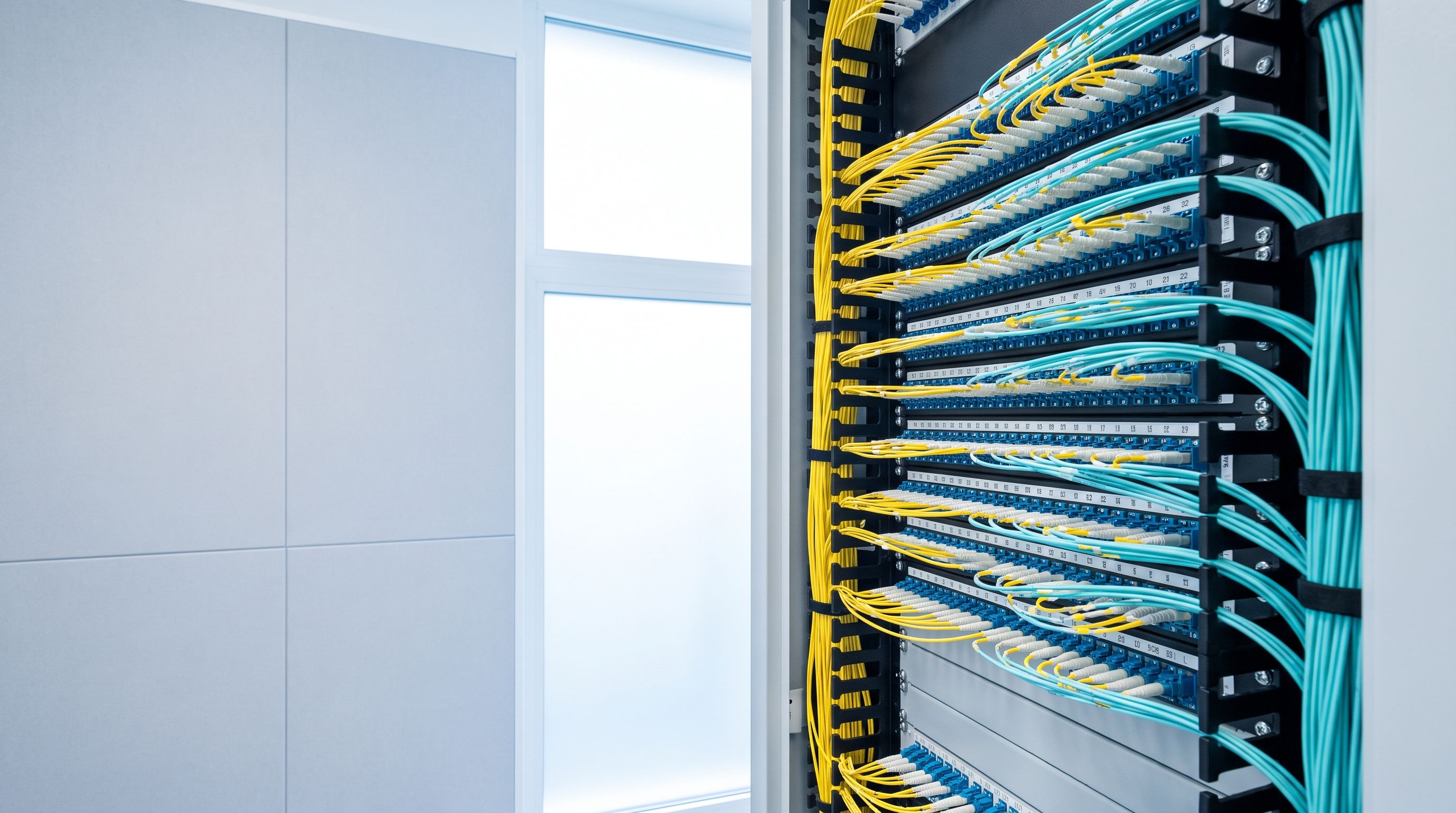


Telecommunications, communication systems and information technology
This is where we come from: since 1992 we have planned and optimised telecommunications, communications and IT infrastructure, manufacturer-independently.
PLANATEL originally stands for “Planung und Analyse von Telekommunikationsanlagen”, the planning and analysis of telecommunications systems. Telecommunications is the discipline with which our company history began in 1992, and it has never fallen away since: security technology was added to it. Today we still support you on ICT projects large and small: manufacturer-independently, economically and on a sound technical footing.
From needs analysis through target design to tendering and award support, you receive every planning phase from a single source, for specialist departments and IT leadership, for operators of critical infrastructure, for building owners and the housing sector, and for public-sector clients who need procurement-compliant, product-neutral specifications.
Telecommunications
We plan and optimise the connectivity of your sites: connections and provider concepts, carrier management, multi-site networking over LAN, WLAN, WAN, fibre, internet and mobile, and FTTx network concepts and their planning. For the housing sector we support cost-effectiveness appraisals, network concepts and tenders through to commissioning.
Availability here is a planning parameter, not a promise: redundant transmission paths, sound provider concepts, standby systems, uninterruptible power supply, and defined response and recovery times, matched to how critical your applications and sites are.
Communication systems
Classical telephone systems, IP telephony, SIP trunks, cloud telephony and unified communications, together with call centre management and the associated voice services: we assess the options against your organisation, your sites, your user groups and workflows and your existing contracts, not against a manufacturer's portfolio. The possible integration of AI technologies is always considered alongside.
Existing installations can in many cases be migrated step by step. We develop a migration concept that takes account of technical dependencies, running contracts, protection of investment and the necessary operational reliability, rather than replacing a system prematurely.
Information technology
Information technology is today part of every security solution: video systems, access management and security management systems run over the same networks, are administered centrally, and must meet the same requirements for access protection, encryption and logging as any other application. We plan network and infrastructure management, data centres and TV and multimedia provision, and the interfaces between IT and security technology at which projects otherwise come apart.
Because both sides are planned in-house here, the requirements for network, bandwidth, segmentation and operation arise while the security concept is being written, and not first at commissioning.
Contracts and costs in view
In telecommunications in particular, existing carrier, rental and maintenance contracts often hold considerable savings potential. We review your contracts, create clear structures, and recover money you have overpaid. Our remuneration is calculated as a share of the savings achieved. You therefore take no risk with us.
Who we plan telecommunications, communications and IT for
ICT projects rarely fail on the technology and regularly fail because requirement, contracts and operation were never considered together. Which of the three is most pressing depends on who is asking.
IT management and specialist departments
You receive a target picture with compared solution variants and a defensible cost basis before a migration starts. We do not retire existing systems prematurely; we develop a migration concept that protects the investment.
Operators of critical infrastructure
We plan availability as a design parameter, not as a promise: redundant routes, provider concepts, standby systems, uninterruptible power supply and defined response and recovery times, matched to the criticality of your applications and sites.
Housing sector and building owners
For fibre and FTTx rollout we accompany the economic assessment, the network concept and the tender through to commissioning, and establish whether self-build, a provider connection or a combination is right for your portfolio.
Public sector clients
We prepare technical specifications, define suitable evaluation criteria and review the bids received on their technical merits, with clear, comparable and, wherever possible, manufacturer-neutral requirements.
Management and investors
Existing carrier, rental and maintenance contracts often hide considerable savings. We review tariffs, connections, managed services and provider structures and recover money paid in excess. Our fee is calculated on the savings achieved.
Security officers
Video systems, access management and security management run over the same networks as everything else. Because both sides are planned in our house, the requirements for network, bandwidth and segmentation are already in the security concept.

Our services for telecommunications, communications & IT
- Needs analysis & concept
- Telephony, IP/cloud telephony & unified communications
- Multi-site networking, fibre & FTTx
- Networks, data centres & IT infrastructure
- Planning & tendering
- Award support & site supervision
- Contract and cost optimisation (success-based)
Frequently asked questions about telecommunications
When is independent advice on our ICT infrastructure worthwhile?
Independent advice is especially worthwhile when systems are being modernised, sites networked, contracts renewed or larger investments prepared. We analyse your existing infrastructure, establish the actual need, and develop a solution that is sound both technically and commercially. In doing so we look not only at individual products but at the interplay of networks, telephony, communications, operations, security and cost.
Does PLANATEL also support tenders and procurement procedures?
Yes. We support public-sector bodies and companies in drawing up technical service descriptions, defining suitable evaluation criteria, and assessing incoming bids on their technical merits. On request we support the entire process, from as-is survey and planning through tendering to award, implementation and acceptance. Throughout, we ensure requirements are clear, comparable and as manufacturer-independent as possible.
How do we find out which telephony or communications solution suits us?
It always begins with an analysis of your organisation, your sites, user groups, workflows and existing contracts. On that basis we evaluate, for example, classical telephone systems, IP telephony, SIP trunks, cloud telephony and unified communications solutions. The goal is to find the communications platform that is appropriate to your needs, reliable and commercially the best. The possible integration of AI technologies is always considered.
Can existing telephone systems be modernised step by step?
In many cases a phased migration is possible, and indeed sensible. Existing components can often continue to be used at first and then extended selectively with modern IP, cloud or unified communications functions. We develop a migration concept that takes account of technical dependencies, running contracts, protection of investment, and the necessary operational reliability.
How can we reduce our running telecommunications costs?
We review tariffs, connections, mobile contracts, voice and data volumes, maintenance contracts, managed services and existing provider structures. Savings frequently arise from connections that are no longer needed, unsuitable tariff models, contracts running in parallel, or an unfavourable distribution of services across several providers. Alongside price, we always consider availability, quality, service and resilience.
How is a resilient ICT infrastructure ensured?
High availability arises from a coordinated overall concept. This includes redundant line routes, suitable provider concepts, replacement systems, uninterruptible power supply, clear operating processes, and defined response and recovery times. We assess the business impact of possible outages and develop an availability concept matched to the criticality of your applications and sites.
Does PLANATEL support the networking of multiple sites?
Yes. We plan and optimise site networking for administrations, companies, branch offices, production sites and other properties. Depending on requirements we consider LAN, WLAN, WAN, fibre, internet and mobile solutions, and how they work together. We take account of bandwidth, availability, IT security, scalability, operations and cost.
What role does fibre, or FTTx, play in our future infrastructure?
Fibre delivers high bandwidth, low latency and good scalability over the long term. Whether your own build-out, a provider connection or a combination of solutions makes sense depends on the sites, applications, user numbers and commercial conditions. Here we also support the housing sector specifically, with commercial viability assessments, network concepts, tenders, and support through to commissioning.
What does a typical ICT project with PLANATEL look like?
We usually begin with an as-is and needs analysis. We then develop a target picture, compare solution variants and produce a robust basis for costing and decision-making. We present the result to you and agree the next steps. Depending on the engagement, planning, tendering, award support, project control, quality control, documentation and acceptance follow. The precise scope of services is adapted to your organisation and your individual requirements.
Is PLANATEL tied to particular manufacturers or telecommunications providers?
Our consulting and planning approach is fundamentally oriented towards the requirements of the client. We compare technical solutions, providers, contract models and operating concepts against transparent criteria. You therefore receive a basis for decision-making that is oriented towards functionality, quality, security, future viability and economy, not towards the interests of a particular manufacturer or provider. We always work manufacturer-independently, unless you as the client give us specific preferences.