


Specialist planning for fire alarm, voice alarm and BOS emergency radio systems
Certified planning to DIN 14675, from fire risk analysis to the operational-principle test.
Fire alarm systems
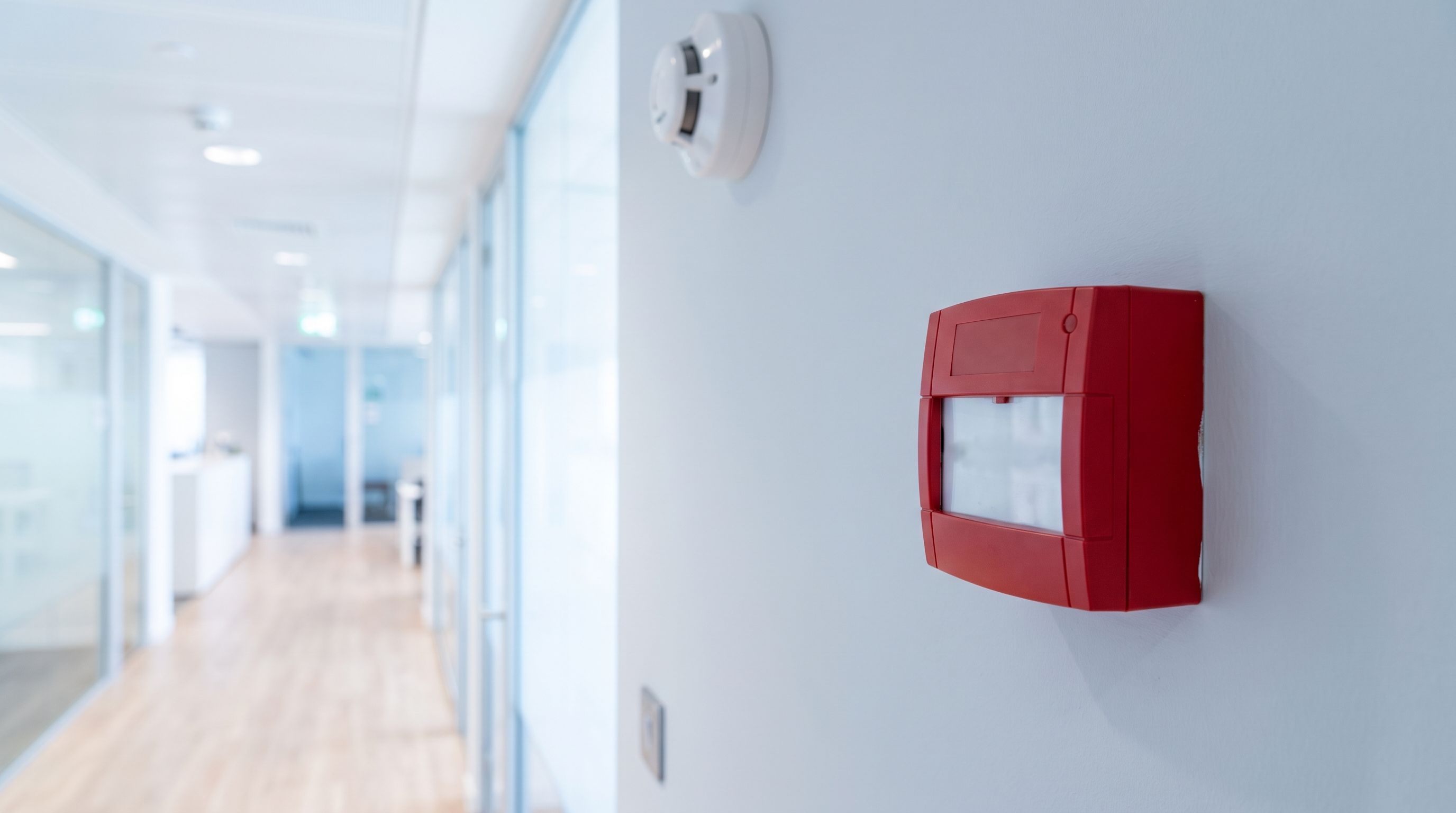
Particularly where a fire alarm system is required under building regulations (for example in special-purpose buildings), the planning, installation and maintenance (including the fire brigade peripherals) take on particular importance. Modern fire alarm systems consist of various components that form the core of the installation:
- Fire alarm control panel
- Operating elements
- Fire detectors
- Alarm devices (visual, audible)
- Fire-case controls
- Transmission equipment (e.g. to the fire brigade)
A fire alarm control panel is the heart of every fire alarm system. All messages, faults and alarms converge in it. In an emergency, the alarm is triggered here and the response personnel required for evacuation are informed.
The operating elements include the fire brigade control panel (FBF) to DIN 14661, the fire brigade indicator panel (FAT) to DIN 14662, the fire brigade radio control panel (FGB) to DIN 14663 and the fire brigade key depository (FSD) to DIN 14675-1, Annex A, and VdS 2105.
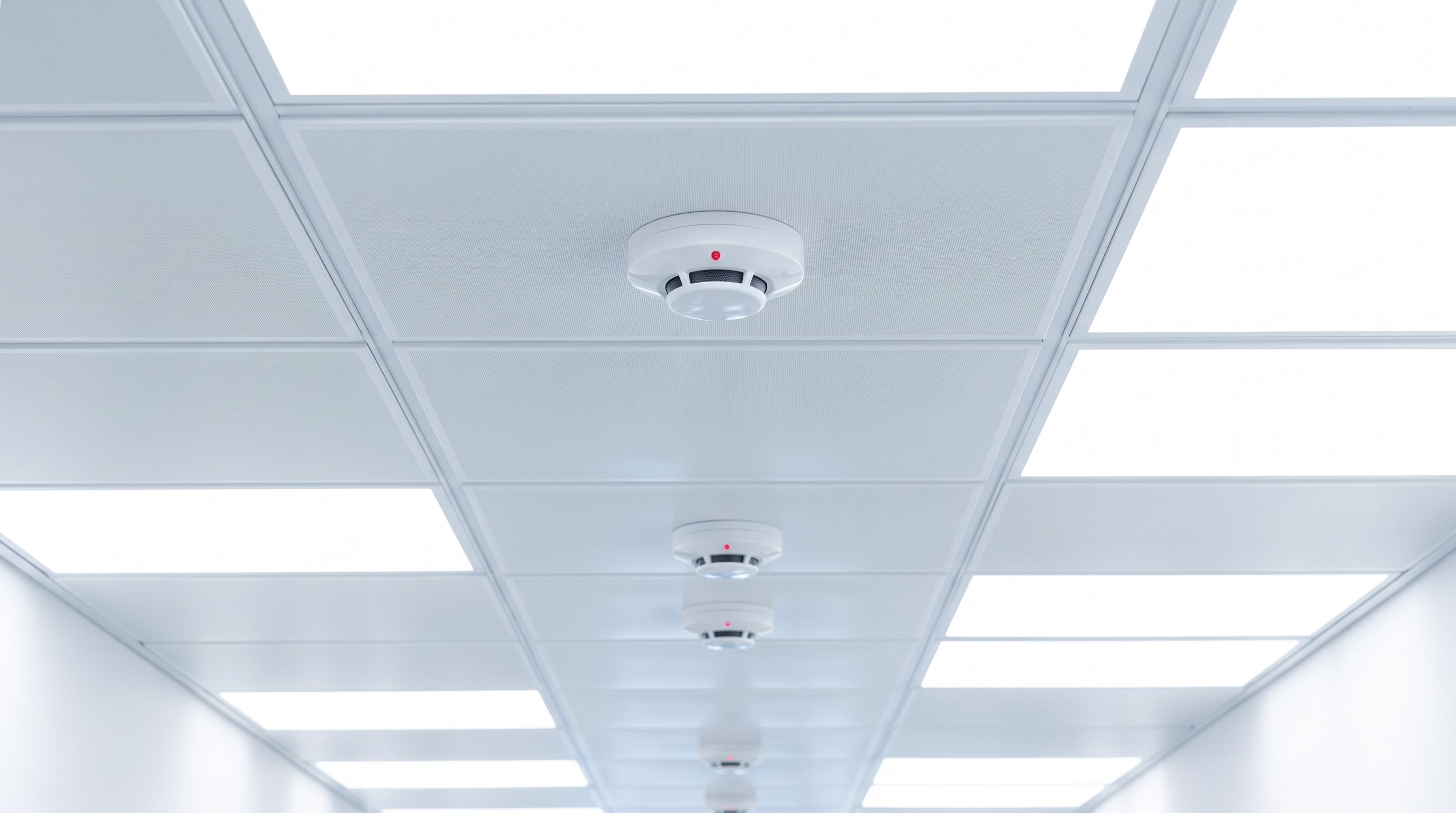
Correctly installed, well-matched fire detectors watch over buildings almost invisibly and raise the alarm immediately upon detecting a fire. In doing so, they must cope with varying ambient conditions of temperature, dust or humidity. Alerting via alarm devices in the building may be visual, audible, or a combination of both.
Depending on building-law requirements, transmission equipment to the fire brigade may be mandatory. To ensure the proper connection of fire alarm systems to the fire brigade, districts and cities frequently transfer responsibility for the installation, operation and maintenance of the transmission unit (ÜE) and the alarm receiving equipment (AE) to a concessionaire. The connection types and technical requirements follow from DIN EN 50136.
Complex fire alarm systems consist of networked installations that receive information from the field-bus level (fire detectors, I/O modules) or execute controls. On request, pre-processed information is transmitted to superordinate systems, such as a security management system.
Fire alarm and alerting concept to DIN 14675
A fire alarm and alerting concept (BMuA concept) is the central basis for planning, installing and operating fire alarm systems and other installations for alerting building occupants in the event of fire and in other hazardous situations.
We produce it for developers and project developers in the permit process, for operators and building owners who have to demonstrate their operator obligations, for fire protection officers and specialist departments in live operation, and for public sector clients tendering fire protection technology product-neutrally.
We carry out external fire prevention inspections, produce fire risk analyses and develop tailored concepts suited to the individual application. We plan your fire alarm system according to the HOAI planning phases, taking account of the applicable guidelines (DIN VDE 0833, DIN EN 54, VdS 2095) and official requirements. We also assist in clarifying your organisational and technical framework conditions and support you in preparing the tender documents. We compare the bids you receive from both a technical and a commercial perspective, support you in award negotiations on request, and accompany you through the realisation of the project. In this way we cover system-based fire protection: from the fire alarm system through voice alarm to the BOS emergency radio system.
Voice alarm and evacuation systems
Planning alerting and evacuation systems demands a high degree of knowledge of our clients’ operational processes, so that the protection objective, saving human life, can be achieved across the most varied properties. Together with you we determine which form of alerting your needs require, and what the necessary system configuration looks like. These may be systems that alert by means of standard tones as well as spoken announcements.
In planning electroacoustic systems (ELA) and voice alarm systems (SAA), DIN VDE 0833 and DIN EN 50849 (voice alarm systems for emergency announcements) must be observed and complied with. The relevant DIN standards and requirements arising from state law or the associated building permit are of course taken into account.
BOS emergency radio systems for buildings
Emergency services must remain reachable inside a building. Where the structure attenuates the digital radio network of the German authorities and organisations with security duties (BOS), the fire protection authority will as a rule require a building radio system. That is typically the case in underground car parks, basement levels, stairwells, tunnels or behind metallised facades. The requirement follows from the building permit, the fire protection concept and the stipulations of the responsible fire brigade.
We clarify the requirement with the fire protection authority on your behalf, plan the installation including antenna and cable routing, repeater locations, power supply and the fire brigade radio operating panel (FGB) to DIN 14663, and coordinate the interfaces with the fire alarm system. We support the measurement-based verification of radio coverage and the acceptance with the fire brigade through to the result.
The operational-principle test: an obligation for security-related systems
The full-scale test and the operational-principle test are already mandatory in many German states. As the owner or operator of buildings with security-related systems, you are obliged to demonstrate the flawless interaction of those systems. The test must be carried out and documented before initial commissioning, after significant changes, and recurring every three years, before a state-approved expert assessor in the course of a full-scale test. The basis for this test is VDI 6010-3 and the respective state-law provisions.
The operational-principle test (WPP) aims to establish, through an approved test assessor, the effectiveness and functional capability of the individual installations across their interfaces. Its bases are the fire-case control matrix and the security-related control concept (sSK), which is closely interlocked with the fire protection concept.
A dedicated department supports you in carrying out the operational-principle test. Our project sequence:
- Baseline check (site analysis against the building-permit position, target/actual comparison, review of the fire-case control matrix)
- Concept phase (function and interface matrix)
- Technical coordination of trades
- Pre-test phase (preliminary operational-principle test, evaluation of results, rectification where required)
- Full-scale test with a state-approved expert assessor, including test report
- Recurring operational-principle test after three years
Do not put your recurring operational-principle test to the test.
What else can PLANATEL help with?
- Planning of fire alarm systems for all sectors and all types of building, from offices, hospitals and care facilities through data centres to industrial production sites
- Optimisation of running operating costs, such as rents and maintenance fees
- Review of bids for fire-detector replacement
- Review of maintenance quality
- We work across Europe, with a focus on Germany
Who we plan fire alarm, voice alarm and BOS radio systems for
In fire protection technology the question depends on the chair you sit in: the developer wants the building permit satisfied, the operator their operator obligations, the owner the running costs, the contracting authority product neutrality. We plan so that all four are served.
Developers and project developers
We check your permit situation and tell you what building law actually requires before anything goes out to tender. The fire alarm and evacuation concept to DIN 14675 is ready early enough not to hold up detailed design.
Operators and building owners
As the operator you are obliged to demonstrate that the safety systems interact correctly. We accompany the interaction test from the fire control matrix to the full-scale test before a state-recognised expert, and then every three years.
Fire protection officers and specialist departments
You receive planning to DIN VDE 0833, DIN EN 54 and VdS 2095 with a documented interface and function matrix. Where the use of the building changes, we clarify with you which concepts and certificates become necessary.
Investors
With fire alarm systems the real cost sits in operation. We review maintenance quality, maintenance contracts and quotes for detector replacement, and optimise the running operating costs, on a success basis if you prefer.
Public sector clients
Manufacturer-independent tender documents, technical and commercial comparison of the bids, and support through the award negotiations. We are certified to DIN 14675, but we do not install and we do not sell systems.
Fire services and fire protection authorities
For BOS radio systems we clarify the requirement with the responsible authority, plan the antenna and cable routing, the repeater locations and the fire service radio control panel to DIN 14663, and accompany the measurement-based verification through to acceptance.
Our services for fire alarm systems
- Fire risk analysis & fire alarm and alerting concept
- Voice alarm & evacuation systems (SAA/ELA)
- BOS emergency radio systems for buildings
- Planning to the HOAI project phases
- Manufacturer-independent tender & award
- Site supervision & acceptance
- Operational-principle test & operator obligations
Frequently asked questions about fire alarm systems
When is a fire alarm system mandatory?
For many special-purpose buildings a fire alarm system is required under building regulations. The specific obligation follows from state building law, the building permit, the fire alarm concept, or from your insurer’s requirements. We review your permit position, tell you what is actually required, and prepare the necessary fire alarm and alerting concept.
What is a fire alarm and alerting concept to DIN 14675?
The BMuA concept is the central basis for the planning, installation and operation of a fire alarm system and for alerting building occupants. It brings together protection objectives, building-law requirements and technical requirements.
What is an operational-principle test, and how often is it due?
The operational-principle test (full-scale test) demonstrates the correct interaction of all security-related systems: before commissioning, after significant changes, and recurring every three years, before a state-approved expert assessor. The basis is VDI 6010-3 and the applicable state law.
Does PLANATEL also plan voice alarm systems?
Yes. Voice alarm systems are closely linked to the fire alarm system: the fire alarm system detects, the voice alarm system alerts the affected areas. We plan both trades in coordination with one another, complying with DIN VDE 0833 and DIN EN 50849.
When is a BOS emergency radio system for a building required?
Whenever radio coverage for the emergency services inside the building is inadequate, typically in underground car parks, basement levels, tunnels, or behind attenuating facades. The requirement is set by the responsible fire protection authority, usually via the building permit or the fire protection concept. We clarify the requirement, plan the installation including the fire brigade radio operating panel (FGB) to DIN 14663, and support the measurement-based verification through to acceptance with the fire brigade.
Does PLANATEL sell or install fire alarm systems?
No. We are certified to DIN 14675 (for fire alarm systems for planning and design, for voice alarm systems for planning) and we work manufacturer-independently. We put the installation out to tender, support the award, and supervise execution through to acceptance.
Do I have to produce a fire protection concept?
If the type and use of the building have not changed, the conditions of the building permit continue to apply. Where use changes or conversions take place, we clarify with you which concepts and certificates become necessary.
Can another company take over maintenance of my fire alarm system?
Yes, provided it holds the required certification: for fire alarm systems, DIN 14675. We review maintenance quality and maintenance contracts and, on request, support the change of provider.