

Security Concepts & Threat Analyses12 min read
A Comprehensive Safe-Deposit Room Protection Concept: Security Redefined
Safe-deposit rooms often house irreplaceable valuables and sensitive data. A robust protection concept is therefore essential to protect this critical area against a wide range of threats, while also ensuring compliance with complex regulatory requirements. We examine how independent planning strengthens the resilience of your infrastructure.
A safe-deposit room protection concept comprises the holistic planning and implementation of physical, electronic and organisational security measures to protect valuables and data in safe-deposit rooms. It integrates intrusion detection systems, video surveillance, access control and fire alarm systems, to ward off threats and ensure legal compliance with standards such as VdS, DIN and BaFin requirements.
Strategic planning for maximum security in financial institutions and companies
Safe-deposit rooms often house irreplaceable valuables and sensitive data. A robust protection concept is therefore essential to protect this critical area against a wide range of threats, while also ensuring compliance with complex regulatory requirements. We examine how independent planning strengthens the resilience of your infrastructure.
Key Takeaways
- A safe-deposit room protection concept must be holistic and integrate physical, electronic and organisational measures, in order to effectively counter a wide range of threats.
- Legal compliance with BaFin (MaRisk), the Geldwäschegesetz (GwG, Anti-Money Laundering Act) and the GDPR is critical for safe-deposit rooms and requires precise planning and complete documentation of all security measures.
- Independent planning and consulting, as offered by PLANATEL®, secures manufacturer-independent, tailored and cost-optimised solutions that meet the highest security standards.
Simply stringing together security systems is not enough. Rather, what is needed is a well-thought-out, integrated safe-deposit room protection concept that addresses all potential risks and seamlessly connects physical and electronic components alike. This requires a precise needs analysis and manufacturer-independent planning, to ensure a future-proof, legally compliant solution. PLANATEL® has supported you since 1992 in mastering these complex requirements and developing tailored protection concepts.
The need for an integrated safe-deposit room protection concept
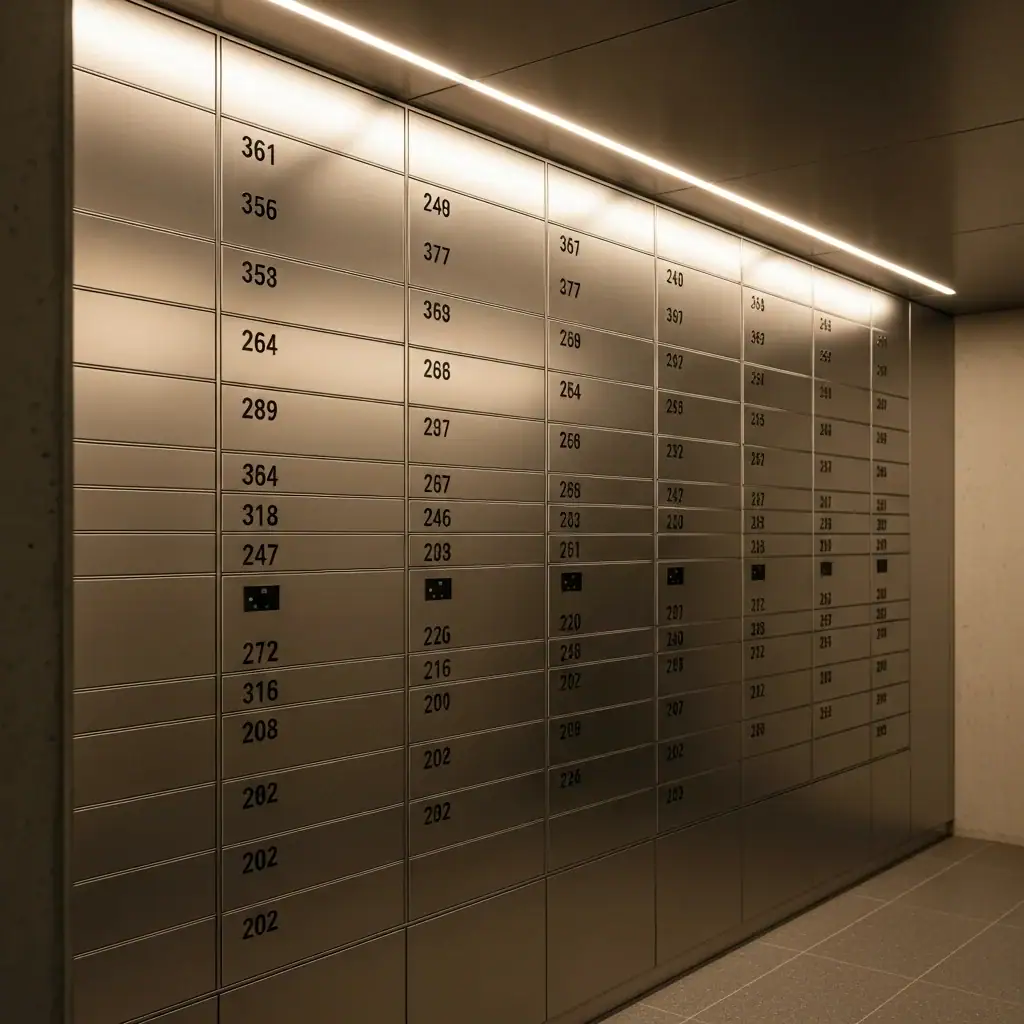
Safe-deposit rooms are high-security areas whose protection goes far beyond mere physical security. They are exposed not only to physical break-in attempts but also to risks such as fire, unauthorised access or internal threats. An integrated protection concept considers these aspects holistically and creates a multi-layered line of defence. The complexity of the requirements is further increased by the need to meet strict regulatory requirements, particularly in the financial sector. BaFin (Bundesanstalt für Finanzdienstleistungsaufsicht, the Federal Financial Supervisory Authority) requires credit institutions, under MaRisk (Minimum Requirements for Risk Management), to have robust risk management that also covers physical security risks and the protection of assets such as those stored in safe-deposit boxes.
Such a concept begins with a detailed risk and threat analysis that identifies specific weaknesses and defines protection objectives. This involves assessing not only the current situation but also future developments and potential new threats. Planning must be flexible enough to adapt to changing circumstances. Independent consulting is crucial here to ensure an objective assessment of risks and the selection of the most effective protective measures, without being influenced by manufacturer interests. PLANATEL® provides this independent expertise, to ensure that your safe-deposit room protection concept is optimally tailored to your individual needs and meets the highest security standards.
Foundations of physical security and structural requirements
Physical security forms the foundation of any safe-deposit room protection concept. This starts with the structural design of the strongroom itself. The resistance classes under EN 1143-1 for security rooms are decisive here, defining the level of protection against break-in. Walls, ceilings and floors must be constructed accordingly to withstand mechanical, thermal and chemical break-in attempts. This often involves the use of reinforced concrete with special reinforcement or modular strongroom panels.
Besides pure resistance, doors and airlocks also play a decisive role. Strongroom doors must likewise meet a high resistance class and be fitted with complex locking systems. Airlock areas in front of the actual safe-deposit room serve to control access and prevent multiple people entering unnoticed. Planning these structural measures requires in-depth expertise in material properties, construction principles and integration into the overall concept. PLANATEL® advises you on defining these structural requirements and ensures that the execution meets the highest security standards. We plan the interfaces to the technical systems and select suitable components, to create a coherent, robust physical barrier that meets statutory and normative requirements.
Electronic monitoring: intrusion detection systems (EMA) and video surveillance
Electronic monitoring is an indispensable complement to physical security and significantly increases the probability of detection. Central to this are intrusion detection systems (EMA), which must be planned in accordance with DIN VDE 0833-2 and the VdS 2095 guidelines and installed by certified installer companies. Safe-deposit rooms typically use EMA of the highest VdS classes (e.g. class C), which include a range of detectors:
- Vibration sensors: detect drilling, cutting or blasting attempts on walls, ceilings and strongrooms.
- Motion detectors: monitor the room for unauthorised persons.
- Glass-break detectors: secure windows or glass surfaces, which may be present in rare cases.
- Magnetic contacts: monitor doors and hatches.
The EMA is complemented by modern video surveillance systems. These serve not only as a deterrent but also for the complete documentation of events and the verification of alarms. High-resolution cameras with infrared capability and intelligent video analysis can detect suspicious activity, track individuals, and, where necessary, automatically trigger an alarm. Video data must be stored tamper-proof and for a defined period, with the General Data Protection Regulation (GDPR) strictly observed. Planning these systems through PLANATEL® takes into account the optimal placement of cameras, the selection of suitable camera technologies, and integration into a central security management system, to ensure maximum monitoring coverage and efficiency.
Access control and fire alarm systems (BMA) for safe-deposit rooms
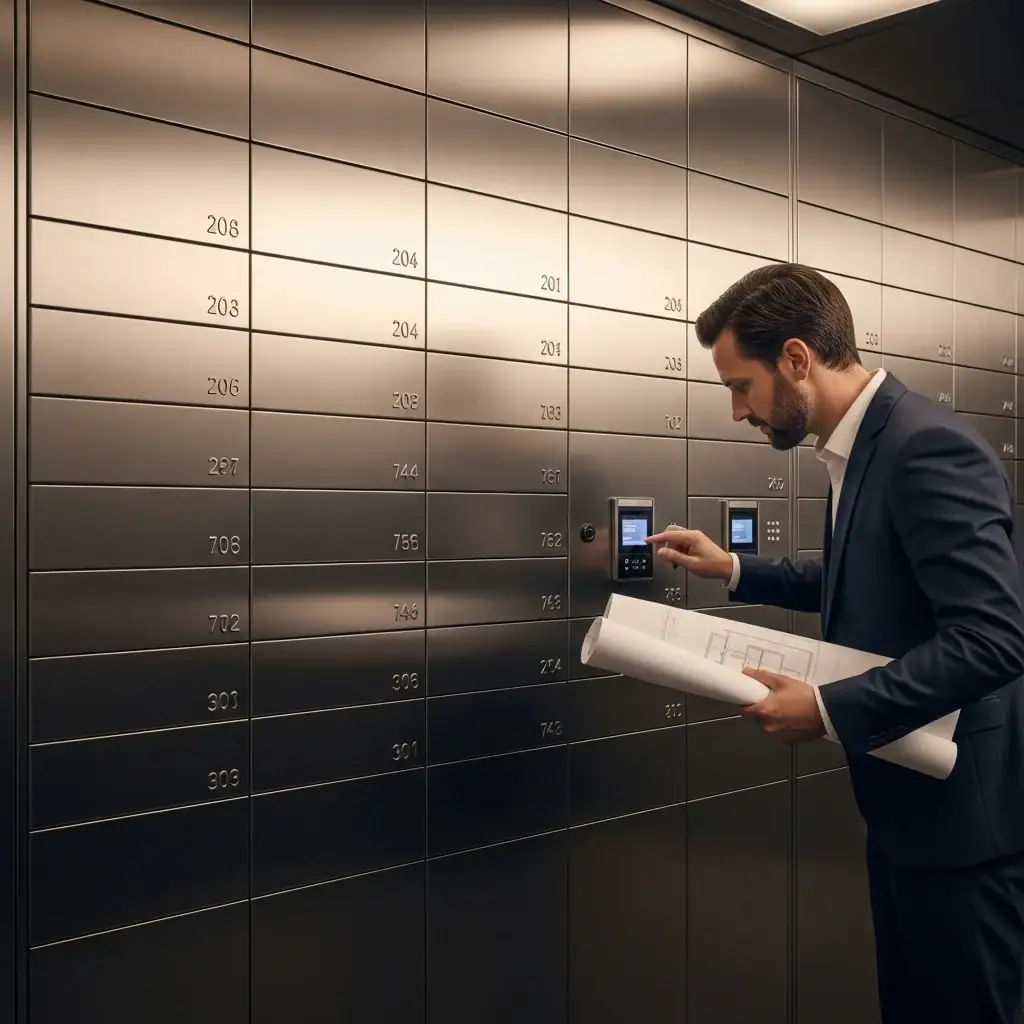
An effective access control system is crucial for strictly regulating and logging access to the safe-deposit room. Modern systems use a combination of different authentication factors, for example:
- Biometric methods: fingerprint or vein scanners offer a high level of security and are difficult to manipulate.
- RFID cards or transponders: enable flexible management of access permissions.
- PIN codes: can be used as an additional factor.
The system must also support the four-eyes principle, whereby access is only possible in the joint presence of an employee and the customer. All access attempts, successful and failed alike, must be logged in an audit-proof manner, to ensure complete traceability. Planning by PLANATEL® includes selecting the suitable technologies, defining the access rules and integrating them into overarching security systems.
At the same time, protection against fire events is of the utmost importance. Fire alarm systems (BMA) must be planned in accordance with DIN 14675 and VdS 2095 and installed by certified installer companies, in order to detect fires early and initiate appropriate measures. Safe-deposit rooms often use highly sensitive aspirating smoke detection systems (RAS) or multi-criteria detectors, which can detect even the smallest smoke particles or temperature changes. The BMA must be able to trigger fire-event controls, such as closing fire doors or activating voice alarm systems (SAA) to evacuate adjacent areas. PLANATEL® plans these complex systems on a manufacturer-independent basis and ensures optimal coordination of all components, to enable a fast, effective response in an emergency.
Legal compliance and risk management in the context of safe-deposit rooms
Securing safe-deposit rooms is inextricably linked to a wide range of statutory and regulatory requirements. For financial institutions, BaFin's Minimum Requirements for Risk Management (MaRisk) are of central importance. These require a comprehensive risk management system that also covers operational risks, including physical security risks. This means that the security of safe-deposit rooms must be ensured at the highest level not only technically but also procedurally and organisationally.
In addition, the provisions of the Geldwäschegesetz (GwG, Anti-Money Laundering Act) are relevant, particularly with regard to customer identification and preventing the use of safe-deposit boxes for illegal purposes. Compliance with the General Data Protection Regulation (GDPR) is also critical, since video surveillance and access logs capture personal data. Regular risk assessments, internal audits and adapting protection concepts to new threat scenarios are essential to permanently secure legal compliance. PLANATEL® supports you in analysing these complex requirements and developing a protection concept that is not only technically sound but also fully legally compliant. We help you establish the necessary processes and documentation, to meet reporting obligations to supervisory authorities and minimise potential liability risks.
The role of independent planning and consulting by PLANATEL®
Planning a safe-deposit room protection concept is a complex task that requires specialist knowledge and an independent perspective. PLANATEL® has stood for exactly this expertise since 1992. As an independent planning and consulting company, we are not tied to particular manufacturers and receive no commissions of any kind. This guarantees you objective, manufacturer-independent consulting that serves exclusively your interests.
Our services cover the entire value chain, from the as-is survey and needs analysis, through the target concept and detailed planning, to the tender, award and support of implementation. We develop tailored concepts optimally matched to your specific requirements and the circumstances of your property. In doing so, we always take into account current standards and guidelines such as DIN 14675, VdS 2095 and DIN VDE 0833, as well as BaFin's regulatory requirements. Thanks to our more than 34 years of experience in the field of security systems, we can offer you not only technically sound but also economically optimised solutions. We identify potential for cost optimisation without compromising on security, and ensure that you receive the best possible solution for your budget. With PLANATEL®, you have an experienced partner at your side who guides you through the entire process and ensures the successful implementation of your safe-deposit room protection concept.
Next step
Contact us for a no-obligation initial consultation.
PLANATEL®: Independent planning and consulting since 1992
Tel: 040 / 23 73 02-30
Email: info@planatel.de
Frequently asked questions
What are the first steps in developing a safe-deposit room protection concept?
The first steps include a comprehensive as-is analysis of the existing infrastructure and a detailed needs and risk analysis. This identifies potential threats, defines protection objectives, and determines the specific security requirements for the safe-deposit room. This forms the basis for developing a tailored target concept that covers all relevant aspects, from physical security to electronic monitoring systems. Independent consulting helps to carry out this analysis objectively and comprehensively.
What advantages does commissioning an independent planning firm such as PLANATEL® offer?
Commissioning an independent planning firm such as PLANATEL® offers numerous advantages. These include manufacturer-independent consulting, which ensures that the best solutions are selected without conflicts of interest. You also benefit from over 34 years of experience in planning complex security systems, leading to an optimised cost-benefit ratio and a future-proof infrastructure. PLANATEL® also ensures legal compliance and supports you in meeting all relevant standards and guidelines.
How are organisational measures integrated into a safe-deposit room protection concept?
Organisational measures are an integral part of a safe-deposit room protection concept. These include clear guidelines for key and permission management, implementing the four-eyes principle for access, regular staff training, and creating and testing emergency and evacuation plans. These measures complement the technical systems and ensure that human factors and processes also contribute to increasing overall security and support compliance with statutory requirements.
What role does video surveillance play in safe-deposit rooms under the GDPR?
Video surveillance in safe-deposit rooms must strictly comply with the requirements of the General Data Protection Regulation (GDPR). This means that the capture and storage of personal data (e.g. images of individuals) may only take place for clearly defined purposes (e.g. break-in prevention, evidence gathering) and for a limited period. Technical and organisational measures must also be taken to protect the data, and data subject rights (e.g. the right of access) must be upheld. Careful planning is essential here.
How can PLANATEL® help optimise the costs of a protection concept?
PLANATEL® supports cost optimisation by using our manufacturer-independent position to enable the selection of the most efficient and economical systems, without compromising on security. We carry out detailed tenders, compare offers objectively, and negotiate in our clients' interests. We also identify potential for process optimisation and for avoiding unnecessary investment, by planning only the technologies that are genuinely needed and future-proof. Our expertise leads to transparent costs and optimal investment security.
Which VdS classes are relevant for intrusion detection systems in safe-deposit rooms?
For intrusion detection systems (EMA) in safe-deposit rooms, the highest VdS classes, particularly VdS class C, are generally relevant. These classes define strict requirements for the components and installation of the EMA, in order to guarantee maximum protection against break-in attempts. The choice of the exact class depends on the individual risk assessment and the values being protected, with a higher class providing more comprehensive protection.
How does BaFin influence the security of safe-deposit rooms?
BaFin significantly influences the security of safe-deposit rooms through its Minimum Requirements for Risk Management (MaRisk). These require credit institutions to have a robust risk management system that also covers physical security risks and the protection of assets in safe-deposit boxes. Banks must identify, assess, manage and monitor risks, in order to ensure legal compliance and protect customer deposits and other assets.
What role do fire alarm systems play in a safe-deposit room protection concept?
Fire alarm systems (BMA) play a decisive role by detecting fires in safe-deposit rooms at an early stage. Under DIN 14675 and VdS 2095, they must be planned and installed by certified installer companies, to protect assets against the consequences of fire. Highly sensitive detectors such as aspirating smoke detection systems are often used here. The BMA not only triggers an alarm but can also activate fire-event controls, to prevent spread and support evacuations.
Why is manufacturer-independence important when planning safe-deposit room protection concepts?
Without being tied to specific providers, an independent planner such as PLANATEL® can select the systems that are optimally tailored to the client's individual requirements and budget, rather than favouring solutions that promise higher commissions. This leads to a more efficient, future-proof and cost-effective security infrastructure.
Sources and further information
- Sicherheit und Stand der Technik für Schliessfächer – SAFECOR GmbH
- Schließfach-Einbrüche: Risiken, Haftung & sichere Alternative | Trisor
- Wichtige Informationen zur Sicherheit der Schließfächer für IF – Bordesholmer Sparkasse AG
- Bietet Ihr Schließfach wirklich Sicherheit? Die 5-Punkte-Checkliste