


Security Concepts & Threat Analyses11 min read
Strongroom Risk Assessment: Foundation for the Highest Level of Security
Strongrooms house a company's most critical assets. A precise risk assessment is essential to protect these assets effectively against a wide range of threats while ensuring legal compliance. Learn how a systematic analysis uncovers vulnerabilities and enables robust security strategies.
A strongroom risk assessment is a systematic analysis of potential threats and vulnerabilities that could impair the security of a strongroom. It serves to identify risks, evaluate existing protective measures, and develop tailored concepts for securing sensitive assets and complying with relevant standards and guidelines.
Comprehensive risk analysis and tailored security concepts for your most sensitive assets
Strongrooms house a company's most critical assets. A precise risk assessment is essential to protect these assets effectively against a wide range of threats while ensuring legal compliance. Learn how a systematic analysis uncovers vulnerabilities and enables robust security strategies.
Key Takeaways
- A systematic strongroom risk assessment is essential to identify all relevant threats and vulnerabilities and to develop a robust security concept.
- Compliance with standards such as DIN EN 1143-1, VdS 3134, VdS 2095 and VdS 2349 is essential for legal compliance and the effectiveness of the security systems.
- Independent planning and consulting, such as that offered by PLANATEL®, ensures manufacturer-independent, tailored and future-proof security solutions for your strongrooms.
For companies, financial institutions and public authorities, strongrooms are of central importance, particularly in an increasingly complex threat landscape. They protect not only material assets, but also highly sensitive data and critical infrastructure. Ensuring their security, however, requires far more than merely installing a robust safe. A well-founded strongroom risk assessment is the indispensable foundation for comprehensively identifying potential risks, critically evaluating existing protective measures, and developing a future-proof security concept. Without such a systematic analysis, companies remain vulnerable to unforeseen events and miss the opportunity for proactive risk minimisation. PLANATEL® helps you master these complex requirements, drawing on over 34 years of experience.
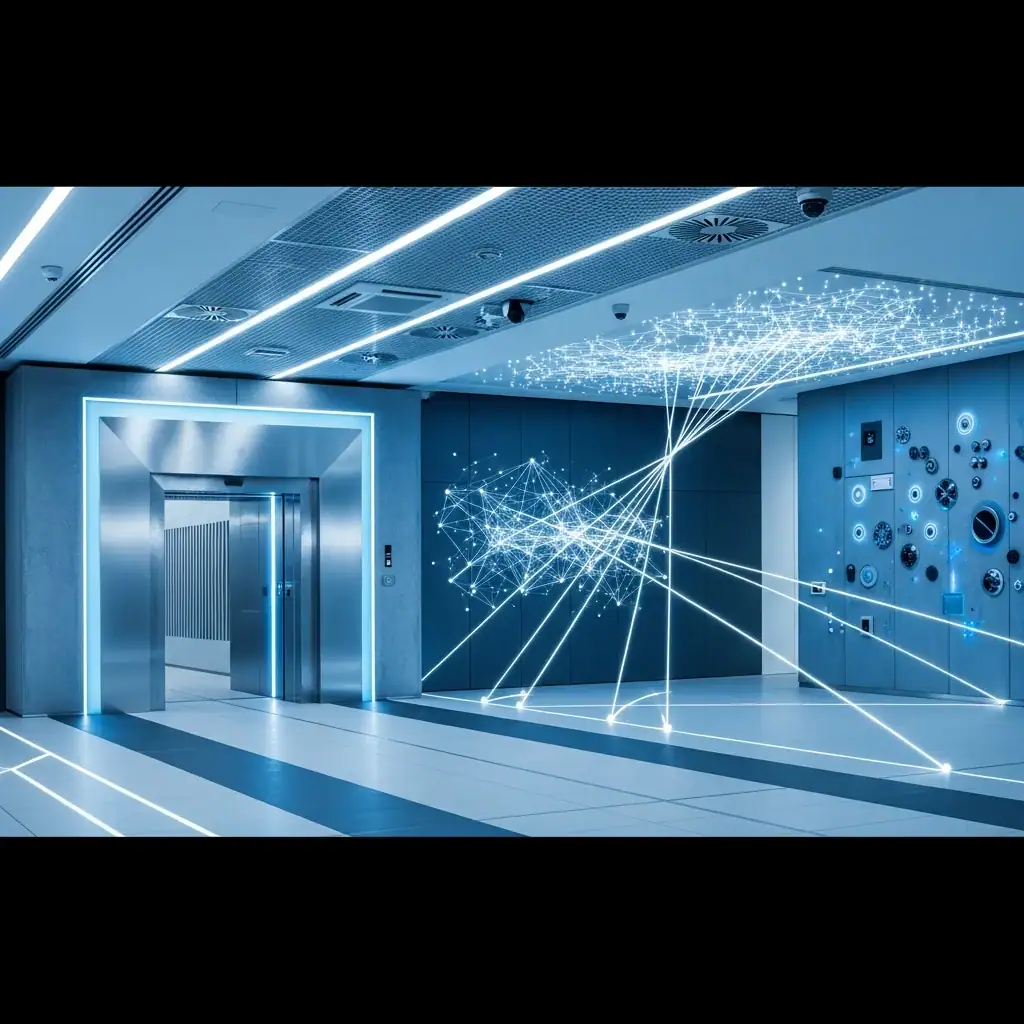
The need for a systematic strongroom risk assessment
Strongrooms are the last line of defence against the loss of assets, sensitive documents or critical IT systems. The function of strongrooms extends far beyond mere storage; they are integral components of business continuity and risk management. A superficial look at the security situation is not sufficient here. A comprehensive strongroom risk assessment is therefore not an option but a necessity. It makes it possible to precisely capture and assess the specific risks to which a strongroom is exposed. This covers not only external threats such as burglary or sabotage, but also internal hazards such as operator error, technical defects, or organisational shortcomings.
Without such a systematic analysis, companies remain vulnerable to undetected weaknesses that, in an emergency, can lead to considerable financial damage, loss of reputation, or even business interruption. It creates transparency about the actual security status and forms the basis for well-founded decisions on investment in security technology and organisational measures. It is the first step towards proactive security management that aims not only to defend against known dangers, but also to anticipate future threat scenarios. PLANATEL® helps you get to grips with this complexity and create a solid basis for your security strategy.
Legal framework and recognised standards for strongrooms
The planning and operation of strongrooms in Germany, Austria and Switzerland are subject to a wide range of legal requirements and recognised technical standards. These serve to guarantee a minimum level of security and to enable protection classes to be compared. Among the central standards is DIN EN 1143-1, which sets out the requirements, classification and test procedures for safes, strongroom doors and strongrooms with regard to their resistance to burglary. This standard defines various resistance grades that indicate the level of protection.
In addition, the guidelines of the German insurers' association VdS (Verband der Sachversicherer) are of decisive importance. In particular, VdS 3134, "Guidelines for the planning and installation of strongrooms and safes," provides detailed specifications for the construction, fitting-out and integration of security technology. For the planning of fire alarm systems (BMA) in such sensitive areas, VdS 2095 and DIN VDE 0833 are relevant, while for intrusion detection systems (EMA), VdS 2349 sets out specific requirements for strongrooms. In addition, the recommendations of the BSI IT-Grundschutz, for example module SYS.1.1 "Strongrooms," can be used for securing IT systems located within strongrooms. Compliance with these standards is decisive not only for the effectiveness of the protective measures, but also for recognition by insurers and general legal compliance.
Methodology of the risk assessment: systematic analysis in six steps
An effective risk assessment for strongrooms follows a structured methodology that ensures a comprehensive analysis. PLANATEL® relies here on a proven six-step approach, ranging from the as-is survey to action planning. First comes the as-is survey, in which all relevant information about the strongroom, its surroundings, the assets stored there, and the existing security technology is captured. This includes building plans, technical documentation of fire alarm systems (BMA) and intrusion detection systems (EMA), access control systems, and organisational processes.
In the second step, potential threats are identified. These include physical attacks, fire, water damage, sabotage, but also internal risks such as theft by employees or technical failures. This is followed by the analysis of vulnerabilities, in which the gaps between the identified threats and the existing protective measures are uncovered. The fourth step is the risk assessment, in which the probability of occurrence of each threat and the potential scale of damage are assessed. This leads to a prioritisation of risks. Building on this, the fifth step involves defining protection objectives, which precisely specify which assets are to be protected against which threats and to what level. Finally, in the sixth step, concrete measures are derived, encompassing both technical adjustments to fire alarm systems, intrusion detection systems and video surveillance, and organisational and personnel measures. This systematic process ensures a well-founded, traceable basis for all further security decisions.
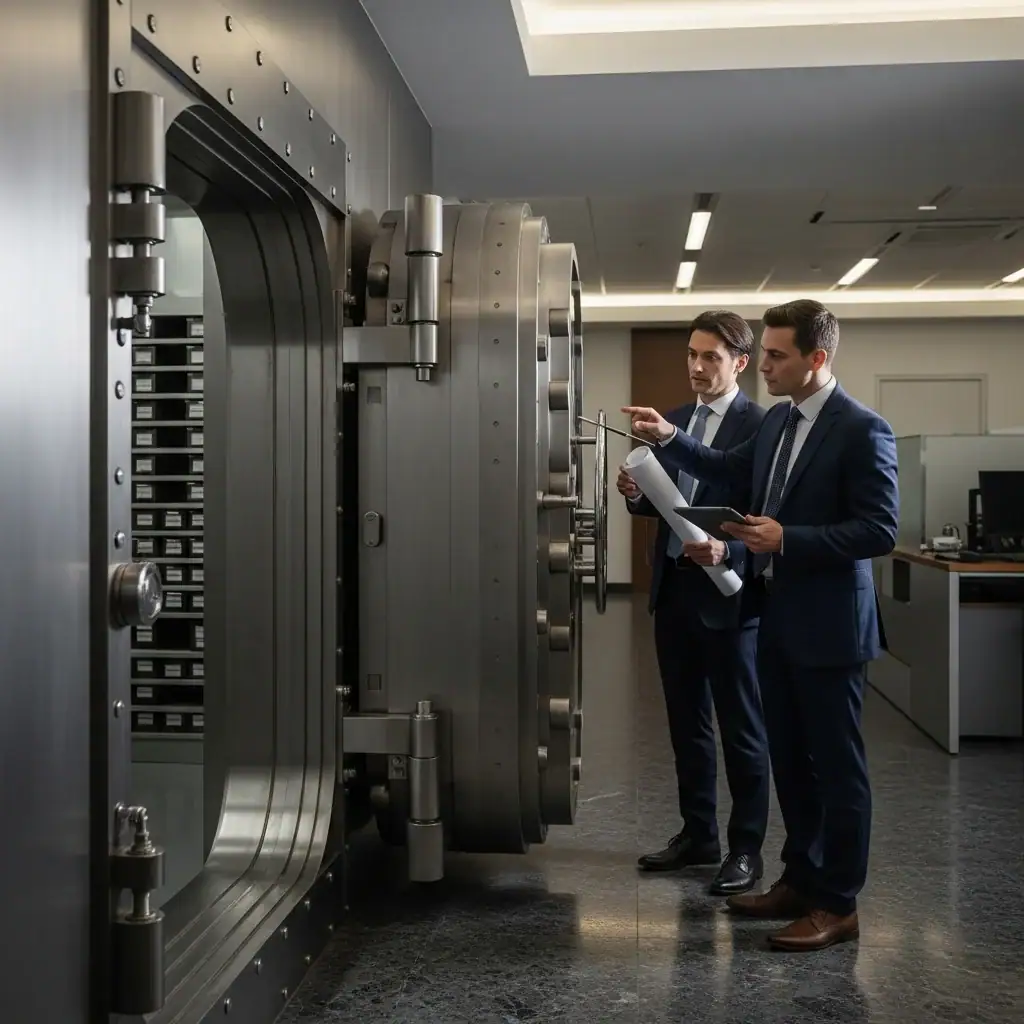
Identifying and assessing threats and vulnerabilities
The core task of a strongroom risk assessment lies in precisely identifying and assessing all relevant threats and the vulnerabilities associated with them. Threats can be divided into various categories: Physical threats include burglary, vandalism, sabotage, and natural disasters such as earthquakes or flooding. Technical threats relate to failures of security systems, power supply, or air conditioning, which could jeopardise the integrity of the strongroom. Organisational threats arise from inadequate processes, insufficient key management, or missing contingency plans. Last but not least, human threats must be considered, ranging from external attackers to internal perpetrators.
Assessing these threats requires a realistic estimate of the probability of occurrence and the potential scale of damage. A vulnerability analysis uncovers where existing protective measures do not adequately address these threats. This may include an inadequate classification of the strongroom under DIN EN 1143-1, outdated fire alarm systems or intrusion detection systems, gaps in video surveillance, or a lack of redundancy in critical systems. The spatial location of the strongroom, its accessibility, and its visibility also play a role. PLANATEL® analyses these factors in detail and objectively, to draw a clear picture of the risk landscape and set priorities for risk treatment.
Integrating modern security systems into strongrooms
After identifying threats and vulnerabilities, integrating and optimising modern security systems is a decisive step towards increasing the protective effect of a strongroom. What matters is not only the selection of individual components, but a coherent, coordinated overall concept. Fire alarm systems (BMA) are essential for detecting fires early and protecting the objects stored in the strongroom from heat damage. Planning here follows the requirements of VdS 2095 and DIN VDE 0833, with special detectors selected for the respective environmental conditions and assets to be protected. Early detection is decisive for minimising consequential damage.
Intrusion detection systems (EMA) to VdS 2349 are the primary means of detecting unauthorised entry or tampering attempts. They comprise a variety of sensors, such as vibration detectors, glass-break detectors and motion detectors, precisely tailored to the specific requirements of the strongroom. Video surveillance systems serve visual monitoring, the documentation of events, and the verification of alarms. Modern systems offer high-resolution images, intelligent analysis functions, and remote access. Access control systems regulate physical access to the strongroom and log every access attempt. Combining these systems within an overarching security management system (GMS) enables central control, monitoring and rapid response to security events, which significantly increases the efficiency and effectiveness of the entire security infrastructure. PLANATEL® plans this integration on a manufacturer-independent basis, tailored to your specific needs.
The role of independent planning and long-term optimisation by PLANATEL®
The complexity of a strongroom risk assessment and the subsequent planning of security systems requires a high degree of expertise and, above all, independence. PLANATEL® has stood for exactly these principles since 1992: as an independent planning and consulting firm, we are 100% manufacturer-independent and financially independent. This means that our recommendations are based solely on the best solutions for your specific requirements, without any ties to particular manufacturers or product lines. We receive no commissions and act exclusively in your interest.
Our more than 34 years of experience in planning fire alarm systems, intrusion detection systems, video surveillance and access control for sensitive areas such as strongrooms enables us to develop tailored, future-proof concepts. We accompany you from the detailed as-is survey and needs assessment, through the target concept and detailed planning, to the tender, award and support for implementation. Yet our work does not end with installation. Security concepts must be dynamic and adapt to new threats and technological developments. PLANATEL® also supports you with long-term optimisation, reviewing legal compliance, and continuously adjusting your security strategies, to permanently guarantee the protection of your assets and avoid manufacturer dependency.
Next step
Contact us for a no-obligation initial consultation.
PLANATEL®: Independent planning and consulting since 1992
Tel: 040 / 23 73 02-30
Email: info@planatel.de
Frequently asked questions
What does the as-is survey involve in a strongroom risk assessment?
The as-is survey involves the detailed capture of all relevant information about the strongroom. This includes building plans, technical documentation of existing fire alarm systems, intrusion detection systems, video surveillance and access control systems. The assets stored, the organisational processes, and the spatial surroundings are also analysed, to obtain a complete picture of the current situation. This forms the indispensable basis for every further risk analysis and action planning.
How are risks assessed as part of the risk assessment?
The risk assessment is carried out by estimating the probability of occurrence of a threat and the potential scale of damage. Both quantitative and qualitative factors are taken into account. The results enable a prioritisation of risks, so that protective measures can be specifically targeted at the most critical dangers. A high probability of occurrence combined with a high damage potential, for example, requires immediate, comprehensive countermeasures, which PLANATEL® plans precisely.
What role do fire alarm systems (BMA) play in a strongroom security concept?
Fire alarm systems play a decisive role in protecting strongrooms, since they detect fire and smoke development early. This is essential to preserve the assets stored in the room from heat damage, smoke contamination, or destruction. The planning of BMA in strongrooms follows strict guidelines such as VdS 2095 and DIN VDE 0833, with special detectors and integration into overarching security management systems taken into account, to ensure rapid alerting and response.
How does PLANATEL® guarantee manufacturer-independence in planning security systems?
PLANATEL® has been an independent consulting and planning firm since 1992. Our financial independence and our refusal to accept commissions from manufacturers guarantee that our recommendations are based solely on the best technical and economic solutions for our customers. We evaluate products and systems objectively and select the components that optimally match the specific requirements of the strongroom, without creating any manufacturer dependency. This secures you the most efficient, future-proof solution.
Why is regular review and updating of the security concept necessary?
The threat landscape is constantly evolving, and technological advances also offer new possibilities for protection. Regular review and updating of the security concept for strongrooms is therefore essential, to guarantee the long-term effectiveness of the measures. This includes adapting to new standards, integrating improved security systems such as fire alarm systems or intrusion detection systems, and reviewing organisational processes, to keep the protection of your sensitive assets continuously at the highest level and proactively address new risks.
What is the main purpose of a risk assessment for strongrooms?
The main purpose is the systematic identification and assessment of risks, and the development of effective protective measures, to guarantee the security of sensitive assets and ensure legal compliance.
Which standards are relevant for strongrooms?
Important standards are DIN EN 1143-1 for resistance grades, VdS 3134 for planning and installation, VdS 2095 for fire alarm systems, and VdS 2349 for intrusion detection systems.
Why is manufacturer-independence important when planning security systems?
Manufacturer-independence ensures that the recommended solutions are objectively the best for the customer's specific requirements, without being influenced by commission interests or manufacturer dependency.
What types of threats are considered in a risk assessment?
Physical (burglary, fire), technical (system failures), organisational (process shortcomings) and human (theft, sabotage) threats are comprehensively analysed.
Sources and further information
- Gefährdungsbeurteilung, bgetem.de – BG ETEM
- Die sieben Schritte der Gefährdungsbeurteilung, bgetem.de – BG ETEM
- 3. Gefährdungen beurteilen, bgetem.de – BG ETEM
- Muster-Gefährdungsbeurteilung für die Durchführung wiederkehrender Prüfungen an ortsveränderlichen elektrischen Betriebsmitteln gemäß § 5 Arbeitsschutzgesetz (DOCX, 57 kB) – DGUV
- DGUV Regel 113-004 „Behälter, Silos und enge Räume“ – BG BAU – Berufsgenossenschaft der Bauwirtschaft