


Security Concepts & Threat Analyses15 min read
Comprehensive Strongroom Security Concept: Protection for Your Highest-Value Assets
Given rising threats, a robust strongroom security concept is essential. Find out how independent planning effectively protects your most sensitive assets and meets legally compliant standards.
A strongroom security concept encompasses the holistic planning and integration of structural, mechanical and electronic security systems to protect highly sensitive assets. It is based on a detailed risk analysis and takes into account relevant standards such as DIN EN 1143-1 and VdS guidelines, to guarantee maximum burglary protection and legal compliance. Independent planning by experts is decisive for a future-proof, manufacturer-independent solution.
Strategic planning for physical security in companies and institutions
Given rising threats, a robust strongroom security concept is essential. Find out how independent planning effectively protects your most sensitive assets and meets legally compliant standards.
Key Takeaways
- A strongroom security concept requires holistic planning that integrates structural, mechanical and electronic systems, to guarantee the protection of highly sensitive assets.
- Compliance with standards such as DIN EN 1143-1 and VdS guidelines is decisive for classifying burglary protection, ensuring legal compliance, and gaining recognition from insurers.
- Independent, manufacturer-independent planning, as offered by PLANATEL®, is essential for developing tailor-made, future-proof and economically optimised security solutions, and for adapting them over the long term.
A simple safe is often no longer enough to adequately meet the wide range of risks – from burglary to sabotage. A well-thought-out strongroom security concept is therefore not an option, but a necessity. It forms the basis for the secure handling of cash, precious metals, sensitive documents, data carriers or other highly sensitive goods, and safeguards business continuity. The strategic planning of these complex systems requires in-depth expertise and a manufacturer-independent perspective, in order to develop tailor-made, future-proof solutions.
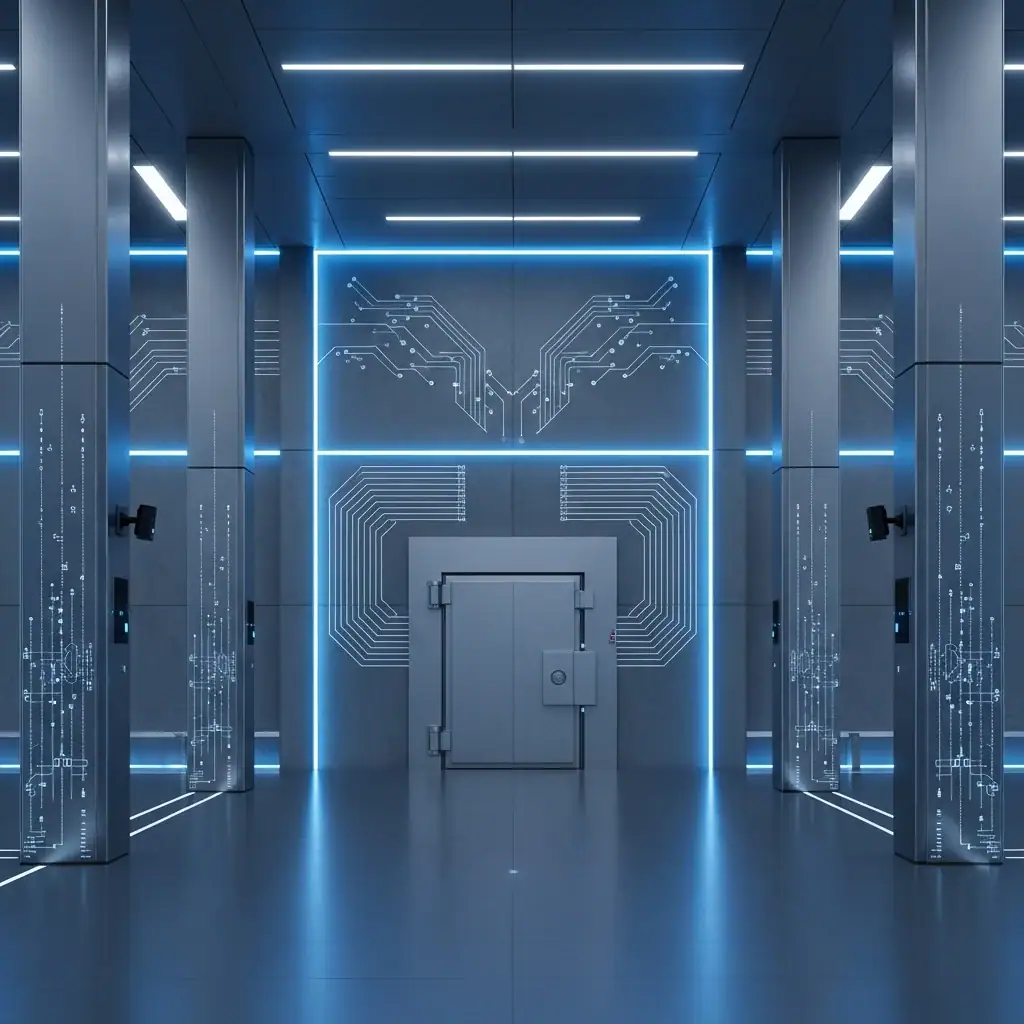
The Growing Need for an Integrated Strongroom Security Concept
Securing assets in companies and institutions has become a central challenge in recent years. Crime, particularly burglary at companies, shows a worrying trend. According to the Sicherheitsmonitor 2025, 41 percent of companies were affected by at least one burglary in the past two years, and 40 percent rate the risk of a physical break-in as high. The 2023 police crime statistics (Polizeiliche Kriminalstatistik) also show a 16.1 percent increase in serious theft at companies compared with the previous year. These figures underline that traditional security measures are often no longer enough to withstand current threats.
A strongroom security concept goes far beyond the mere purchase of a safe. It treats the entire protected area as an integrated system that connects structural, mechanical and electronic components. The aim is to create a multi-layered line of defence that deters potential attackers, detects attacks early, and maximises the time needed for unauthorised access. This requires precise coordination of all elements, from the physical construction of the room, through intrusion detection systems (EMA), to complex access control systems and security management systems. Only such a holistic approach can achieve a level of security that adequately reflects the value of the goods to be protected and the associated risks.
The complexity of this task calls for specialised knowledge and independent advice. PLANATEL® has been helping companies develop such concepts since 1992 – concepts that not only meet current requirements, but are also future-proof and flexibly adaptable. Our expertise ensures that your strongroom is not just a secure place, but an integral part of your overall security strategy.
Sound Needs Analysis and Risk Identification as the Foundation
Every effective strongroom security concept begins with a detailed needs analysis and comprehensive risk identification. Without a clear understanding of what needs to be protected and what threats it faces, adequate protective measures cannot be defined. This process is the cornerstone of a tailor-made, economically sound security solution.
The needs analysis first involves precisely identifying the assets to be protected. These can be physical goods such as cash, precious metals, jewellery, artworks, controlled substances or weapons, but also intangible assets such as sensitive data on storage media or critical documents. For each of these assets, the material and immaterial value must be assessed, along with the potential impact of loss or damage. This is followed by a comprehensive threat analysis that takes into account all conceivable attack vectors and scenarios. This includes not only burglary and vandalism, but also internal risks such as embezzlement or sabotage, as well as natural hazards such as fire or water damage.
In parallel, a vulnerability analysis is carried out, assessing the site's existing structural and organisational conditions. This includes examining the building structure, the existing security technology, organisational processes and personnel. The results of these analyses feed into a comprehensive risk assessment that quantifies the probability of threats occurring and the scale of potential damage. On this basis, protection objectives can be defined and the required security measures prioritised. PLANATEL® accompanies you through this critical phase with over 34 years of experience, to guarantee an objective, well-founded assessment and set the course for an optimal security concept.
Structural Requirements and Resistance Grades to DIN EN 1143-1
The physical construction of a strongroom forms the foundation of every security concept. Structural requirements and classification to international standards play a decisive role here. The European standard DIN EN 1143-1 sets out the requirements, classification and test procedures for resistance to burglary for safes, safes for automated teller machines, strongroom doors and strongrooms. This standard defines various resistance grades (N/0 to XIII) that indicate the degree of burglary protection and are based on extensive break-in tests using mechanical and thermal tools.
Strongrooms can be built using solid construction or modular construction. In solid construction, the walls, floor and ceiling are cast on site with special security reinforcement embedded in concrete, allowing a high degree of flexibility in sizing, and is often used in new builds or extensive renovations. Modular rooms, on the other hand, consist of prefabricated, certified security elements that are assembled on site into a free-standing structure. This construction method is particularly advantageous for existing buildings, or where later disassembly and reuse is being considered. Regardless of the construction method, the strongroom door must have a resistance grade at least equal to, or higher than, that of the surrounding walls.
The choice of the appropriate resistance grade is closely linked to the recommended insured sums. Higher resistance grades allow correspondingly higher insured sums. PLANATEL® advises you on a manufacturer-independent basis on selecting the optimal resistance grade and the appropriate construction method, to meet both protection requirements and economic considerations while ensuring legal compliance.

Intelligent Intrusion Detection Systems (EMA) and Video Surveillance in the Strongroom
The structural shell of a strongroom is only one part of a comprehensive security concept. Intelligent integration of electronic security systems, particularly intrusion detection systems (EMA) and video surveillance, is decisive for detecting attacks early, verifying them, and initiating appropriate countermeasures. VdS-approved EMA systems are the gold standard here, and are divided into different classes (A, B, C), each offering different degrees of protection against attempted circumvention and different detector sensitivities.
For strongrooms, EMA systems of the higher VdS classes B or C are generally used, meeting the requirements of DIN VDE 0833-3 for Grade 3 or Grade 4. These systems offer medium to enhanced protection against attempted circumvention and feature extensive monitoring of security-relevant functions. Monitoring of value containers can be integrated directly into the EMA, to ensure the perpetrator remains engaged with the safe for longer even after an initial alarm. A secure connection to an emergency and service control room (NSL) is mandatory for the higher classes, often via two independent transmission paths (e.g. LAN/IP and mobile network), to prevent failures.
In addition to the EMA, powerful video surveillance is essential. Modern video surveillance systems with intelligent analysis functions can detect suspicious activity around the strongroom before a physical break-in attempt takes place. In the event of an alarm, they enable rapid verification of the event and provide valuable evidence. Planning these systems must take into account the specific conditions of the strongroom, to guarantee seamless coverage and optimal functionality. PLANATEL® plans the integration of these complex systems on a manufacturer-independent basis and ensures optimal coordination, to achieve the highest level of security and efficiency.
Access Control and Security Management Systems for Maximum Control
A comprehensive strongroom security concept includes not only protection against unauthorised entry, but also precise control and monitoring of authorised access. Modern access control systems are indispensable here, to define who may enter the strongroom, when, and under what conditions. This goes far beyond simple keys and often includes biometric methods, chip cards or PIN codes, which can be combined to guarantee greater security. The systems log every access attempt and success, enabling seamless traceability and minimising internal risks.
Integrating access control into an overarching security management system (GMS) is a further decisive step toward maximising security. A GMS centralises all security-relevant information and control functions – from the intrusion detection system and video surveillance, through fire alarm systems, to access control. In the event of an alarm, all relevant data is bundled and displayed clearly, enabling a fast, coordinated response. The system can automatically trigger predefined escalation plans, such as locking further doors, activating additional cameras, or notifying security personnel.
Planning such a security management system requires a deep understanding of operational processes and specific security requirements. It must be intuitive to operate while meeting the highest security standards. PLANATEL® designs manufacturer-independent security management systems that are optimally tailored to your infrastructure and enable efficient control of all security systems. This not only minimises risk, but also optimises operational processes and reduces complexity for your security staff.
Legal Compliance and Relevant Standards for Strongrooms
Planning and constructing a strongroom must always be in line with applicable legal requirements and relevant standards. Compliance with these requirements is decisive not only for the effectiveness of the security concept, but also for recognition by insurers and avoiding legal consequences. A central role here is played by the guidelines of VdS Schadenverhütung GmbH, an independent institution for corporate security that carries out inspections and certifications and develops its own, often more stringent, guidelines.
For strongrooms, the VdS guidelines 2450 (guidelines for mechanical security devices) and 2451 (guidelines for strongrooms in solid, modular or mixed construction) are particularly relevant. These define detailed requirements for the construction and resistance of the rooms. In addition, VdS 2264 governs EMA monitoring measures for value containers, to guarantee optimal electronic protection. The European standard DIN EN 1143-1, which classifies the resistance grades of strongrooms, is also of fundamental importance and is used by VdS as the basis for its inspections.
Legally compliant planning also involves considering further relevant standards, such as DIN VDE 0833 for alarm systems, which sets out the requirements for the planning, installation, operation and servicing of intrusion detection systems. Compliance with these standards and guidelines is often a precondition for taking out insurance and for the level of insurable value. PLANATEL® has the necessary expertise to plan your strongroom security concept in a legally compliant, standard-compliant way from the outset. We ensure that all relevant requirements are taken into account, to give you maximum security and legal certainty.
The Independent Planning Process with PLANATEL®: From Concept to Acceptance
Developing a strongroom security concept is a complex project that requires a structured approach and specialised expertise. PLANATEL® accompanies you as an independent planning and consulting provider through the entire process, from the initial idea through to successful acceptance. Our approach is transparent, manufacturer-independent, and always tailored to your individual needs, drawing on over 34 years of experience in the industry.
The process begins with a detailed as-is survey and needs analysis, as described in the previous section. Building on this, we develop a target concept that defines the optimal structural, mechanical and electronic security measures. This includes selecting the appropriate resistance grades, designing the intrusion detection systems (EMA) and video surveillance, designing access control, and integration into a security management system. In the detailed planning phase, all technical specifications are refined, wiring diagrams are prepared, and interfaces are defined. Throughout, we ensure compliance with all relevant DIN standards and VdS guidelines.
We then prepare a detailed tender, which enables you to obtain quotes from qualified installer companies. Our manufacturer-independence is a decisive advantage here: we are not tied to any products or providers, and select exclusively solutions that optimally meet your requirements. We support you through the award and support you during the implementation phase by monitoring compliance with the planning specifications. The final acceptance inspection and review of the final invoice ensure that all services were delivered in accordance with the contract, and that your strongroom security concept is fully functional. With PLANATEL®, you have a competent partner at your side who coordinates the entire planning process and gives you maximum security for your investment.
Long-Term Optimisation and Adaptation of the Security Concept
A strongroom security concept is not a static structure that, once implemented, can be forgotten. The threat landscape is constantly evolving, new technologies are entering the market, and a company's internal requirements can also change. Continuous review, maintenance and adaptation of the security concept is therefore essential to guarantee its long-term effectiveness. PLANATEL® views security as a dynamic process and continues to advise you on the long-term optimisation of your systems even after the initial planning.
Regular reviews of the installed security technology are decisive for ensuring the functionality of intrusion detection systems, video surveillance and access control systems. This includes planning maintenance concepts and selecting certified installer companies that carry out servicing in accordance with VdS guidelines and DIN standards. It is also important to update the threat analysis regularly and respond to new risks. Technological advances, such as improved sensors, smarter video analysis, or new encryption technologies, can be used to further raise the level of security.
Organisational adjustments, such as training staff in how to use the security systems and in emergency procedures, are also of great importance. A security concept is only as strong as its weakest link, and human error can undermine even the most robust technology. PLANATEL® supports you in developing training concepts and defining clear responsibilities. Through our independent advice, we ensure that your strongroom security concept is always up to date, adapts to changing circumstances, and continues to provide the best possible protection for your assets over the long term. This keeps your investment valuable and effective in the long run.
Next Step
Contact us for a no-obligation initial consultation.
PLANATEL®: Independent planning and consulting since 1992
Tel: 040 / 23 73 02-30
E-Mail: info@planatel.de
Frequently Asked Questions
Which assets should be secured in a strongroom?
All highly sensitive material and intangible assets whose loss or damage would have significant financial or operational impact should be secured in a strongroom. These typically include cash, precious metals, jewellery, artworks, confidential documents, data carriers with critical information, controlled substances or weapons. Precisely defining the assets to be protected is the first step of a sound needs analysis, and largely determines how the security concept is designed.
How often should a strongroom security concept be reviewed and adapted?
A strongroom security concept should be reviewed regularly, at least once a year, and adapted as needed. This is necessary because the threat landscape, technological possibilities, and the company's internal requirements are constantly evolving. Continuous review ensures the concept always stays current, responds to new risks, and guarantees the long-term effectiveness of the protective measures. PLANATEL® also recommends regular maintenance of the installed security technology by certified installers.
What role does manufacturer-independence play in planning a strongroom security concept?
Manufacturer-independence is of decisive importance when planning a strongroom security concept. It guarantees that the choice of components and systems is based solely on the customer's actual requirements and optimal protection needs, without influence from commission interests or product ties. An independent planner such as PLANATEL® can therefore objectively assess the best available technologies and solutions from various providers, and combine them into a tailor-made, future-proof, economically efficient overall concept that avoids manufacturer dependence.
What are the key steps in the planning process for a strongroom security concept with PLANATEL®?
The planning process with PLANATEL® comprises several key steps: it begins with a detailed as-is survey and needs analysis, followed by development of a target concept and precise detailed planning. We then prepare a manufacturer-independent tender and support you through the award and during the implementation phase. The process concludes with acceptance of the system and review of the final invoice, to ensure implementation is contractually compliant and meets the relevant standards.
What advantages does working with an external planning office such as PLANATEL® offer?
Working with an external planning office such as PLANATEL® offers numerous advantages: you benefit from over 34 years of specialised experience and in-depth expertise in security technology. Independent, manufacturer-independent advice ensures you receive the objectively best solution, free from commercial interests. This leads to optimised costs, higher-quality implementation, and compliance with all relevant standards and legal requirements. It also relieves your internal resources and minimises project risks.
What resistance grades exist for strongrooms?
These grades indicate the tested burglary protection against mechanical and thermal tools, and are decisive for the level of recommended insured sums.
What is the difference between solid construction and modular construction for strongrooms?
Strongrooms in solid construction are cast on site with special security reinforcement embedded in concrete, and offer high flexibility. Modular rooms consist of prefabricated, certified elements that are assembled, which is advantageous for existing buildings or when relocating. Both construction methods must meet the requirements of DIN EN 1143-1.
Why is VdS certification important for intrusion detection systems (EMA)?
VdS certification for intrusion detection systems (EMA) confirms the high reliability and quality of the systems in accordance with the VdS guidelines (e.g. VdS 2311). It is often a precondition for insurance cover and provides tested protection against attempted circumvention, classified into classes A, B and C.
What role does a security management system (GMS) play in the strongroom security concept?
A security management system (GMS) centralises the control and monitoring of all security systems, such as the EMA, video surveillance and access control. In the event of an alarm, it bundles all relevant information, enables rapid verification, and coordinates the response, considerably increasing the efficiency and security of the overall concept.
Sources and Further Reading
- rybak-versicherungsmakler.de
- hartmann-tresore.de
- tresore.eu
- vds.de
- ecb-s.com