


Access Management & Intrusion Detection14 min read
Creating an Access Control Concept: A Strategic Guide for Businesses
A well-thought-out access control concept is crucial for protecting company assets and sensitive data. It goes far beyond simply preventing unauthorised access and requires strategic, legally compliant, technologically sound planning, which we have provided as independent consultants since 1992.
Creating an access control concept means developing a structured strategy for regulating and monitoring access to buildings, rooms and sensitive areas. This involves analysing risks, defining authorisations, selecting suitable technologies and ensuring legal compliance, particularly with regard to data protection. The aim is to increase security and optimise operational processes.
Comprehensive Planning for Maximum Security and Efficiency
A well-thought-out access control concept is crucial for protecting company assets and sensitive data. It goes far beyond simply preventing unauthorised access and requires strategic, legally compliant, technologically sound planning, which we have provided as independent consultants since 1992.
Key Takeaways
- An effective access control concept requires holistic planning that takes into account technical, organisational and legally compliant aspects.
- Compliance with standards such as DIN EN 60839-11-1 and VdS 2344, as well as the GDPR, is essential for functionality and legal protection.
- Independent consulting, such as that offered by PLANATEL®, secures a manufacturer-independent selection of the best technologies and optimises the life-cycle costs of your system.
An effective access control concept is therefore not merely a matter of security, but a fundamental part of corporate strategy. It protects not only tangible assets but also intangible goods such as intellectual property and sensitive customer data. Developing such a concept requires an in-depth analysis of a company's specific requirements and risk profile, to ensure a tailored, future-proof solution. PLANATEL® supports you in mastering this complexity and developing a robust concept that meets the highest standards.
Fundamentals and Objectives of an Access Control Concept
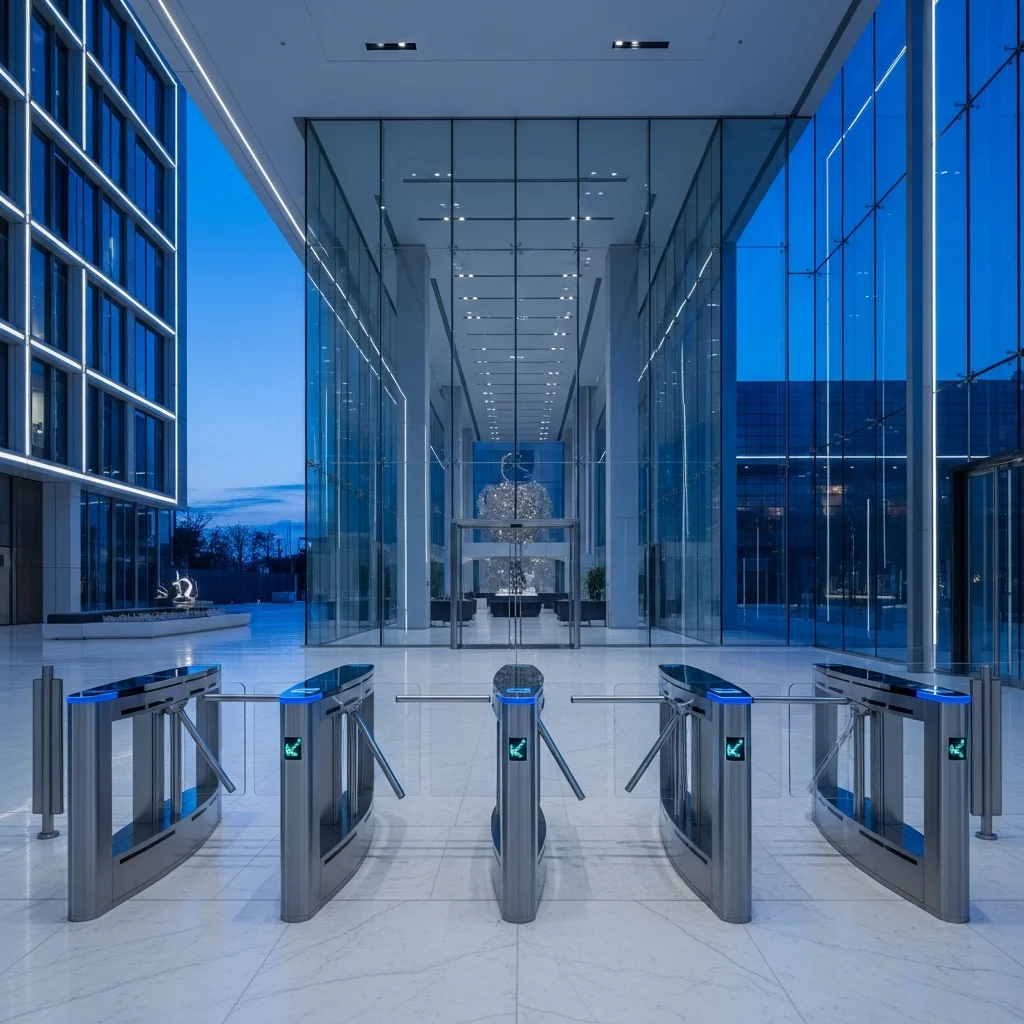
An access control concept defines who is granted access to specific areas of a company, when and where. It is an integral part of comprehensive security management and primarily serves to protect people, assets, information and business operations. Its objectives range from preventing unauthorised access, through the gapless documentation of access movements, to the flexible management of authorisations. A modern concept takes into account not only physical barriers but also the integration of digital processes.
The need for such a concept is underscored by current crime statistics. According to the Federal Criminal Police Office's Police Crime Statistics (PKS) for 2023, the number of burglaries in Germany rose by 18.1 percent compared to the previous year. This illustrates the continued relevance of robust security measures for businesses. An effective access control system must therefore be able to minimise these risks while not impairing operational efficiency. It is about striking a balance between maximum security and practical handling, which requires careful planning.
PLANATEL® places value on a holistic approach when developing concepts, covering all relevant aspects, from the organisational and technical through to the legal dimension. We analyse your specific situation and develop a concept that precisely addresses your protection objectives and creates a sustainable security architecture.
Legally Compliant Requirements and Relevant Standards
Developing an access control concept requires strict compliance with a wide range of legal requirements and technical standards. The General Data Protection Regulation (GDPR) is paramount here, governing the handling of personal data generated by access control, for example through the recording of access times or biometric features. The principles of data minimisation, purpose limitation and transparency must be strictly observed. A careful balance between security needs and data protection rights is essential to avoid legal risks.
Technical standards and guidelines are also decisive. DIN EN 60839-11-1, for example, sets out requirements for electronic access control systems, while VdS 2344 provides specific guidelines for access control systems in Germany. These standards define minimum technical requirements for components and systems to ensure their reliability and security. DIN VDE 0833-3, which describes requirements for intrusion and hold-up alarm systems, can also be relevant in the context of integrated security solutions. Compliance with these standards matters not only for functionality but also for recognition by insurers and authorities.
PLANATEL® ensures that your access control concept takes into account all relevant national and European regulations. We provide comprehensive advice on GDPR requirements and technical standards, to plan a legally sound, future-oriented system.
Phases of Concept Development: From Analysis to Detailed Planning
Developing a sound access control concept is a multi-stage process that requires a systematic approach. It begins with a detailed as-is analysis, in which existing structures, processes and security gaps are identified. This involves recording building plans, current access rules, critical areas and potential threats. A comprehensive risk analysis assesses the probability and extent of damage of various scenarios, from unauthorised access to internal misuse.
Building on this, needs assessment follows. In this phase, the protection objectives are defined and the requirements for the future system are refined. Which groups of people need access to which areas? Which time windows are relevant? What documentation obligations exist? These questions form the basis for the target concept, in which the functional and technical requirements for the access control system are set out. Interfaces to other security systems, such as fire alarm systems or video surveillance systems, are also taken into account here.
Detailed planning covers the selection of suitable technologies, the specification of components and the preparation of a detailed installation plan. PLANATEL® accompanies you through each of these phases, from the initial analysis to the tender and award, to ensure a manufacturer-independent, optimal solution for your specific requirements. Our more than 34 years of experience planning complex security systems ensures a robust, future-proof concept for you.
Technological Options and Their Assessment
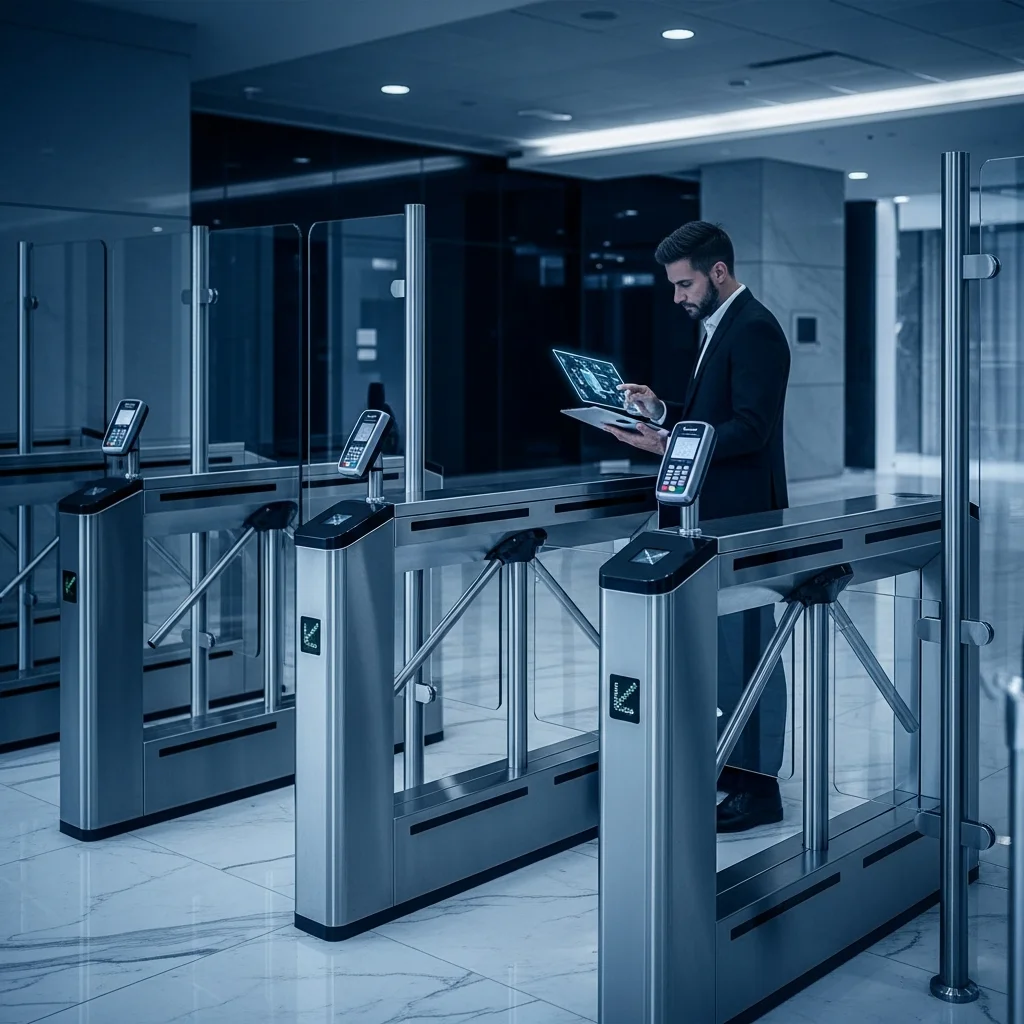
The market for access control systems offers a wide range of technological solutions, each with specific advantages and disadvantages. Selecting the right technology is crucial for the effectiveness and cost-effectiveness of the entire concept. In principle, systems can be divided into mechanical, electronic and biometric solutions, with modern concepts often using a combination of these approaches.
Mechanical systems, such as classic master key systems, are inexpensive to purchase but offer limited flexibility when granting or revoking rights. The loss of a key can result in high follow-up costs. Electronic access control systems, based on transponders, chip cards or PIN codes, offer high flexibility by contrast. Access authorisations can be centrally managed, changed or revoked, and access events are logged without gaps. This enables precise traceability and significantly increases security. Integration into higher-level management systems is often straightforward here.
Biometric systems, which use features such as fingerprints, iris scans or facial recognition, offer the highest level of security, as they are based on unique, non-transferable characteristics. However, they are more expensive to purchase and require particular attention to data protection regulations. The assessment of technologies always takes into account your company's specific protection objectives, budget and scalability requirements. PLANATEL® advises you on a manufacturer-independent basis when selecting the optimal combination of technologies that meets your requirements and offers a high degree of investment security.
Integration into Existing Security Systems
A modern access control concept only unlocks its full potential through seamless integration into a company's existing security infrastructure. Networking with other hazard alarm systems creates holistic security management that is greater than the sum of its parts. Typical integration partners are fire alarm systems, intrusion detection systems, video surveillance systems and building management systems.
Integration with fire alarm systems is particularly critical: in the event of fire, doors that are normally secured by access control must be automatically unlocked to clear escape routes. At the same time, in normal operation, access control can help prevent unauthorised access to sensitive areas, such as those housing fire alarm control panels. Networking with intrusion detection systems makes it possible, in the event of an attempted break-in, not only to trigger an alarm but also to use access control to lock down certain areas or secure escape routes for authorised personnel.
Video surveillance systems can visually support access control by recording access events and enabling visual verification. At critical access points, this can significantly increase security. Central control and monitoring of all systems via an overarching security management system or a control room optimises response times and the efficiency of security personnel. PLANATEL® plans such integration scenarios from the outset, to avoid siloed solutions and create an efficient, responsive overall system.
Common Mistakes and Challenges in Developing the Concept
Developing an access control concept is complex and harbours various pitfalls that can impair the effectiveness and cost-effectiveness of the system. One of the most common mistakes is an inadequate needs analysis. If the protection objectives being pursued and the specific requirements placed on the system are not precisely determined. Over- or under-dimensioning of the solution. Over-dimensioning causes unnecessary costs, while under-dimensioning cannot guarantee the desired level of security.
Another challenge is the lack of scalability and future-readiness of the concept. Companies keep evolving, headcounts change, and new technologies come onto the market. A rigid system that cannot flexibly accommodate these changes quickly becomes obsolete and requires costly retrofitting. Equally critical is neglecting data protection. Without careful consideration of GDPR requirements, high fines and reputational damage can result.
Lack of integration into existing IT and security systems is also often a problem, leading to siloed solutions and inefficient processes. Last but not least, dependence on a single manufacturer can limit flexibility for future expansions or maintenance work. PLANATEL® identifies these potential sources of error early and develops strategies to avoid them. Our independent consulting ensures that your concept is robust, flexible and future-proof.
Cost-Effectiveness and Life-Cycle Costs
When planning an access control concept, it is crucial not only to consider the initial investment costs but also to analyse the total cost of ownership (TCO). In addition to acquisition costs, this includes expenditure on installation, maintenance, software licences, energy consumption, training and potential expansions or adjustments over the entire service life of the system. Forward-looking planning can enable considerable savings here and secure the system's cost-effectiveness in the long term.
Maintenance costs are an often underestimated factor. Regular inspections, software updates and the replacement of wear parts are essential to ensure the functionality and security of the system. A well-planned concept takes these aspects into account from the outset and selects components that offer high reliability and a long service life. In addition, considerable operating cost savings can be achieved through the integration and automation of processes, for example through the central management of access authorisations, as manual effort is reduced.
PLANATEL® supports you in preparing a detailed TCO analysis and selecting solutions that are not only technically convincing but also economically sustainable. We plan maintenance concepts and select certified installers who guarantee long-term, cost-efficient support for your system. Our manufacturer-independent positioning enables us. To identify the most economical and technically sensible solution for you, free of commission interests.
The Role of Independent Planning and Consulting by PLANATEL®
The complexity of the subject matter, the multitude of technological options and the constant changes in the legal framework make developing an access control concept a demanding task. This is where independent planning and consulting by PLANATEL® comes in. Since our founding in 1992, we have offered our customers manufacturer-independent, financially independent expertise that is oriented exclusively towards your interests.
Our more than 34 years of experience planning security systems, including access control, enables us to advise you comprehensively, from the initial needs analysis, through concept development and detailed planning, to accompanying the tender and award. We act as your competent partner, assessing technical feasibility, ensuring legal compliance and optimising cost-effectiveness. We identify the technologies and system integrators that are right for you, without being tied to particular manufacturers or receiving commissions. This eliminates the risk of dependence on a manufacturer and secures the best possible solution for you.
With PLANATEL® at your side, you benefit from transparent, objective consulting aimed at achieving your protection objectives efficiently and sustainably. We take the burden off your internal resources and ensure that your access control concept not only meets current requirements but is also equipped for future developments.
Next Step
Contact us for a no-obligation initial consultation.
PLANATEL®: Independent planning and consulting since 1992
Tel: 040 / 23 73 02-30
Email: info@planatel.de
Frequently Asked Questions
Why is an as-is analysis so important for developing the concept?
The as-is analysis forms the foundation for every successful access control concept. Without a precise assessment of the existing infrastructure, processes, vulnerabilities and protection needs, no targeted measures can be defined. It helps identify blind spots, deploy resources optimally, and ensure that the new system addresses the actual risks rather than being planned past the real requirements. A thorough analysis prevents planning errors and unnecessary costs in later project phases.
What advantages do electronic access control systems offer over mechanical ones?
Electronic access control systems offer a range of significant advantages. They enable central, flexible management of access authorisations, which can be changed or revoked at any time without having to replace physical keys. They also log all access events without gaps, which increases traceability and helps clarify incidents. Integration with other security systems is simpler, and the loss of a transponder is less critical than the loss of a key, since it can simply be blocked. In the long term, this leads to greater security and lower operating costs.
How can PLANATEL® assist in selecting the right installer?
PLANATEL® provides comprehensive support in selecting the right installer through a manufacturer-independent tender and award process. Based on the detailed concept and technical specifications, we prepare transparent tender documents. We objectively evaluate the bids from potential installers according to technical criteria, references, service offerings and cost-effectiveness. Our aim is to find a certified, reliable partner who implements the planned solution properly and on schedule, and ensures long-term support, without you having to worry about dependence on a manufacturer.
What role does scalability play in planning an access control concept?
Companies develop dynamically, headcounts change, new building sections are added, or security requirements increase. A scalable system can be flexibly adapted to these changes without requiring a complete new investment. This protects your investment, minimises future costs and ensures that your security system always meets current needs. PLANATEL® plans systems that can grow with your company.
Why is it important to consider emergency plans in the access control concept?
Emergency plans define clear procedures for scenarios such as power outages, system failure, fire or evacuation. In an emergency, it must be ensured that doors unlock automatically to clear escape routes, or that certain areas remain securely locked. A well-thought-out emergency plan ensures the safety of people and assets even under extreme conditions and minimises the risk of panic or uncontrolled access in crisis situations. PLANATEL® incorporates such scenarios into the planning from the outset.
What is the difference between access control and time tracking?
Access control regulates and monitors access to specific areas, based on authorisations. Time tracking, by contrast, serves to document employees' working hours, breaks and overtime. Although both systems can often use the same hardware (e.g. card readers), their primary functions and legal frameworks differ.
What role does the GDPR play in planning access control systems?
The GDPR is of central importance, as access control systems frequently process personal data (e.g. name, access times, biometric features). The principles of data minimisation, purpose limitation, transparency and data security must be observed. A data protection impact assessment may be required for high-risk systems.
Can an access control system be integrated with a fire alarm system?
Yes, integration is not only possible but often also relevant to safety. In the event of fire, access control must be configured to automatically release escape routes to ensure safe evacuation. Such networking requires careful planning in accordance with the relevant standards.
What does manufacturer independence mean in access control consulting?
Manufacturer independence means that the consultant has no financial ties to, or receives no commissions from, manufacturers of access control systems. This ensures an objective recommendation of the best solution, based solely on the customer's needs, without the risk of dependence on a manufacturer or a suboptimal choice of product.
Sources and Further Information
- Guidelines for Access Control Systems – VdS 2367
- Planning Criteria for Access Control | Security Technology | Electronic Locking Systems | BauNetz Wissen
- Security in Buildings: Concepts for Access Control – Deutsches Architektenblatt
- Planning and System Manual for Access Control, 2023 Edition – Siedle
- Access Control Systems – You Decide Who Gets In – Concepture