


Access Management & Intrusion Detection15 min read
Access Control System Planning Cost: Investment Security Through Independent Expertise
Planning an access control system (ZKA) is complex and involves numerous cost traps. Sound, manufacturer-independent planning is essential to protect the investment, reduce operating costs, and ensure long-term security as well as legal compliance.
Planning an access control system (ZKA) covers the needs analysis, concept design, detailed planning and tender. Costs are shaped substantially by system scope, technology, level of integration and security requirements. Independent planning by experts such as PLANATEL® optimises overall costs, avoids vendor dependency, and secures the investment's legal compliance.
How professional planning optimises overall costs and secures legal compliance
Planning an access control system (ZKA) is complex and involves numerous cost traps. Sound, manufacturer-independent planning is essential to protect the investment, reduce operating costs, and ensure long-term security as well as legal compliance.
Key Takeaways
- Independent, manufacturer-independent planning is essential for optimising the overall cost of an access control system and avoiding hidden cost traps.
- Compliance with standards such as DIN EN 60839-11-1 and VdS guidelines, as well as consideration of GDPR and the NIS2 Directive, are indispensable for legal compliance and security.
- Long-term cost-effectiveness is achieved by planning scalable systems, comprehensive maintenance concepts, and accounting for total cost of ownership (TCO).
Access control systems not only protect physical company assets and sensitive areas from unauthorised entry, they also play a central role in meeting data protection requirements and optimising operational workflows. Yet planning and implementing a ZKA is a complex task that requires far-reaching decisions and significant investment. Without precise, forward-looking planning, unexpected costs can quickly arise, functionality can be compromised, or legal compliance can even be put at risk. The initial investment cost is only part of the equation; long-term operating and maintenance costs, as well as the system's scalability, are equally decisive for economic success.
The Complexity of Modern Access Control Systems and Their Significance
An access control system is far more than just an electronic lock on a door. It is a software-controlled security system that regulates and monitors access to physical or digital spaces. Within a company, it authorises or denies people entry based on predefined authorisation concepts, in order to protect buildings, grounds, and the people and assets within them. The significance of a ZKA extends beyond pure protection: it enables efficient management of access rights, detailed logging of access events, and can be seamlessly integrated with other systems such as time recording, video surveillance, or security management systems.
The choice of the right technology, from RFID badges to smartphone-based solutions to biometric systems such as fingerprint or facial recognition, depends heavily on the specific security requirements and the desired level of convenience. A 2025 report shows that wireless systems have overtaken wired solutions for the first time, and that mobile credentials and cloud-based solutions are booming, underscoring the flexibility and scalability of modern systems. While these technological developments offer enormous benefits, they also increase the complexity of planning and require in-depth expertise to arrive at an optimal, future-proof solution.
Investing in a ZKA is a long-term decision that has a major influence on the protection of sensitive company areas, compliance with data protection regulations, and improvements in operational efficiency. Careful planning is therefore essential to meet the diverse requirements for security, functionality and legal compliance, while ensuring the cost-effectiveness of the solution over its entire life cycle. Without such planning, poor decisions can lead to significant follow-on costs and security gaps.
Factors Influencing the Planning and Cost of an Access Control System
The costs of planning and implementing an access control system are determined by a wide range of factors that go well beyond the pure purchase price of the hardware. Primary influencing factors include the scope of the system, the chosen technology, and the degree of integration with existing infrastructure. Every door, every access point to be integrated into the system, increases complexity and therefore the cost of hardware, installation and software licences.
The type of identification media used also plays a major role. While simple RFID badges are comparatively low-cost, biometric systems (e.g. fingerprint or iris scanners) incur higher acquisition costs and often higher maintenance costs as well. Security requirements are also a decisive cost factor. The higher the required security level, the more robust and complex the components and system architecture must be, which is directly reflected in cost. Additional functions such as time recording, visitor management, or linking with video surveillance and fire alarm systems increase the scope of functionality, and, with it, planning and implementation effort.
Installation and electrical work should not be underestimated either, particularly where electric door locks are not already present or extensive cabling is required. The software solution itself, including licensing models and maintenance contracts, is a further significant cost block. In the longer term, operating costs for energy, software updates, replacement of wear parts (e.g. batteries in wireless components), and the administrative effort of managing authorisations must also be taken into account. Comprehensive planning must account for all of these aspects from the outset, to allow a realistic cost estimate and an economical solution.
The Structured Planning Process under DIN EN 60839-11-1 and VdS Guidelines
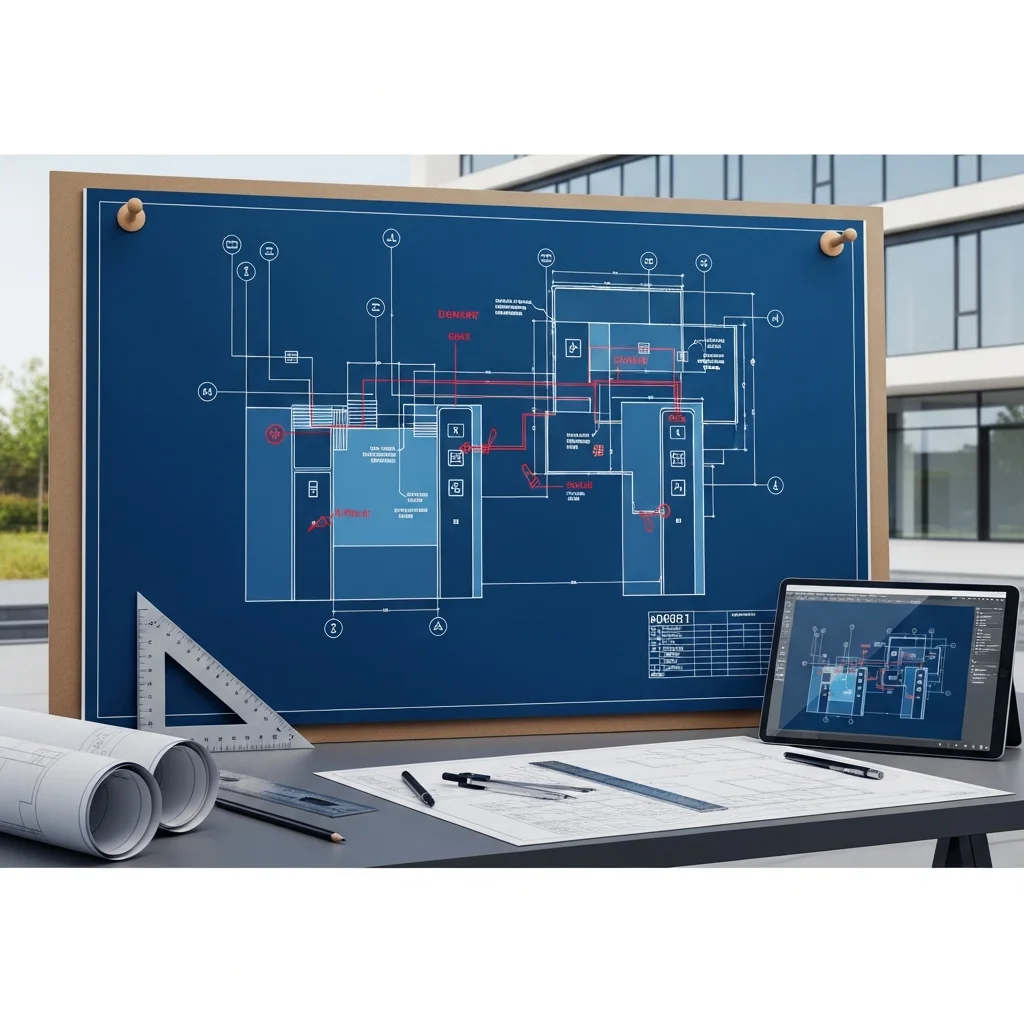
A successful access control system is based on a methodical, standards-compliant planning process. At PLANATEL®, we base our work on proven standards and guidelines to ensure the highest quality and legal compliance. DIN EN 60839-11-1, for example, sets out the minimum requirements for functionality, performance characteristics and test procedures for electronic access control systems, and defines various security grades. In addition, VdS guidelines provide important specifications for the planning, installation and servicing of security systems, which are also relevant for access control systems.
The planning process begins with a detailed as-is analysis and needs assessment. This captures the existing infrastructure, the areas to be protected, the number of users, and the specific security risks. It determines which access rights are required for which groups of people at which times. Building on this, the target concept is developed, defining the optimal system architecture, suitable technologies (e.g. online or offline systems, biometric or card-based solutions), and integration options with other systems. This phase also includes setting the security grades in accordance with DIN EN 60839-11-1, to ensure protection against unauthorised access and manipulation.
Detailed planning translates the target concept into concrete technical specifications, including cabling plans, hardware selection and software configuration. Finally, a manufacturer-independent tender is prepared, precisely formulating all technical and functional requirements. This structured approach ensures that all relevant aspects are considered, from technical feasibility through legal compliance to cost-effectiveness, and forms the basis for successful implementation and efficient operation of the access control system.

Hidden Cost Traps and How Independent Planning Avoids Them
Without professional, independent planning, numerous hidden cost traps lie in wait when implementing access control systems, capable of blowing the budget and undermining the system's efficiency. One of the most common traps is an inadequate needs analysis. If actual requirements are not precisely determined, this can lead to an oversized system with unnecessarily high acquisition costs, or an undersized one that requires expensive retrofitting later. Equally critical is vendor dependency. If systems are planned without manufacturer-independent advice, there is a risk of being tied to a particular provider, which drives up the cost of future expansions, maintenance and component replacement, and weakens the negotiating position.
Further cost traps arise from insufficient scalability of the system. If a ZKA is not designed from the outset for future growth or changing requirements, expansions can become disproportionately expensive or even necessitate a complete system replacement. Lack of integration with existing IT or security systems can also lead to siloed solutions, causing duplicated administrative effort and compatibility problems. Finally, insufficient attention to legal compliance and data protection can lead to substantial fines and reputational damage, particularly with regard to GDPR and the NIS2 Directive.
PLANATEL® addresses these challenges with 100% independent, manufacturer-independent planning. A detailed needs analysis and forward-looking design avoid both over- and under-dimensioning. Our expertise in manufacturer-independent tendering secures competitive pricing and prevents premature vendor dependency. We plan systems that are flexible, scalable, and optimally integrable into your existing infrastructure, to ensure long-term cost-effectiveness and investment security. This way, hidden cost traps are identified and eliminated early.
Cost-Effectiveness Through Manufacturer-Independent Tender and Award
The tender and award phase is decisive in shaping the cost-effectiveness of an access control system. A manufacturer-independent tender, as designed by PLANATEL®, is the key to obtaining competitive offers and securing the best terms for our clients. Rather than limiting ourselves to the solutions of a single provider, we enable fair competition among several qualified installers. This leads not only to optimised acquisition costs but also to transparent presentation of follow-on costs for maintenance, licences and support.
Our detailed tender documents are based on the previously developed target concept and technical specifications. They precisely describe the functional and technical requirements for the system without prescribing particular manufacturer products. This gives providers the freedom to offer their respective best and most cost-efficient solutions that meet the defined criteria. We evaluate incoming offers not only on price but also on technical features, service offerings, references, and the long-term reliability of the proposed solutions. This holistic approach ensures you receive not merely the cheapest, but the most economical and capable ZKA for your organisation.
With our more than 34 years of experience in planning and consulting, we know how to structure tenders so they are legally sound while ensuring maximum transparency and comparability. We support you in negotiations and contract drafting, to ensure all agreed services and terms are clearly defined. The result is an access control system that not only meets current requirements but can also be operated economically over the long term and offers a high degree of investment security, free of unnecessary vendor dependency.
Long-Term Perspectives: Scalability, Maintenance and Life-Cycle Costs
Planning an access control system must go beyond the initial investment alone and consider the system's entire service life. A ZKA is a long-term investment with life cycles often spanning 10 to 15 years. Scalability, a well-thought-out maintenance concept, and consideration of total cost of ownership (TCO) are therefore of decisive importance. A future-proof system must be able to adapt to changing organisational structures, growing headcounts, or new security requirements without requiring a complete replacement. This calls for a modular architecture and open interfaces that allow easy expansion and integration of new components.
PLANATEL® places great emphasis on planning systems with high scalability. We analyse not only current needs but also forecast future developments, to design a flexible, adaptable solution. A further critical aspect is maintenance and operating costs. Electronic systems can require higher initial investment than mechanical locking systems, but often pay for themselves after just 3–5 years through lower follow-on costs, for example, by eliminating the need to replace cylinders when a key is lost. Nonetheless, ongoing costs arise for software maintenance, power supply, and occasional battery replacement in wireless components.
We plan comprehensive maintenance concepts covering regular inspections, software updates, and the replacement of wear parts, to ensure the ZKA's functionality and security throughout its entire life cycle. By accounting for TCO, which includes all direct and indirect costs over the period of use, we enable our clients to make well-founded investment decisions. A well-planned ZKA not only minimises risk but also contributes to long-term cost efficiency and value retention.
Legal Compliance and Data Protection for Access Control Systems
Implementing an access control system is inseparably linked to data protection and legal compliance requirements. Because ZKAs capture personal data such as names, access times and, in some cases, biometric characteristics, they are subject to strict requirements, in particular the General Data Protection Regulation (GDPR). A legally compliant ZKA must satisfy the principles of data minimisation, transparency and accountability. This means only necessary data may be captured, data processing must be traceable, and automated deletion mechanisms must be established for access logs.
The use of biometric data requires particular attention, as it requires the explicit consent of employees and may only be collected for clearly defined purposes. In addition, companies must take "appropriate technical and organisational measures" to ensure the security of personal data, which includes encryption, hashing and secure storage systems. The NIS2 Directive, which must be transposed into national law by 18 October 2024, extends the range of companies affected and significantly raises cybersecurity requirements, which also affects access control. Breaches can attract substantial fines of up to 10 million euros or 2% of global annual turnover.
PLANATEL® provides comprehensive support in making your access control system legally compliant. We analyse the specific data protection risks, develop an authorisation concept that meets GDPR requirements, and ensure that all technical and organisational measures for data security are implemented. Our planning takes into account current statutory requirements, to minimise legal risk and strengthen the trust of your employees and business partners. Forward-looking planning here is not just a matter of security, but also of legal protection.
PLANATEL®: Your Independent Planning Partner for Access Control Systems
Successfully planning and implementing an access control system requires specialist expertise, market knowledge, and absolute neutrality. This is where PLANATEL®'s expertise comes in. Since our founding in 1992, we have operated as an independent, competent planning and consulting firm. With over 34 years of experience in the conception, optimisation and management of complex projects in information technology, telecommunications and security systems, we are your reliable partner.
Our core competence lies in manufacturer-independent consulting. We accept no commissions whatsoever from manufacturers or installers, underscoring our financial independence and unrestricted commitment to our clients' interests. Our goal is to develop tailored, cost-efficient and legally compliant solutions that exactly match your requirements and stand the test of time. We plan not only the technical infrastructure but also the processes and concepts needed for smooth, secure operation of your access control system.
From the initial needs analysis through the development of detailed target concepts and technical specifications to support for tendering and award, we accompany you through the entire project cycle. We select certified installers and ensure implementation meets the highest quality standards. Our expertise helps you avoid hidden cost traps, optimise overall costs, and make a future-proof investment. Trust PLANATEL® to make your access control system not only secure and efficient, but also economical and legally compliant.
Next Step
Contact us for a no-obligation initial consultation.
PLANATEL®: Independent planning and consulting since 1992
Tel: 040 / 23 73 02-30
Email: info@planatel.de
Frequently Asked Questions
Why is a detailed needs analysis so important before planning an access control system?
A detailed needs analysis is the foundation of every successful ZKA planning process. It precisely identifies the specific security requirements, the areas to be protected, the number of users, and the desired functions. Without this precise assessment, there is a risk of poor planning that leads either to costly over-dimensioning or inadequate under-dimensioning of the system. Both incur unnecessary costs and potential security gaps in the long run. A well-founded analysis ensures the system is optimally tailored to your needs and that future expansions can be accommodated.
What hidden costs can arise when implementing an access control system?
Hidden costs can take many forms. These include insufficiently accounted-for installation costs, particularly for necessary electrical work or structural adaptations. Software licensing costs, ongoing maintenance contracts, costs for software updates, and the replacement of wear parts such as batteries in wireless components can also strain the budget. Insufficient scalability can also force expensive retrofits or a complete system replacement in future. Finally, fines resulting from a lack of legal compliance, particularly with regard to GDPR, can have a significant financial impact.
How can PLANATEL® help minimise the life-cycle costs of a ZKA?
PLANATEL® minimises life-cycle costs (TCO) through forward-looking, manufacturer-independent planning. We design scalable systems with open interfaces that can flexibly adapt to future requirements and avoid expensive full replacements. Through detailed maintenance concepts and by accounting for all operating and follow-on costs in the tender, we ensure you receive an economically optimised solution. Our independent consulting allows us to negotiate the best terms for acquisition, maintenance and support, reducing TCO over the entire period of use.
What role does integration with other systems play for the cost and efficiency of a ZKA?
Integrating a ZKA with other systems such as time recording, video surveillance or security management systems can significantly increase efficiency and save costs. Well-planned integration avoids siloed solutions, reduces administrative effort, and enables central control and monitoring. However, the degree of integration also increases planning complexity and the initial cost of interfaces and software adaptations. Independent planning assesses the optimal degree of integration to achieve maximum efficiency at an acceptable cost and ensure future compatibility.
Why is manufacturer independence so important when planning an access control system?
Without vendor ties, PLANATEL® can impartially evaluate the technologies and products available on the market and select the optimal combination for your specific requirements. This avoids premature vendor dependency, which often leads to higher prices for hardware, software and service. A manufacturer-independent tender also fosters competition and secures the best terms and long-term flexibility for system maintenance and expansion.
What role does DIN EN 60839-11-1 play in planning access control systems?
DIN EN 60839-11-1 sets out the minimum requirements for functionality, performance characteristics, and test procedures for electronic access control systems. It defines various security grades and is an important basis for the design and specification of ZKAs, to ensure their security and reliability.
How does GDPR affect the planning of an access control system?
GDPR has a significant influence, since access control systems process personal data. Planning must ensure data minimisation, transparency, accountability and automated deletion mechanisms. Particular care is required with biometric data, which requires explicit consent. Legally compliant planning minimises legal risk and protects against substantial fines.
Are wireless access control systems more expensive than wired solutions?
Initial investment costs can vary. A 2025 report shows that wireless systems have overtaken wired solutions, pointing to their growing acceptance and efficiency. While wireless systems can lower installation costs, the costs of battery replacement and the security of wireless communication must be factored into the overall assessment.
What advantages does a manufacturer-independent tender offer for the cost of a ZKA?
A manufacturer-independent tender fosters competition among qualified providers, leading to better prices and terms. It prevents premature vendor dependency and enables the selection of the most economical and capable solution. It also ensures transparency in acquisition and follow-on costs.
Sources and Further Reading
- gfos.com
- assaabloy.de
- bwb-kiel.de
- assaabloy.com
- assaabloy.de