


Access Management & Intrusion Detection13 min read
Independent Access Control Consulting: Your Path to Secure and Efficient Systems
Planning and implementing modern access control systems is complex and holds numerous pitfalls. Independent consulting is decisive in ensuring a tailored, legally compliant and future-proof solution that optimally meets your specific requirements.
Independent consulting for access control systems gives companies the assurance of receiving an objective, manufacturer-independent solution. It helps navigate the complex requirements of security, legal compliance and economic efficiency, avoids manufacturer dependencies, and ensures that the system is optimally tailored to individual needs, from needs analysis through to successful implementation.
How independent expertise optimises your security infrastructure and avoids manufacturer dependency
Planning and implementing modern access control systems is complex and holds numerous pitfalls. Independent consulting is decisive in ensuring a tailored, legally compliant and future-proof solution that optimally meets your specific requirements.
Key Takeaways
- Independent access control consulting is essential to avoid manufacturer dependency and ensure a tailored, future-proof solution.
- Legal compliance, in particular adherence to the GDPR, must be firmly anchored in planning from the needs analysis through to implementation.
- Integrating access control into a comprehensive security concept and taking a total-cost-of-ownership view are decisive for long-term security and economic efficiency.
Access control systems protect not only sensitive areas and company assets, but also ensure staff safety and compliance with strict data protection requirements. Yet selecting, planning and implementing such infrastructure is a demanding task that requires well-founded expertise and a clear strategy. Without an independent perspective, companies risk becoming tied to proprietary solutions or implementing systems that fail to meet their actual needs. This is where the importance of independent access control consulting comes in, to establish secure, efficient and legally compliant solutions for the long term.
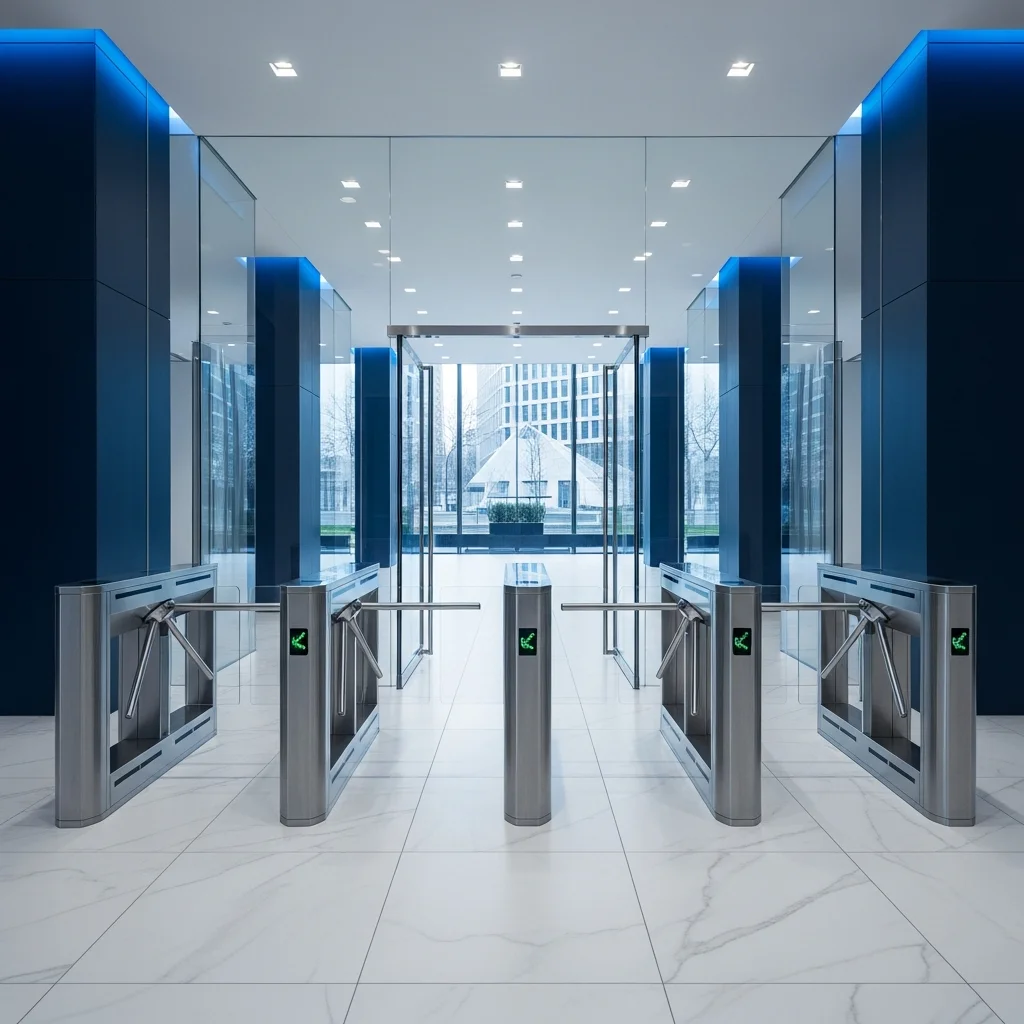
Understanding the complexity of modern access control systems
Modern access control systems (ZKS) are far more than just electronic locks. They are complex, software-driven security systems that regulate and monitor access to physical spaces, to protect buildings, grounds and the people within them. The technology has evolved from simple mechanical solutions to highly developed systems that use RFID technology, biometric data and mobile authentication. This development brings with it a wide range of components and interfaces that must be considered during planning: from readers and electronic locks to central access control software and integration with existing IT infrastructure. The choice of the right solution depends heavily on individual security requirements, budget, building structure and the desired degree of flexibility.
A central aspect is the classification of access control systems by security grade, as defined, for example, in DIN EN 60839-11-1. This standard sets minimum requirements for functionality, performance characteristics and test procedures for electronic access control systems and their components used in security applications. Complexity increases further with the need to manage various identification media, such as transponders, biometric features or mobile devices, and to ensure their resistance to forgery. Integration with higher-level security management systems or building management technology also requires a deep understanding of system architectures and communication protocols. Without comprehensive expertise in all of these areas, planning can quickly lead to suboptimal or even insecure solutions.
Manufacturer independence as the foundation of future-proof access control
The decision to implement an access control system is a long-term investment that extends far beyond the acquisition costs. One of the greatest challenges for companies is avoiding manufacturer dependency, often referred to as "vendor lock-in". Proprietary systems can limit flexibility, make future extensions more difficult, and lead to unexpectedly high costs for maintenance or system replacement. Independent access control consulting is therefore of decisive importance in ensuring a manufacturer-independent selection. PLANATEL® has operated fully independently and free of financial ties to manufacturers or installers since 1992. This enables an objective evaluation of all solutions available on the market, based exclusively on the customer's specific requirements.
The advantage of manufacturer independence lies in the freedom to combine the best components and software solutions from different providers, to create an optimal, tailored system. This includes considering open standards and interfaces that enable smooth integration with existing infrastructure and future extensions. According to the 2025 Wireless Access Control Report by ASSA ABLOY, wireless systems have for the first time overtaken wired solutions, underlining the importance of flexible, integrable systems. Independent consulting helps companies evaluate these trends and choose solutions that meet not only current but also future technological developments. This secures scalability, reduces long-term operating costs, and protects against unwanted dependencies that can hinder innovation.
The PLANATEL® approach: from needs analysis to detailed planning
The successful implementation of an access control system begins with precise, comprehensive planning. At PLANATEL®, we follow a proven, multi-stage approach that ensures every solution is optimally tailored to the customer's individual needs and circumstances. Our process starts with a detailed as-is survey, in which we analyse the existing infrastructure, current security measures and organisational processes. Building on this, a well-founded needs analysis follows, in which we jointly define protection objectives with you, assess potential risks and specify the functional requirements for the new system. This includes clarifying user frequencies, material and luggage transport, and taking escape-route situations into account.
We then develop a target concept that compares various solution approaches and technologies and proposes the optimal system architecture. Here, aspects such as offline or online capabilities, compatibility with the existing IT infrastructure, and partner integrations are taken into account. Detailed planning covers the technical specification of the components, the preparation of specifications of services, and the development of installation plans. We prepare precise tender documents, evaluate the incoming quotes on a manufacturer-independent basis, and support you in awarding the contract to qualified, certified installers. During the implementation phase, we provide comprehensive support, monitor compliance with the specifications, and carry out final acceptance to ensure the system's correct function and legal compliance. This holistic approach minimises planning errors and ensures that your investment creates value in the long term.

Legal compliance and data protection for access control systems
Implementing access control systems is inseparably linked to strict legal requirements and data protection. In particular, the General Data Protection Regulation (GDPR) and the German Federal Data Protection Act (BDSG) place high demands on the processing of personal data, which inevitably arises with access control. A legally compliant access control system must ensure the principles of data minimisation, transparency and accountability. This means that only necessary data may be collected, data processing must be traceable, and automated deletion mechanisms for access logs must be put in place.
Article 32 of the GDPR obliges companies to take appropriate technical and organisational measures to protect personal data. This includes protection against unauthorised access, loss, alteration or unlawful disclosure. When planning access control systems, aspects such as the secure storage and encryption of data, the definition of clear access rights, and the implementation of audit trails must therefore be considered. For biometric access control in particular, additional steps are required to obtain staff consent, minimise data processing and use certified systems. PLANATEL® ensures that all planned access control solutions comply with current statutory requirements, and supports you in creating a comprehensive access control concept that takes all data protection aspects into account, thereby minimising legal risks.
Common mistakes and pitfalls when implementing access control
Implementing an access control system is a complex project in which numerous sources of error can arise, impairing the efficiency, security and economic viability of the system. A common mistake is an inadequate needs analysis, which leads to the system being over- or under-dimensioned. This can mean either that unnecessarily high costs arise, or that the system does not meet the actual security requirements. Another critical point is insufficient consideration of integration with existing systems such as time recording, video surveillance or fire alarm systems. Proprietary systems that offer no open interfaces can quickly lead to isolated solutions here, reinforcing manufacturer dependency.
Technical errors in planning and installation are also widespread. These include failing to observe fire protection regulations (particularly when integrating fire alarm systems), neglecting escape-route situations, or an inadequate power supply that jeopardises the system's operational reliability. Organisational shortcomings, such as missing access logs or an inadequate authorisation concept, can also cause serious security gaps. Access rights that are granted but never revoked, or generic keys issued to all users, are examples of such vulnerabilities. PLANATEL® identifies these potential pitfalls early in the planning phase. Through our over 34 years of experience and our manufacturer-independent perspective, we develop concepts that avoid these mistakes and ensure a robust, secure and future-oriented access control solution.
Integrating access control into comprehensive security concepts
An isolated access control system cannot achieve its full effect. Its true strength lies in intelligent integration into a comprehensive security concept that networks various system technologies with one another. Access control systems can, for example, be coupled with fire alarm systems (BMA) in accordance with DIN 14675 and VdS 2095, to automatically release escape routes in the event of a fire while simultaneously controlling access for rescue teams. Such integration is decisive for the safety of people and compliance with statutory requirements.
Equally important is the connection with intrusion detection systems (EMA) in accordance with DIN VDE 0833 and VdS 2311. In the event of unauthorised access, the EMA can trigger an alarm while the access control system simultaneously locks the door and creates a record of the incident. Video surveillance systems complement access control by visually documenting events at doors and entrances and enabling immediate verification of alarms. Integration with time-recording systems or building automation systems is also worthwhile, to optimise processes and control energy consumption. PLANATEL® plans such networked security solutions, which not only optimally coordinate the individual systems with one another, but also enable central control and monitoring via security management systems. This creates a coherent security architecture that can respond flexibly to different threat scenarios, significantly increasing your company's overall security.
Economic efficiency and life-cycle costs: an independent perspective
The decision to implement an access control system should not be based solely on the initial acquisition costs. A holistic view of total cost of ownership (TCO) over the system's entire life cycle is decisive for an economical and sustainable investment. The TCO approach considers, alongside investment costs, the ongoing expenses for operation, maintenance, spare parts, software updates, training and potential downtime. Long-term costs often make up a significant proportion of total costs, with around 70% of costs potentially arising after system deployment.
Independent consulting from PLANATEL® enables a transparent analysis of these life-cycle costs. We assess not only the efficiency and performance of the systems, but also their scalability and adaptability to future requirements. A system that appears inexpensive today can prove to be a costly mistake due to high maintenance costs, a lack of compatibility, or rapid obsolescence. We help you identify systems that offer high operational reliability, are energy-efficient, and enable flexible extension through open standards. This includes assessing cloud-based solutions against on-premise installations, as cloud solutions often bring lower maintenance costs through the provider. Our goal is to plan a solution that not only meets your security requirements, but also optimises operating costs in the long term and delivers a clear return on investment (ROI).
Selecting the right installer and quality assurance
Even the best planning is only as good as its execution. Selecting a qualified and reliable installer is therefore a critical step for the success of your access control project. As an independent planning and consulting company, PLANATEL® does not itself carry out installation or maintenance work. Instead, we focus on supporting you in selecting certified, experienced specialist firms that install the planned systems in accordance with the highest quality standards and applicable norms. VdS-recognised installers, for example, ensure that they comply with the relevant VdS guidelines for planning and installation when installing alarm systems, including access control systems.
Our process includes preparing detailed specifications of services, which form a clear basis for installers' quotes. We check the qualifications of potential partners, assess their references, and ensure they have the necessary certifications and experience to implement your specific project. During the installation phase, we accompany the project, monitoring compliance with the technical specifications and schedules. After installation is complete, we carry out careful acceptance, during which all functions of the system are comprehensively tested. This includes checking correct functioning, documentation, and compliance with all relevant standards and guidelines. Through this comprehensive quality assurance, we ensure that your access control system not only functions optimally on paper, but also in practice, and remains reliable in the long term.
Next step
Contact us for a non-binding initial consultation.
PLANATEL®: Independent planning and consulting since 1992
Tel: 040 / 23 73 02-30
Email: info@planatel.de
Frequently asked questions
What advantages does independent access control consulting offer?
Independent consulting ensures an objective analysis of your needs and a manufacturer-independent selection of the best solutions. It helps avoid proprietary systems and the associated manufacturer dependencies, optimises total operating costs, and ensures the system remains scalable and future-proof in the long term. You also benefit from expertise that comprehensively considers all relevant standards and legal requirements, such as the GDPR, thereby minimising legal risks.
How does PLANATEL® ensure the legal compliance of access control systems?
PLANATEL® integrates the requirements of the GDPR and the BDSG into the planning process from the outset. This includes defining clear purposes for data collection, implementing data minimisation, ensuring the traceability of data processing, and setting up automatic deletion mechanisms for access logs. We also advise you on selecting systems that comply with relevant DIN and VdS standards, and support you in creating a comprehensive access control concept that considers all data protection aspects.
What role does integrating access control into a higher-level security concept play?
Integration is decisive for holistic security. An access control system should work seamlessly with other security systems such as fire alarm systems (BMA), intrusion detection systems (EMA) and video surveillance systems. This enables a coordinated response to security incidents, the release of escape routes in an emergency, and comprehensive documentation. PLANATEL® plans such networked solutions, which not only increase efficiency but also significantly improve your company's overall security and responsiveness.
How does PLANATEL® support the selection and commissioning of the installer?
PLANATEL® prepares detailed, manufacturer-independent specifications of services that serve as the basis for the tender. We support you in evaluating the incoming quotes, check the qualifications and certifications of potential installers, and help you select the most suitable partner. During the implementation phase, we monitor compliance with the specifications and carry out final acceptance, to ensure the installation meets the highest quality standards and the planned requirements.
What trends are shaping the access control system market in 2026?
The market for access control systems is expected to reach a volume of USD 13.76 billion in 2026 and grow to over USD 28.41 billion by 2035. Current trends include the growing spread of wireless systems, mobile authentication, and the stronger integration of AI and cloud solutions. Germany places particular emphasis on open protocol systems to avoid manufacturer dependency, and on industrial high-security solutions. PLANATEL® takes these developments into account, to plan future-proof, flexible solutions.
What is the difference between logical access control and physical access control?
Logical access control refers to protection against unauthorised access to IT systems and data, while physical access control ensures protection against unauthorised entry into buildings, rooms or areas of a site.
Which standards are relevant for access control systems?
Important standards are DIN EN 60839-11-1 (requirements for systems and devices), DIN EN 60839-11-2 (application rules), as well as VdS guidelines and the GDPR for data protection.
Why is manufacturer independence important for access control?
Manufacturer independence prevents dependency on a single provider, enables the selection of the best components on the market, and secures the flexibility, scalability and future viability of the system without high follow-up costs.
How does the GDPR affect the planning of access control systems?
The GDPR requires data minimisation, transparency and accountability in the processing of personal data. Systems must be planned so that only necessary data is collected, stored securely, and deleted automatically, to minimise legal risks.
Sources and further information
- gfos.com
- dinmedia.de
- iteh.ai
- bwb-kiel.de
- assaabloy.com