


Access Management & Intrusion Detection11 min read
Getting Access Control Planned: The Foundation for Security and Efficiency
A professionally planned access control system is far more than just a means of opening doors. It forms the backbone of physical security in companies and organisations. But the complexity of modern systems requires independent expertise to address both current security requirements and future developments, while ensuring full legal compliance.
Getting access control planned means developing a tailored security solution that meets a company's specific requirements. This includes a detailed needs analysis, consideration of legal frameworks such as the GDPR and relevant standards such as DIN EN 60839-11-1, and a manufacturer-independent selection and integration of the system components for maximum security and economy.
Independent planning as the key to legally compliant, future-proof systems
A professionally planned access control system is far more than just a means of opening doors. It forms the backbone of physical security in companies and organisations. But the complexity of modern systems requires independent expertise to address both current security requirements and future developments, while ensuring full legal compliance.
Key Takeaways
- Professional, independent planning of access control systems is decisive for long-term security and economy.
- Legal compliance, in particular with regard to the GDPR and relevant DIN/EN standards, must be integrated into the planning from the outset.
- Manufacturer-independence in technology selection and system integration protects against unnecessary manufacturer dependency and secures the future-proofing of the investment.
Unauthorised access can lead not only to material damage but also endanger sensitive data and severely disrupt operations. Effective access control is therefore an indispensable part of any comprehensive security strategy. It protects buildings, IT infrastructure and sensitive business areas by precisely controlling and monitoring access. The complexity of modern access control systems, however, requires sound, independent planning to find the optimal balance between security, usability and economy, while meeting all statutory requirements.
Fundamentals of access control: more than just opening doors
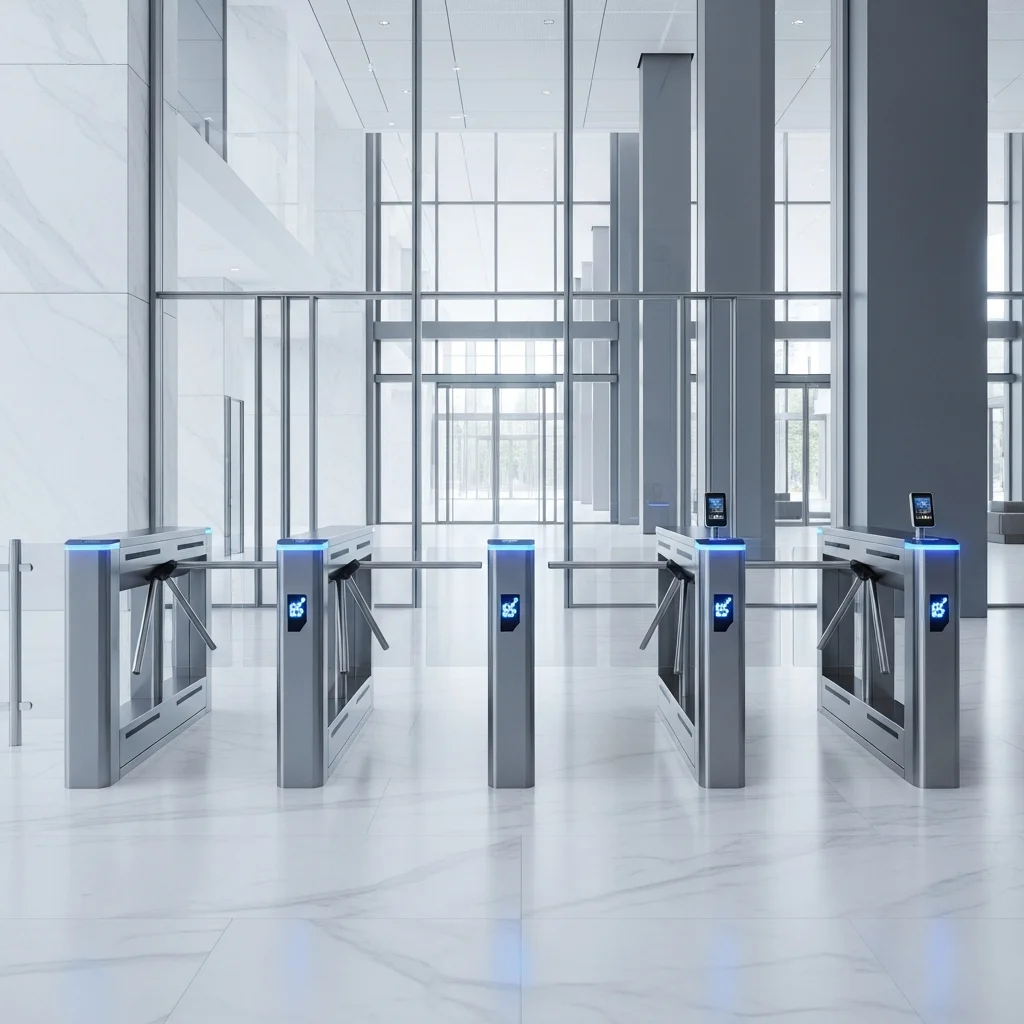
Access control systems today are far more than simple locking systems. They are intelligent, software-controlled security systems that regulate and monitor access to physical or digital spaces. In a company context, they authorise or deny people access based on predefined permission concepts, to ensure the protection of buildings, premises and the people within them. Their primary function is to prevent unauthorised access while enabling authorised people smooth entry. This covers a wide range of technologies, from classic RFID badges through biometric methods such as fingerprint or facial recognition to mobile solutions that use smartphones as access credentials.
A well-planned access control system offers not only greater security but also efficient management and easy traceability of access events. It enables the flexible, real-time adjustment of access rights, which is particularly valuable in dynamic working environments with changing staff or external service providers. Automatic logging of all access events also serves as an important basis for audits and security analyses. Choosing the right authentication method and system architecture (whether an offline, online or hybrid system) depends heavily on the specific requirements and protection needs of the company in question. Sound planning takes account of all these aspects, to create a robust, future-proof solution that effectively protects against theft, sabotage or espionage.
The needs analysis as the foundation of effective planning
The first and decisive step in planning an access control system is a comprehensive needs analysis. This involves establishing in detail the specific security requirements, the areas to be protected, and the necessary access rights for different user groups. A checklist for planning access control should cover questions such as: What is to be secured? Who should be granted access? How should access be granted? What level of security is required? How does the flow of people work? What additional functions are desired?
This analysis forms the basis for selecting suitable access methods and the necessary system capacity. It is essential to involve all relevant stakeholders, from management through the IT department to employee representatives, early in this process. Employee representatives, for example, have a co-determination right under section 87 of the Works Constitution Act with regard to the introduction and use of technical facilities for monitoring employee behaviour or performance. A precise needs analysis helps avoid later surprises in the event of building conversions or extensions, and ensures that the planned system optimally meets the company's current and future requirements. PLANATEL® supports you in this critical phase with over 34 years of experience, to produce an objective, comprehensive as-is survey as well as a precise target concept.
Legal frameworks and standards for access control systems
Planning access control systems must necessarily take account of the complex legal frameworks and relevant standards, to ensure full legal compliance. The General Data Protection Regulation (GDPR) in particular plays a central role, since access systems collect and process personal data. Article 32 of the GDPR obliges companies to take appropriate technical and organisational measures to protect personal data, which also covers access control. This means that only necessary data may be collected, transparency and accountability must be ensured, and automated deletion mechanisms for access logs must be established.
Technical standards are also of great importance. The DIN EN 60839-11 series of standards is decisive here. DIN EN 60839-11-1 (VDE 0830-8-11-1) specifies the minimum requirements for functionality, performance characteristics and test procedures for electronic access control systems and their components. DIN EN 60839-11-2 (VDE 0830-8-11-2) supplements this with application rules for the implementation and secure operation of such systems. ISO/IEC 27001 for information security management systems, and the NIS2 Directive, which imposes new cybersecurity requirements, and thus also requirements on physical access control, from October 2024, are also relevant. Compliance with these requirements is decisive not only for security, it also minimises legal risk and strengthens employee trust. PLANATEL® ensures that your planning takes account of all relevant national and European regulations.

Technology selection and system integration: a manufacturer-independent perspective
Choosing the right technology and integrating it seamlessly into existing infrastructure are decisive for the success of an access control system. The market offers a wide range of solutions, including online, offline and hybrid systems, each with specific advantages and disadvantages. Online systems enable central monitoring and management in real time, while offline systems are simpler to install and maintain but offer limited functionality. Current trends show a strong shift towards cloud-native and mobile-centric solutions, which increase flexibility and scalability.
Another important aspect is integration with other security systems, such as fire alarm systems to DIN 14675 or video surveillance systems. Such networking can significantly improve overall security and increase efficiency. The challenge lies in finding a solution that not only meets current requirements but also readily enables future developments and expansion, without creating unnecessary manufacturer dependency. PLANATEL® places great value on 100% manufacturer-independent, financially independent consulting. We objectively analyse the technologies available on the market and select, together with you, the optimal components that integrate seamlessly into your IT and security landscape. This protects you from unnecessary cost and ensures long-term investment security.
Economy and lifecycle costs of access control systems
Investing in an access control system is a strategic decision that goes far beyond the pure acquisition cost. A holistic view of the lifecycle costs is essential to assess the true economy of a solution. These costs include not only hardware and software but also installation, maintenance, administration, energy consumption and possible expansion over a period of 15 years or more. While initial installation makes up a significant share of the cost, follow-on costs for mechanical locking systems, caused by lost keys or changes to the locking plan, can quickly outweigh the advantages. Electronic solutions often pay for themselves within 3 to 5 years due to lower follow-on costs.
Modern, scalable systems make it easy to integrate new users, doors or buildings without having to replace existing components, saving cost in the long term. Reducing theft, vandalism and unauthorised access, as well as compliance with data protection regulations, also contribute to profitability by avoiding potential economic damage and penalties. Independent planning by PLANATEL® helps you calculate these lifecycle costs transparently and choose a solution that is not only secure but also economical in the long term. We support you in preparing tender documents that enable a clear cost structure and a fair evaluation of bids, to secure the best investment for your company.
The planning process with PLANATEL®: from concept to tender
The planning process for an access control system with PLANATEL® is structured and transparent, to ensure a tailored, future-proof solution. It begins with a detailed as-is survey and needs analysis, in which we precisely capture your specific requirements, risk areas and the desired scope of protection. Building on this, we develop a target concept that defines the optimal system architecture, the choice of technologies, and integration into your existing infrastructure. This phase also takes account of relevant standards and legal requirements, such as the GDPR and DIN EN 60839-11.
This is followed by detailed planning, in which technical specifications, interfaces and installation plans are refined. A central part of our service is the preparation of a manufacturer-neutral tender. We draft specifications of services that enable transparent, comparable bidding and avoid manufacturer dependency. This secures not only fair prices but also the selection of the best technical solution. We accompany you through the entire award and implementation process, support the selection of certified installers, and carry out the acceptance as well as invoice verification. Our goal is to plan an access control system for you that meets the highest security standards, is economical, and integrates seamlessly into your operational processes.
Next Step
Contact us for a no-obligation initial consultation.
PLANATEL®: Independent planning and consulting since 1992
Tel: 040 / 23 73 02-30
Email: info@planatel.de
Frequently Asked Questions
What is meant by a holistic view of lifecycle costs for access control systems?
A holistic view of lifecycle costs goes beyond the pure acquisition cost. It covers all expenditure incurred over the entire service life of an access control system. This includes the cost of hardware, software, installation, commissioning, regular maintenance, energy consumption, licence fees, training, but also the cost of any expansion or adjustment. Such a view helps to realistically assess the long-term economy of an investment and avoid hidden cost traps. Studies show that electronic systems often pay for themselves within a few years through lower follow-on costs.
What role do mobile and cloud-based solutions play in modern access control?
Mobile and cloud-based solutions are becoming increasingly important in modern access control. They enable flexible, location-independent management of access rights via mobile apps or cloud dashboards. This increases flexibility, scalability and usability, since smartphones can serve as digital keys. Cloud-native platforms also make central administration, updates and seamless scaling across multiple locations easier. These technologies are an important trend for the future of access control, as they increase efficiency while maintaining high security standards.
How is the scalability of an access control system taken into account in planning?
This means the architecture is designed so that new doors, locations, users or technologies (e.g. biometrics, mobile access) can be integrated easily and cost-effectively, without having to replace the entire system. A modular design and the use of open standards are decisive for this. PLANATEL® takes these aspects into account from the outset, to develop a future-proof solution that provides long-term investment security and avoids unnecessary manufacturer dependency.
What challenges can arise when planning access control systems, and how are they overcome?
Challenges in planning often include the complexity of system integration into existing IT infrastructure, compliance with constantly changing legal requirements (GDPR, NIS2), selecting the right technologies from a wide range of options, and taking account of economy over the entire lifecycle. These challenges are overcome through a detailed needs analysis, sound knowledge of standards and laws, manufacturer-independent technology assessment, and transparent cost calculation. An independent planner such as PLANATEL® brings the necessary expertise to plan for this complexity and develop optimal solutions.
How does planning access control for critical infrastructure (KRITIS) differ?
For critical infrastructure (KRITIS), particularly high requirements apply to access control systems, going beyond general standards. Operators are legally obliged to take appropriate technical and organisational measures to protect their systems. This includes the highest demands on reliability, tamper resistance, seamless logging, and deep integration with IT security. Legal requirements from the IT Security Act 2.0 and the BSI-KritisV define a minimum level. Planning here must address redundancy, fail-safety and special protection needs in even greater detail.
Which standards are relevant for planning access control systems?
For planning access control systems, the DIN EN 60839-11 series of standards (in particular Parts 1 and 2) is primarily relevant, setting requirements for systems, components and application rules. In addition, ISO/IEC 27001 for information security management systems and the NIS2 Directive must be observed.
How does the GDPR influence the planning of access control?
The GDPR has a significant influence, since access control systems process personal data. Article 32 GDPR requires appropriate technical and organisational measures to protect this data. This requires data minimisation, transparency, accountability, and automated deletion mechanisms for access logs.
Why is manufacturer-independent planning of access control systems important?
Manufacturer-independent planning is decisive for ensuring an objective selection of the best technologies and avoiding unnecessary manufacturer dependency. It enables tailored solutions that integrate optimally into existing infrastructure and secure long-term flexibility as well as cost efficiency.
What advantages does commissioning an external planning office for access control offer?
An external planning office such as PLANATEL® offers independent expertise, comprehensive market knowledge, and over 34 years of experience. It ensures an objective needs analysis, legally compliant planning to current standards, and a manufacturer-neutral tender, leading to an optimised, economical, future-proof solution.
Sources and further information
- rs-muenchen.de
- gfos.com
- cr-gmbh.eu
- assaabloy.de
- lohrer.de