

Access Management & Intrusion Detection14 min read
Access Control System Provider Comparison: Criteria for Your Choice
Choosing the right access control system is a strategic decision that goes far beyond the purchase price alone. Companies face the challenge of finding, among a multitude of providers and technologies, the solution that optimally matches their specific security requirements and long-term goals. A well-founded provider comparison is essential to avoid wrong decisions and high follow-on costs.
A well-founded access control system provider comparison requires the evaluation of technological approaches, scalability, security standards, legal compliance and the total cost of ownership. Independent planning and consulting are decisive for making a manufacturer-independent choice that is optimally tailored to a company's individual needs and offers long-term investment security.
Independent planning for future-proof access control systems
Choosing the right access control system is a strategic decision that goes far beyond the purchase price alone. Companies face the challenge of finding, among a multitude of providers and technologies, the solution that optimally matches their specific security requirements and long-term goals. A well-founded provider comparison is essential to avoid wrong decisions and high follow-on costs.
Key Takeaways
- A comprehensive provider comparison for access control systems must take into account technological aspects, legal compliance (in particular GDPR), scalability and integration capability.
- Considering the total cost of ownership (TCO) is decisive for capturing all direct and indirect costs across the entire lifecycle of the system and finding the most economical solution.
- Independent planning and consulting, such as that offered by PLANATEL®, secures a manufacturer-independent choice, avoids manufacturer dependency, and ensures a future-proof, legally compliant investment.
Access control systems protect not only physical assets and sensitive data, but also the safety of employees and visitors. The market size for access control systems exceeded USD 12.8 billion in 2025 and is expected to reach revenue of over USD 28.41 billion by 2035, driven by technological advances in biometric systems. Given this dynamism and the diversity of available solutions, a systematic provider comparison is complex. The goal is to find a system that not only meets current security requirements, but is also future-proof, legally compliant and economical. PLANATEL® has supported you as an independent partner in this critical decision since 1992.

Fundamentals and importance of modern access control systems
Access control systems are software-controlled security systems that regulate and monitor physical access to buildings, rooms or specific areas. Their importance extends far beyond simply preventing unauthorised entry. Modern systems enable precise control over who is granted access, when and where, and log every access event without gaps. This is decisive for traceability and for meeting evidentiary obligations. Implementing a robust access control system protects not only against theft and vandalism, but also against industrial espionage and unauthorised access to sensitive company data, which is often stored in server rooms or offices holding confidential information. An effective system contributes significantly to maintaining operations and minimising risk.
Technological development has considerably expanded the possibilities of access control systems. While mechanical locking systems used to dominate, companies today rely on electronic and biometric solutions that enable flexible rights assignment and real-time monitoring. These systems can be integrated into overarching security management systems to create a comprehensive security concept. Choosing the right system is an investment in a company's long-term security and efficiency. A careful needs assessment is the first step in determining the specific protection objectives and the required system capacity. Only in this way can it be ensured that the chosen solution meets individual requirements and delivers optimal protective effect.
Challenges in comparing access control system providers
The market for access control systems is diverse and dynamic, which makes the provider comparison a complex task. One of the greatest challenges lies in the heterogeneity of the technologies and system architectures on offer. From purely offline systems to highly networked cloud solutions, there are numerous options, each bringing specific advantages and disadvantages. The decision for a particular technology has far-reaching effects on scalability, maintainability and the ability to integrate into existing IT and security infrastructures.
Another critical issue is potential manufacturer dependency. Without independent consulting, companies risk tying themselves to a provider whose proprietary solutions can make future expansions or a switch to other systems more difficult. This can lead to unexpectedly high costs and a lack of flexibility. In addition, the various security standards and certifications of providers must be carefully examined to ensure compliance with relevant standards such as DIN EN 60839-11-1 or VdS guidelines. The complexity of the technical and legal requirements calls for in-depth expertise that many companies do not fully possess in-house. Independent expertise is therefore decisive for objectively evaluating offers and making a well-founded decision that serves the company's long-term interests.
Technological approaches and system architectures at a glance
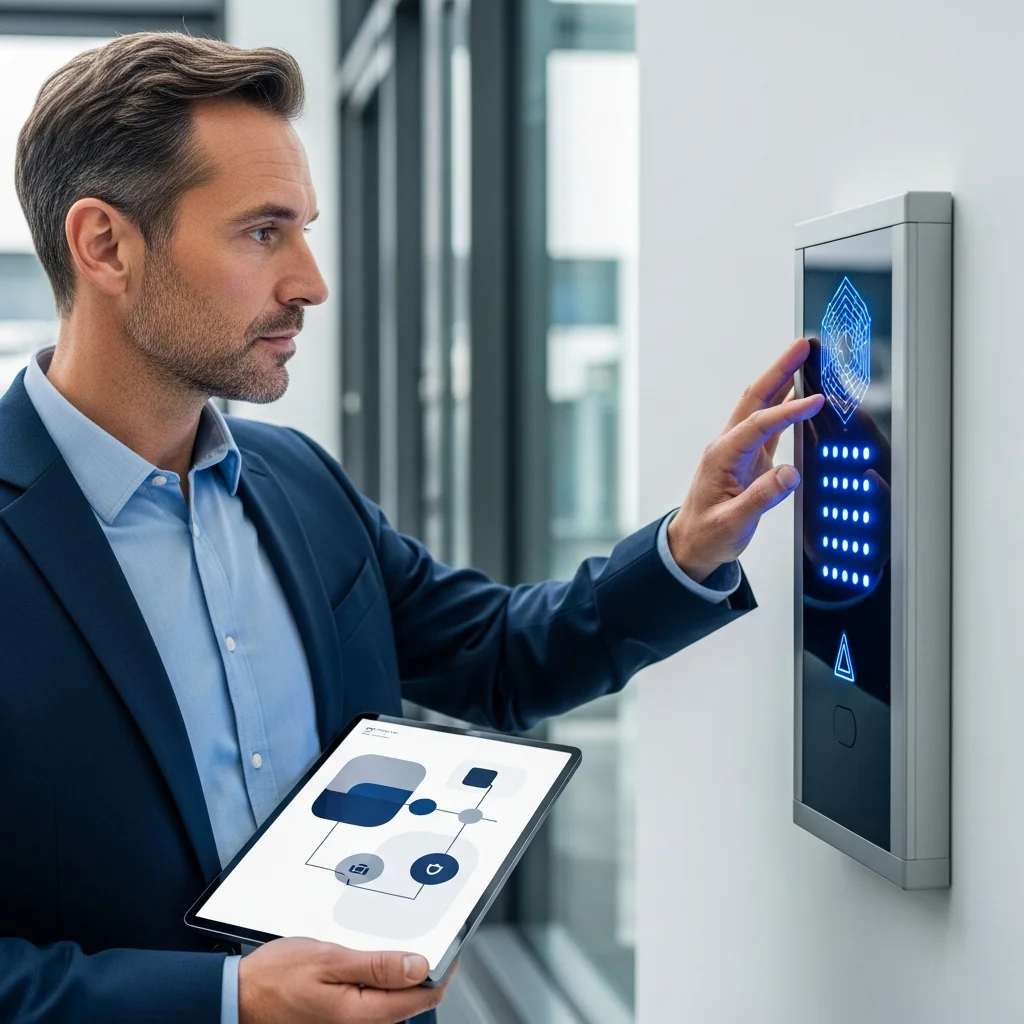
Modern access control systems are based on various technological approaches, each offering different security levels and functionalities. The most common identification methods include RFID technologies (e.g. LEGIC® advant or MIFARE® DESFire), biometric features such as fingerprint, iris or facial recognition, and mobile solutions via smartphone (NFC, Bluetooth or QR code). Biometric systems offer a high level of security, since they are based on unique features that are difficult to forge, and the global market for fingerprint access control systems was worth USD 3.04 billion in 2025 and is expected to grow to USD 7.35 billion by 2035.
In terms of system architecture, a primary distinction is drawn between online, offline and hybrid systems. Online systems are connected to a network and enable central monitoring, management and logging in real time. They offer maximum flexibility in assigning rights and are ideal for large, complex environments. Offline systems, by contrast, function independently and without a direct network connection. They are simpler and cheaper to install, but offer limited functions and require manual updates of authorisations. Hybrid systems combine the advantages of both approaches. A further trend is the growing spread of cloud-based access control solutions (ACaaS, Access Control as a Service), which promise high scalability and lower infrastructure costs. In 2025, on-premise networked systems still held a share of 51.22% of the European market, while cloud platforms show the highest forecast CAGR of 8.55% through 2031. The choice of the right architecture depends heavily on the specific requirements for security, administration and budget.
Decisive criteria for choosing the right provider
Choosing a provider for access control systems requires a systematic evaluation of various criteria, to ensure a solution that remains viable in the long term. First, the functionality and scalability of the system is decisive. It must meet current requirements while also leaving room for future growth and changing needs. A modular architecture that allows extensions and adjustments without a complete new investment is advantageous here. Second, the security of the solution plays a central role. This encompasses not only physical protection, but also the data security of the personal data collected. Encryption, tamper protection and compliance with recognised security standards are essential here.
Third, integration capability with existing systems, such as time recording, building management or fire alarm systems, is an important criterion. Open interfaces and support for common protocols facilitate seamless integration and avoid isolated solutions. Fourth, the provider's maintainability and support are important. Reliable service, fast response times, and the availability of spare parts or software updates are decisive for smooth operation. Fifth, the future-proofing of the technology and the provider should be assessed. Investment in research and development, support for new identification media (e.g. mobile credentials), and a clear product roadmap are indicators of a future-proof partnership. PLANATEL®'s manufacturer-independent consulting places great emphasis on these aspects, to find the optimal, sustainable solution for its clients.
Legal compliance and standards for access control systems
The legally compliant design of access control systems is of the highest importance, particularly with regard to data protection. The General Data Protection Regulation (GDPR) places strict requirements on the processing of personal data collected by access control systems, such as names, times and access histories. Companies must ensure that only necessary data is collected (data minimisation), that processing is transparent and traceable, and that automated deletion mechanisms are in place for access logs. Standard access logs, for example, should be stored for only 30 to 90 days and then automatically deleted, while for high-security areas, storage of up to six months may be permissible in exceptional cases.
In addition to GDPR, technical standards and guidelines must be observed. The European standard DIN EN 60839-11-1 sets out the minimum requirements for functionality, performance characteristics and test procedures for electronic access control systems and their components. It defines various security grades and the associated system functionalities. In addition, the VdS guidelines, such as VdS 2344, offer procedures for the testing, recognition and certification of products and systems in security technology. Although these guidelines are not always a statutory requirement, they are often demanded by insurers, or for projects with high security requirements. Careful planning must take compliance with all these requirements into account, to minimise legal risk and ensure acceptance of the system. PLANATEL® provides comprehensive advice on these complex requirements and ensures that the planned systems comply with all relevant standards.
The role of independent planning in evaluating providers
The complexity of an access control system provider comparison requires expertise that goes beyond mere product knowledge. This is where independent planning and consulting comes in, as offered by PLANATEL® for over 34 years. As a manufacturer-independent and financially independent consulting firm, we pursue solely the interests of our clients. This is a decisive advantage, since we are not tied to particular products or providers and can therefore objectively determine the best solution for individual needs.
Our role begins with a detailed as-is analysis and needs assessment, in which we closely examine the company's specific protection objectives, organisational processes and existing infrastructure. Based on this, we develop a target concept that takes into account all technical, economic and legally compliant aspects. As part of the provider comparison, we evaluate the potential systems against objective criteria, prepare detailed tender documentation, and accompany the entire award process. We identify potential manufacturer dependencies and show ways to avoid them. Through our many years of experience and deep expertise, we ensure that the chosen access control system is not only technically mature, but also fits optimally into the company's overall strategy and can be operated economically in the long term. Our clients benefit from a transparent decision-making process and the assurance of making a future-proof investment.
Cost considerations and total cost of ownership (TCO)
When evaluating access control systems, it is decisive to look beyond the pure purchase price and consider the total cost of ownership (TCO). The TCO encompasses all direct and indirect costs that arise over a system's entire lifecycle, from acquisition to decommissioning. A TCO analysis helps companies understand the true costs of an investment and make well-founded decisions that are economical in the long term.
Direct costs include, alongside the purchase price of hardware and software, installation costs, licence fees, and the costs of initial configuration. Indirect costs include, for example, staff training, ongoing maintenance and support contracts, energy costs for operation, costs for software updates and upgrades, and potential costs arising from downtime or security incidents. The costs of managing identification media (e.g. cards or transponders) and replacing them in the event of loss or damage must also be taken into account. A comprehensive TCO consideration can show that a system with a higher purchase price may, due to lower operating costs or a longer service life, be the more economical choice over the total period. PLANATEL® supports clients in carrying out a detailed TCO analysis, to make all relevant cost factors transparent and identify the most economical solution. According to the Institute for Supply Management, companies that focus on lifecycle costs can achieve TCO reductions of up to 25%.
Implementation and project management for access control systems
The successful implementation of an access control system requires structured project management that accompanies every phase, from planning to commissioning and beyond. After selecting the suitable provider and system, detailed planning begins, covering technical specifications, integration into existing infrastructure, and the setting of timelines. Precise planning is decisive to avoid delays and unexpected costs. This also involves defining the interfaces to other systems such as time recording, video surveillance, or building management systems, and making the necessary adjustments.
During the implementation phase, close coordination between the company, the system integrator and the selected provider is essential. Regular status meetings, risk management and transparent communication are key factors for project success. After installation, extensive functional tests and acceptance of the system take place, to ensure that all agreed performance characteristics are met and that the system operates in a legally compliant manner. Training end users and administrative staff is also an important component, to ensure smooth operation. PLANATEL®, as an experienced partner, takes on the entire project management, relieves clients' internal resources, and ensures that implementation is efficient, on schedule and within budget. We accompany our clients through to successful commissioning and beyond, to secure the long-term success of the investment.

Next step
Contact us for a no-obligation initial consultation.
PLANATEL®: Independent planning and consulting since 1992
Tel: 040 / 23 73 02-30
Email: info@planatel.de
Frequently asked questions
What is meant by scalability in access control systems, and why does it matter?
Scalability in access control systems means the system's ability to grow alongside a company's increasing requirements and changes, without requiring a complete new investment. This includes easily adding further doors, users or locations, as well as integrating new technologies. High scalability secures the investment in the long term and enables companies to respond flexibly to future developments, which is particularly important in dynamic business environments.
What is the significance of open interfaces in access control systems?
Open interfaces are highly significant in access control systems, since they enable seamless integration into existing IT infrastructures and other security systems (e.g. time recording, video surveillance, building management). They reduce the complexity of the system landscape, avoid isolated solutions, and promote interoperability between different components and manufacturers. This increases flexibility, lowers integration costs, and minimises the risk of manufacturer dependency, which is essential for a future-proof solution.
How can PLANATEL® help avoid manufacturer dependency?
PLANATEL® supports clients through strictly manufacturer-independent, financially independent consulting. We analyse the market objectively, evaluate products and solutions without ties to specific providers, and develop concepts based on open standards. Through detailed tenders and the evaluation of alternatives, we ensure that the chosen solution is not tied to proprietary technologies, and that future expansions or system changes are possible without high hurdles. This is how we secure our clients' long-term flexibility.
Which VdS guidelines are relevant for access control systems?
For access control systems, the VdS guidelines 2344 "Procedures for the testing, recognition and certification of products and systems in fire alarm and security technology" and VdS 2358 "Access control systems" are particularly relevant. These guidelines define test methods and requirements for the systems, to ensure a high level of security. Although not always a statutory requirement, VdS certification is often a mark of quality and is demanded by insurers or for projects with heightened security requirements.
What advantages do mobile access solutions via smartphone offer?
Mobile access solutions via smartphone offer a range of advantages, including increased user-friendliness and flexibility. Employees can use their smartphones as an identification medium, which reduces the loss of physical cards and simplifies administration. These solutions often enable the quick, simple granting or revoking of access authorisations via central software. They are also often more cost-efficient in issuing and managing credentials and can communicate securely via technologies such as NFC or Bluetooth.
Which identification media are used in modern access control systems?
Modern access control systems use a variety of identification media. These include RFID transponders (e.g. chip cards), biometric features such as fingerprint, iris or facial recognition, and mobile solutions via smartphone using NFC, Bluetooth or QR codes. Combining several factors (e.g. card and PIN) is also common, to increase security.
What is the difference between online and offline access control systems?
Online access control systems are permanently connected to a central network, enabling real-time monitoring, central administration and flexible rights assignment. Offline systems function autonomously, storing authorisations directly at the reader, and are simpler to install but offer limited administrative functions. Hybrid systems combine both approaches.
What role does the GDPR play in the planning of access control systems?
The GDPR is of central importance in the planning of access control systems, since these systems collect personal data such as access times and movement profiles. Principles such as data minimisation, transparency, and the establishment of automatic deletion mechanisms for logs must be observed. Storage of standard access logs should not exceed 30-90 days.
Why is independent consulting important when choosing an access control system?
Independent consulting is decisive for ensuring a manufacturer-independent, objective choice. Consultants such as PLANATEL® are not tied to specific providers and can therefore identify the optimal solution that matches the company's individual requirements, budget and long-term goals, without creating manufacturer dependency.
Sources and further information
- researchnester.com
- assaabloy.de
- rs-muenchen.de
- gfos.com