


Access Management & Intrusion Detection14 min read
EMA Modernization Planning: Strategies for Future-Proof Intrusion Detection Systems
Outdated intrusion detection systems pose a significant security risk and often no longer meet current requirements. Strategic EMA modernization planning is essential to protect your company effectively while optimising costs. Find out how independent planning paves the way to a future-proof system.
EMA modernization planning comprises the systematic analysis of existing intrusion detection systems, the definition of new protection objectives, and the design of a future-proof system. This includes taking account of current standards such as DIN VDE 0833-3 and VdS 2311, integrating new technologies, and a detailed cost-benefit analysis to ensure a legally compliant, effective and economical solution.
Comprehensive planning for legally compliant and effective security systems
Outdated intrusion detection systems pose a significant security risk and often no longer meet current requirements. Strategic EMA modernization planning is essential to protect your company effectively while optimising costs. Find out how independent planning paves the way to a future-proof system.
Key Takeaways
- Strategic EMA modernization is essential for protecting your company due to technological obsolescence, new threats and changing legal requirements.
- Planning must take account of current standards such as DIN VDE 0833-3 and VdS 2311 to ensure legal compliance and full insurance cover.
- Independent planning, as offered by PLANATEL® since 1992, ensures an objective selection of the best technologies, avoids manufacturer dependencies and optimises the cost-effectiveness of your investment.
Intrusion detection systems (EMA) are an integral part of a comprehensive security concept. However, many companies still operate older EMA systems that no longer meet current requirements for security, functionality and legal compliance. Sound EMA modernization planning is therefore essential. It protects not only assets and data but also people and your company's reputation. Without a strategic approach, you risk not only security gaps but also unnecessary costs and potential legal consequences. Modernising an EMA is a complex task that goes far beyond simply replacing components and requires in-depth expertise.
The need for EMA modernization planning: why act now?
The decision to modernise an intrusion detection system is often a response to several critical factors that impair the effectiveness and reliability of existing systems. One of the main reasons is technological obsolescence. Older EMA systems are frequently based on outdated technologies for which spare parts and qualified maintenance personnel are increasingly hard to find. This leads not only to longer downtimes in the event of a fault but also to significant maintenance costs. Another decisive factor is changing threat scenarios. Modern burglary methods are more sophisticated and require smarter detection and response mechanisms that older systems often cannot provide. Integration into superordinate security management systems or smart-building solutions is usually only possible to a limited extent, or not at all, with legacy systems, which reduces the overall efficiency of the security concept.
In addition, legal and insurance-related requirements play an increasingly important role. Standards such as DIN VDE 0833-3 and VdS 2311 are regularly updated and tightened. A system that has not been modernised can result in the loss of insurance cover or an increase in premiums. In the worst case, this can lead to significant financial losses in the event of a burglary that are not covered by insurance. A proactive approach to EMA modernization planning enables companies to minimise these risks while benefiting from the advantages of modern systems, such as improved detection, reduced false-alarm rates and more efficient management. An EMA has a limited service life, and forward-looking planning is crucial for ensuring the long-term protection of property and assets.
The legally compliant framework: DIN VDE 0833-3 and VdS 2311 as the foundation
The legally compliant planning and operation of intrusion detection systems is of central importance, both to ensure the protection of assets and people and to meet legal and insurance-related requirements. The definitive regulations in Germany here are the DIN VDE 0833 series of standards, in particular DIN VDE 0833-3 for intrusion and hold-up alarm systems, as well as the VdS 2311 guidelines. DIN VDE 0833-3 sets out technical requirements for the planning, structure, operation and servicing of EMA and, in its current 2020 version, is a binding guide. Among other things, it defines the classification of intrusion detection systems into different security grades (A, B, C), depending on the protection needs and potential risks of a property. This classification significantly influences the selection of components, cabling and transmission paths.
The VdS 2311 guidelines supplement DIN VDE 0833-3 and provide detailed insurance-related and practical specifications for secure intrusion and hold-up protection systems. In practice, insurance companies frequently require that security-critical properties be equipped with an EMA certified to VdS 2311 in order to guarantee full insurance cover. A modernisation must take these guidelines fully into account in order to ensure recognition by insurers and authorities. This covers aspects such as detection-line monitoring, tamper protection, power supply and alarm transmission. Careful planning that integrates these standards and guidelines from the outset avoids later rework, ensures the system's functionality in an emergency, and secures the operator's legal compliance. PLANATEL® supports you in navigating these complex requirements in your EMA modernization planning.
The strategic planning process: from as-is analysis to target concept
Successful EMA modernisation begins with a structured, strategic planning process. The first step is a comprehensive as-is analysis of the existing intrusion detection system and the current security infrastructure. This evaluates not only the technical components and their condition but also existing weaknesses, the efficiency of alarm processing, and compliance with current standards and guidelines. In parallel, a detailed risk and threat analysis is carried out, identifying specific hazards for the property and precisely defining protection needs. This includes assessing burglary risks, vandalism, sabotage and other potential threats arising from the nature of the property, its location and the assets to be protected.
Building on these findings, a needs analysis is carried out, setting out the concrete requirements for the new or modernised EMA system. Here, the protection objectives are clearly formulated, for example, the detection of intruders at the perimeter, indoors, or the monitoring of specific value areas. Integration with other systems such as access control, video surveillance or building management technology is also considered at this stage. The result of these analyses is a target concept that describes in detail the technical and organisational design of the future EMA. This includes the selection of suitable detectors, the definition of monitoring areas, the specification of alerting paths, and the interfaces to other systems. A well-thought-out target concept is the basis for an efficient tender and smooth implementation that meets the company's specific requirements while remaining future-proof.
Technological innovations in intrusion detection systems: opportunities for greater security
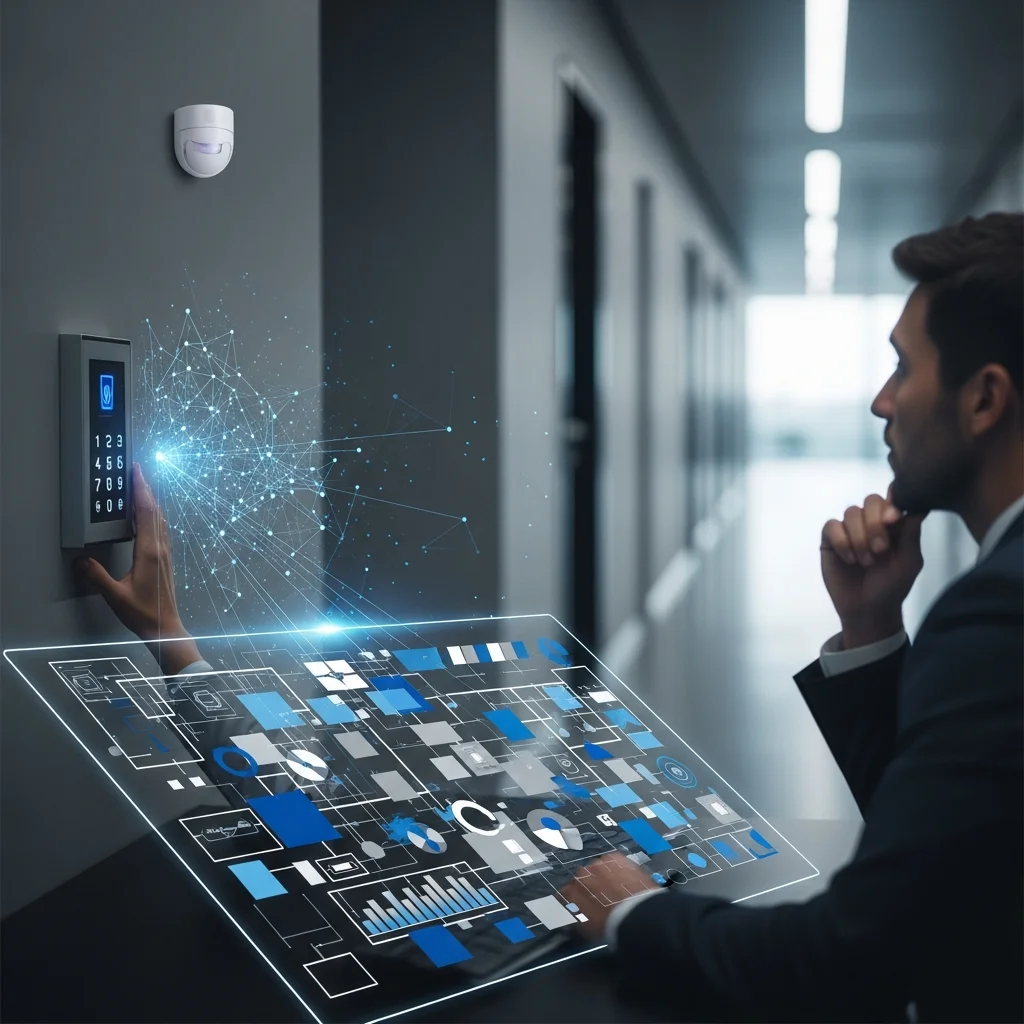
The rapid development of security technology today offers a wide range of opportunities to make intrusion detection systems not only more effective but also smarter and more user-friendly. A key innovation is the shift from analogue to IP-based systems. These enable flexible networking, remote access and easier integration into existing IT infrastructures. Alarm messages and status information are transmitted over secure networks, which shortens response times and increases reliability. Another trend is the integration of artificial intelligence (AI) and machine learning into detection technology. Modern sensors and cameras can use AI algorithms to distinguish between relevant events and harmless disturbances, which drastically reduces the number of false alarms and increases the efficiency of security personnel. For example, intelligent video analysis systems can detect suspicious behaviour patterns before an actual burglary attempt takes place.
The convergence of security systems is also a decisive advance. Modern EMA can be seamlessly connected with video surveillance systems, access control systems and even fire alarm systems to form a holistic security management system. These integrated solutions enable central control and monitoring, improve coordination in the event of an alarm, and offer a more comprehensive overview of the security situation. Cloud-based solutions for data management and storage are also gaining importance, and here the highest requirements for data protection and data security must be applied. EMA modernization planning offers the opportunity to make optimal use of these technological potentials and implement a system that meets not only current but also future security requirements.
Challenges and pitfalls in EMA modernisation
Despite the obvious benefits, modernising an intrusion detection system also involves a number of challenges and potential pitfalls that make careful planning essential. One of the biggest hurdles is manufacturer dependency. Many older systems are proprietary, meaning that spare parts, software updates and expansions can only be obtained from a single manufacturer or its certified partners. This can lead to high costs, restricted flexibility and a dependency that hinders competition in procuring new components or services. Independent planning aims to minimise these dependencies and favours open, standardised interfaces.
Another critical point is the complexity of system integration. Particularly in larger properties, EMA are often linked with other systems such as fire alarm systems, access control or building management technology. A modernisation must ensure that these interfaces continue to function smoothly or are redefined and implemented without disrupting ongoing operations. Data migration and configuration of old settings for new systems can also be time-consuming and requires specialised knowledge. Operational interruptions during the changeover should also not be underestimated. Detailed scheduling and an intelligent migration concept are needed to minimise downtime and ensure security during the transition period. Without experienced and independent support, these challenges can quickly lead to cost overruns, delays and a suboptimal security solution.
Cost-effectiveness and investment protection: a cost-benefit analysis
The decision to modernise an EMA is always also an economic one. A sound cost-benefit analysis is therefore an indispensable part of planning, in order to evaluate long-term cost-effectiveness and investment protection. This considers not only the direct acquisition and installation costs of the new system but also the operating costs, maintenance costs and potential savings incurred over the entire lifecycle. An important metric here is the total cost of ownership (TCO), which takes account of all costs over the system's period of use. Modern EMA systems can deliver significant operating-cost savings through improved energy efficiency, reduced maintenance intervals and lower false-alarm rates.
However, the benefit of a modernised EMA goes beyond purely monetary aspects. It includes improved protection of assets, the avoidance of production losses due to burglary or vandalism, and the protection of sensitive data. The optimisation of insurance terms through compliance with current standards and VdS guidelines can also lead to direct financial advantages. The intangible benefits should also not be underestimated, such as an increased sense of security for employees and customers and the strengthening of the company's reputation. A careful cost-benefit analysis that takes account of both quantitative and qualitative factors enables decision-makers to make a well-founded investment decision and recognise the long-term added value of EMA modernisation. PLANATEL® supports you in preparing these analyses, to create a transparent and comprehensible basis for decision-making.
The importance of independent planning: your advantage with PLANATEL®
The complexity of EMA modernisation requires expertise that goes beyond pure product knowledge. This is where independent planning plays a decisive role. As a manufacturer-independent and financially independent planning and consulting company, PLANATEL® has offered exactly this expertise since 1992. Our independence means that we receive no commissions from manufacturers and therefore act exclusively in our clients' interests. This guarantees an objective selection of the best technical solutions, optimally tailored to your specific requirements, without being influenced by manufacturer interests. We evaluate products and systems on the basis of their technical performance, their future viability and their cost-effectiveness, not on the basis of sales relationships.
Our more than 34 years of experience in planning security systems, including intrusion detection systems, enables us to successfully manage even the most complex projects. We accompany you through the entire process: from the detailed as-is and needs analysis through the preparation of a legally compliant target concept in accordance with DIN VDE 0833-3 and VdS 2311, to tendering, award and support during implementation. Our goal is to create a solution that is not only technically flawless and legally compliant but also economically viable and flexibly expandable in the long term. Through our independent positioning, we avoid manufacturer dependencies and ensure that you retain control over your security infrastructure. With PLANATEL®, you gain a partner who represents your interests and delivers optimal EMA modernization planning.
Next Step
Contact us for a no-obligation initial consultation.
PLANATEL®: Independent planning and consulting since 1992
Tel: 040 / 23 73 02-30
E-Mail: info@planatel.de
Frequently Asked Questions
Why is a detailed as-is analysis so important before EMA modernisation?
A detailed as-is analysis is the cornerstone of any successful EMA modernization planning. It makes it possible to record the exact condition of the existing system, identify weaknesses, and assess compliance with current standards. Without this comprehensive as-is survey, there is a risk that new systems cannot be optimally integrated or that existing problems remain unresolved. The analysis also reveals which components are still usable and where urgent action is needed, enabling cost-efficient planning. It forms the basis for a realistic needs analysis and a tailored target concept.
How can EMA modernisation help reduce operating costs?
EMA modernisation can help reduce operating costs in several ways. Modern systems are often more energy-efficient, lowering electricity consumption. The use of intelligent detection technologies and improved algorithms can significantly reduce false alarms, which in turn saves on the costs of unnecessary call-outs by security services or the police. New systems are also generally easier to maintain and have longer spare-parts lifecycles, reducing maintenance costs. Integration into central management systems also optimises administration and monitoring, which can reduce staffing requirements.
What role does integration with other security systems play in EMA modernisation?
Integration with other security systems such as video surveillance, access control or fire alarm systems is a decisive factor in EMA modernisation. It enables a holistic security concept in which all systems work together in a coordinated way. In the event of an alarm, for example, video images can be automatically displayed or doors locked. This improves responsiveness, increases the efficiency of security personnel, and provides a more comprehensive overview of the security situation. Well-planned integration avoids isolated solutions and creates a powerful, centrally manageable security management system that maximises the protection of the property.
What are the biggest risks of inadequately planned EMA modernisation?
Inadequately planned EMA modernisation carries significant risks. These include security gaps due to faulty integration or insufficient coverage, leaving the property vulnerable. Significant cost overruns and delays can arise if the scope or complexity of the project is underestimated. There is also a risk of losing insurance cover if the modernised system does not meet current standards (e.g. DIN VDE 0833-3, VdS 2311). Increased manufacturer dependency can lead to higher operating costs in the long term. In the worst case, poor planning can jeopardise operational security and damage the company's reputation.
How does PLANATEL® support companies with EMA modernization planning?
PLANATEL® provides comprehensive support to companies with EMA modernization planning through manufacturer-independent, financially independent consulting. We start with a detailed as-is and needs analysis, develop a tailored target concept that takes account of all relevant standards such as DIN VDE 0833-3 and VdS 2311, and prepare a sound cost-benefit analysis. We accompany the entire process from tendering and award through implementation support to acceptance. Our goal is to ensure an optimal, future-proof and economical solution that is precisely tailored to the client's needs and avoids manufacturer dependencies.
Which standards are relevant for planning an intrusion detection system?
For planning an intrusion detection system (EMA), the DIN VDE 0833 series of standards, in particular DIN VDE 0833-3 for intrusion and hold-up alarm systems, and the VdS 2311 guidelines are primarily relevant. These regulations define technical requirements for planning, structure, operation and servicing, in order to ensure functionality and legal compliance.
What does manufacturer independence mean in EMA modernisation?
Manufacturer independence means that the planner or consultant has no financial or contractual ties to particular manufacturers of intrusion detection systems. This ensures an objective selection of the best technical solutions, optimally tailored to the client's specific needs, without being influenced by manufacturer interests. It fosters competition and avoids manufacturer dependency.
How often should an intrusion detection system be modernised?
The need for modernisation depends on various factors, including the age of the system, technological development, changing threat scenarios and updated standards. There is no fixed timeframe, but as a rule, a review and, where appropriate, modernisation should be considered every 10 to 15 years to maintain effectiveness and legal compliance.
What advantages do IP-based intrusion detection systems offer?
IP-based intrusion detection systems offer a range of advantages, including flexible networking options, remote access, and easier integration into existing IT infrastructures. They enable faster transmission of alarm messages, reduce false alarms through intelligent detection, and facilitate central control and monitoring as part of a holistic security management system.
Sources and further information
- uds-beratung.de
- artystasecurity.berlin
- fm-connect.com
- rohr-elektrotechnik.de