


Fire Alarm Systems15 min read
Independent Fire Alarm System Planning: Your Path to Safety and Efficiency
Planning a fire alarm system is a complex task that goes far beyond mere compliance with statutory requirements. Independent planning not only secures legally compliant execution but also optimises cost and operation across the entire lifecycle.
Independent planning of fire alarm systems (BMA) ensures an objective selection of the optimal system components and architecture, free from manufacturer interests. This leads to tailored, legally compliant and cost-efficient solutions that maximise the protection of people and assets and minimise long-term operating costs.
How neutral expertise masters the complexity of fire alarm systems
Planning a fire alarm system is a complex task that goes far beyond mere compliance with statutory requirements. Independent planning not only secures legally compliant execution but also optimises cost and operation across the entire lifecycle.
Key Takeaways
- Independent planning of fire alarm systems (BMA) is essential to avoid manufacturer dependency and ensure an objective, tailored solution.
- Strict compliance with standards such as DIN 14675, VdS 2095, EN 54 and DIN VDE 0833 is essential for the legal compliance and functional safety of the BMA.
- Neutral planning leads to substantial cost optimisation across the entire lifecycle of the system and minimises long-term risks.
It is not just about complying with regulations, but about protecting human life, securing assets, and maintaining operational capability. The complexity of modern fire alarm systems, combined with a jungle of standards and guidelines, requires expertise that goes beyond pure product knowledge. This is where independent planning comes in: it guarantees that the chosen solution is optimally tailored to specific needs, without being influenced by manufacturer interests. PLANATEL® has guided you on this path for over 34 years.

The fundamental importance of fire alarm systems in modern infrastructure
Fire alarm systems are far more than technical devices for fire detection; they are an integral part of the security architecture of any modern property, whether an office building, a production facility or a public institution. Their main task is to detect and locate fires early and trigger the appropriate alarms, enabling rapid evacuation and the initiation of extinguishing measures. Early detection can mean the difference between a minor incident and a disaster that not only causes significant material damage but also endangers human life and brings business operations to a standstill. According to GDV statistics for 2024, fire damage in Germany amounted to around EUR 3.5 billion, with a significant share attributable to commercial and industrial properties.
Beyond pure detection, fire alarm systems are often integrated into complex security management systems. They control smoke and heat extraction systems, close fire compartmentation, open escape doors and initiate evacuation measures. The correct functioning of these networked systems is crucial for overall safety. Faulty planning or execution can have serious consequences that go far beyond the cost of rectification. It is about business continuity, the protection of investments, and ultimately responsibility towards employees and users. Forward-looking, independent planning takes all these aspects into account, to create a robust, reliable solution that meets the specific risks and requirements of the property in question.
Why independent planning of fire alarm systems is decisive
The decision to install a fire alarm system is a long-term investment with far-reaching consequences. One of the most critical decisions is the choice of planning partner. Independent planning, as PLANATEL® has offered since 1992, is invaluable here. The main reason lies in manufacturer independence and financial independence. While installers or system integrators are often tied to particular manufacturers and may receive commissions for selling specific products, an independent planner acts exclusively in the client's interest. This eliminates potential conflicts of interest and ensures that the proposed solution is objectively the best for the given requirement.
The benefits of this independence are manifold: it starts with the selection of the optimal components, which are not only technically convincing but also represent the best choice in terms of value for money. This leads to significant cost optimisation across the entire lifecycle of the system, as expensive, proprietary solutions are avoided in favour of open, future-proof systems. Independent planning also enables a tailored solution that is precisely matched to the specific circumstances and risk profile of the property. There is no "one-size-fits-all" solution for fire alarm systems; every property has unique requirements that call for individual analysis and design. An independent planner brings the necessary expertise to recognise these nuances and translate them into effective planning that takes all relevant standards and guidelines into account.
Legal compliance and standards: the foundation of every fire alarm system
Planning and installing fire alarm systems in Germany, Austria and Switzerland is governed by a complex web of laws, regulations and technical standards. Compliance with these requirements is not only a legal necessity but also the basis for the system's functionality and reliability. Central standards and guidelines include DIN 14675, VdS 2095, the European EN 54 series and DIN VDE 0833. DIN 14675 governs the structure and operation of fire alarm systems and sets out the requirements for specialist firms that plan, engineer, install, commission, service and maintain these systems. It is the definitive standard for planning fire alarm systems in Germany.
VdS 2095, issued by VdS Schadenverhütung GmbH, gives concrete substance to the requirements for fire alarm systems and serves as an important guideline for planning, engineering and installation. It often goes beyond the minimum requirements of the DIN standards and is frequently used by insurers as the basis for recognising fire alarm systems. The EN 54 series, in turn, sets out the requirements for the individual components of fire alarm systems, such as fire detectors, fire alarm control panels and alarm devices, to ensure their interoperability and reliability. DIN VDE 0833 is a general standard for hazard warning systems that also covers fire alarm systems and addresses planning, installation, operation and servicing. Correctly applying these standards requires in-depth expertise and continuous further training. An independent planner ensures that your fire alarm system not only meets current statutory requirements but is also future-proof and audit-proof, which is of decisive importance during audits and in the event of a claim.
The structured planning process for a fire alarm system: steps and common mistakes
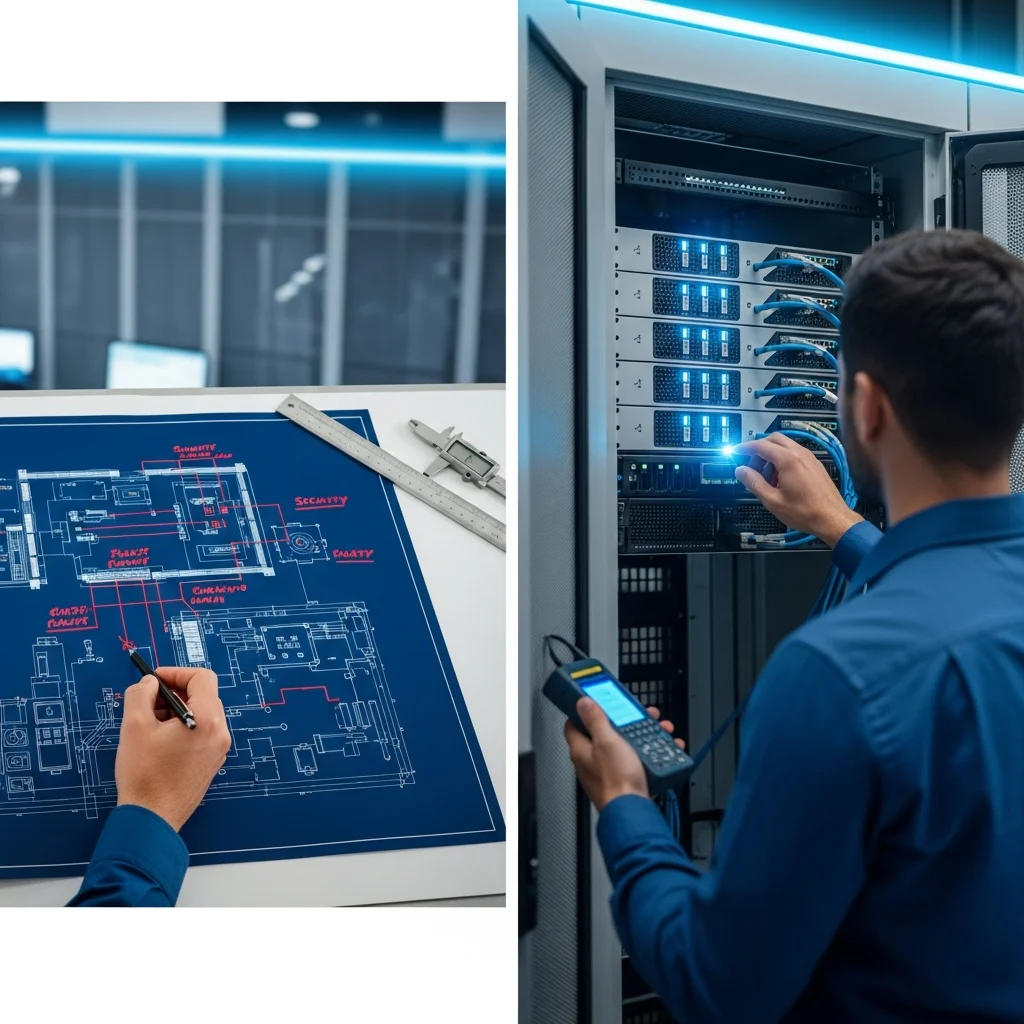
Planning a fire alarm system is a multi-stage process that demands the utmost precision and expertise. A structured approach is essential to ensure an effective, legally compliant solution. The process begins with a detailed needs analysis, in which the specific risks of the property, the type of use, the structural conditions and the protection objectives are defined. This includes determining the fire loads, the number of people, and the assets to be protected. On this basis, a fire alarm concept is developed that establishes the type and scope of the system, including the choice of detectors, alarm devices, and interfaces to other systems.
This is followed by preliminary and schematic design, in which initial technical solutions are sketched out and the system architecture is designed. Initial cost frameworks are also determined at this stage. Permit planning involves preparing all documents necessary for regulatory approval and coordinating with the relevant authorities, such as the fire brigade. Execution planning details all technical aspects, from wiring to the placement of each individual detector, and serves as the basis for the tender. Common mistakes in this process include an inadequate needs analysis, leading to over- or under-sizing of the system, disregard of specific standards, or insufficient consideration of interfaces to other trades. Another critical mistake is poor documentation, which considerably hampers later servicing and expansion work. PLANATEL® accompanies you through each of these steps and minimises these risks through over 34 years of experience and a meticulous approach.
Cost optimisation and lifecycle assessment through neutral planning
The investment in a fire alarm system is considerable, yet the long-term operating costs can often exceed the acquisition costs. Independent planning lays the foundation for sustainable cost optimisation across the entire lifecycle of the system. By selecting components and systems in a manufacturer-neutral way, proprietary solutions, which are often associated with higher acquisition and maintenance costs, can be avoided. An independent planner considers not only the initial investment costs, but also the costs of installation, commissioning, regular maintenance, servicing, spare parts and possible extensions. This leads to a realistic Total Cost of Ownership (TCO) assessment that enables sound decision-making.
One example of this is the selection of detectors: while a manufacturer-tied planner might propose more expensive specialist detectors from a particular make, an independent expert can identify equivalent or even superior products available on the market at significantly better terms, which also offer higher compatibility with other systems. This optimisation also extends to maintenance concepts. PLANATEL® plans maintenance concepts designed for efficiency and longevity, and selects certified installers who can reliably implement these concepts without incurring unnecessary costs. This not only secures the functionality of the system, but also compliance with the inspection intervals under DIN 14675 and VdS 2095, which in turn ensures legally compliant operational readiness and avoids potential penalties or insurance issues.
Risk minimisation and avoiding manufacturer dependency
A key risk when fire alarm systems are planned by non-neutral partners is the emergence of manufacturer dependency. This means that a company becomes tied to the products and services of a particular manufacturer, which can lead to significant disadvantages in the long term. Such dependencies often manifest themselves in higher prices for spare parts, maintenance contracts and system extensions, since competition is eliminated. There can also be restrictions on compatibility with future technologies or other systems, impairing the flexibility and scalability of the fire alarm system. In the worst case, manufacturer dependency can mean that, when a system is renewed or extended, substantial investment in an entirely new system becomes necessary even though only individual components needed replacing.
PLANATEL® actively works to minimise these risks. Through consistently manufacturer-neutral planning, open standards and interoperable systems are favoured, allowing free choice of components and service providers. This not only secures competitiveness in future tenders, but also the long-term adaptability of the fire alarm system to new requirements and technological developments. An independent planner objectively evaluates the solutions available on the market and selects those that offer the best technical performance, the highest reliability and the greatest future-proofing, without being tied to the product range of a single supplier. This creates a robust, flexible security infrastructure that protects your company from unexpected costs and technological dead ends.
The expertise of PLANATEL®: over 34 years of independent planning
Since its founding in 1992, PLANATEL® has established itself as a leading independent planning and consulting company in the field of fire alarm systems. With over 34 years of experience in the industry, we offer our clients a unique combination of in-depth technical knowledge, comprehensive market expertise, and an unwavering commitment to manufacturer neutrality. Our team of experienced engineers and specialist planners specialises in the design, planning and optimisation of complex fire alarm systems for medium-sized to large companies, public institutions and property managers in Germany, Austria and Switzerland. We understand the specific challenges our clients face and develop tailored solutions that not only meet the highest safety standards but are also economical and future-proof.
Our approach is characterised by a holistic view: we analyse not only the technical requirements, but also the organisational processes, the economic framework, and the long-term strategic goals of our clients. This comprehensive perspective allows us to plan fire alarm systems that integrate seamlessly into existing infrastructure and create real added value. The fact that PLANATEL® receives no commissions whatsoever from manufacturers or installers underscores our 100% independence and guarantees that our recommendations are always objective and in our clients' best interest. We are your trusted partner, accompanying you from the initial needs analysis to successful acceptance and ensuring that your fire alarm system functions optimally and meets all legally compliant requirements.
Future outlook and technological developments in fire alarm systems
Technology in the field of fire alarm systems is constantly evolving. Current trends include the integration of AI-based analysis to reduce false alarms, networking with IoT platforms for more comprehensive building automation, and the use of cloud technologies for remote maintenance and data analysis. The development of multi-sensor detectors that simultaneously capture various fire indicators, as well as improvements to voice alarm systems for more effective evacuation, are also important advances. These innovations offer immense potential to increase the efficiency and reliability of fire alarm systems, but also bring new challenges in terms of complexity, interoperability and data security.
In this dynamic environment, the role of an independent planner is more important than ever. A manufacturer-neutral expert like PLANATEL® can separate the wheat from the chaff, objectively evaluate new technologies, and assess which innovations genuinely add value to your specific project. We help you make future-proof decisions that take account not only of the current state of the art, but also leave room for future extensions and adaptations. This protects your investments and ensures that your fire alarm system will continue to meet the highest safety standards in the years to come. Independent planning is therefore a decisive factor in making the most of technological progress while minimising the risks of a poor decision.
Next Step
Contact us for a no-obligation initial consultation.
PLANATEL®: Independent planning and consulting since 1992
Tel: 040 / 23 73 02-30
Email: info@planatel.de
Frequently Asked Questions
What advantages does engaging an independent planner for fire alarm systems offer?
An independent planner offers the decisive advantage of manufacturer neutrality. They are not tied to particular products or suppliers and can therefore objectively select the best solution for your specific requirements. This leads to an optimal technical design, significant cost optimisation across the entire lifecycle of the system, and avoidance of manufacturer dependency. Independent expertise also ensures full legal compliance and minimises risks from poor planning or insufficient consideration of standards.
How does HOAI affect the planning of fire alarm systems in Germany?
The Official Scale of Fees for Architects and Engineers (HOAI) serves in Germany as guidance for fee calculation for planning services, including for fire alarm systems as part of technical equipment (§56 HOAI). Although HOAI has not been binding since 2021, it continues to provide a transparent basis for determining fees. For clients, this means they get a clear idea of the expected costs for planning services, even though fees are now freely negotiable. PLANATEL® places importance on transparent fee models that fairly reflect the effort and complexity of the project.
What role does VdS 2095 play in planning and installing fire alarm systems?
VdS 2095 comprises technical guidelines from VdS Schadenverhütung GmbH that set out detailed requirements for the planning, engineering, installation, operation and servicing of fire alarm systems. They supplement and give concrete substance to the DIN standards, and are often used by insurers as the basis for recognising fire alarm systems. Compliance with VdS 2095 can not only increase safety but also have a positive effect on insurance premiums. An independent planner ensures that these important guidelines are integrated into the planning from the outset.
How can independent planning contribute to cost optimisation for fire alarm systems?
Independent planning contributes significantly to cost optimisation by enabling a manufacturer-neutral selection of components. This avoids overpriced proprietary solutions and promotes the use of systems with the best value for money. The planner takes account of the Total Cost of Ownership (TCO), that is, not only acquisition costs but also installation, maintenance and servicing costs across the entire lifecycle. By optimising maintenance concepts and selecting certified installers who submit competitive offers, long-term operating costs are significantly reduced.
What are the biggest risks of non-neutral planning of fire alarm systems?
The biggest risks of non-neutral planning lie in the emergence of manufacturer dependency, which can lead to higher costs for components, maintenance and extensions. There is also the risk that the proposed solution is not optimally tailored to the actual needs of the property, but primarily serves the supplier's sales interests. This can lead to over- or under-sizing, a lack of flexibility, and difficulties with future adaptations, ultimately compromising safety and causing unnecessary costs.
What is the difference between a fire alarm system and a fire protection concept?
A fire alarm system (BMA) is a technical system for automatic fire detection and alarming. A fire protection concept, by contrast, is a comprehensive, holistic document describing all structural, technical and organisational fire protection measures for a building or facility. The BMA is an important component of the technical fire protection within a fire protection concept.
What role does DIN 14675 play in planning fire alarm systems?
DIN 14675 is the central standard in Germany for fire alarm systems. It governs the structure and operation of fire alarm systems and sets out the requirements for specialist firms that plan, engineer, install, commission, service and maintain these systems. Compliance is decisive for the legally compliant, reliable operation of the system.
Can a fire alarm system also trigger false alarms?
Yes, fire alarm systems can trigger false alarms, for example due to steam, dust, cigarette smoke or cooking fumes. Professional, independent planning takes account of the ambient conditions and selects suitable detectors and detection methods to minimise the likelihood of false alarms and increase operational reliability.
How often must a fire alarm system be serviced?
Servicing of a fire alarm system is mandated under DIN 14675 and VdS 2095. As a rule, a fire alarm system must be serviced at least once a year by a certified specialist. In addition, monthly function checks by the operator and quarterly inspections by a specialist are required to ensure operational readiness.