


Fire Alarm Systems15 min read
Fire Alarm System Specialist Planning Cost: An Investment in Safety and Economy
Specialist planning for fire alarm systems (BMA) is a complex task whose cost is often underestimated. Yet sound, manufacturer-independent planning is decisive for the long-term safety, legal compliance and economy of your building. Learn how strategic planning avoids unnecessary expense and optimises the protection of your assets.
The cost of specialist planning for a fire alarm system varies considerably and depends on the complexity of the building, the scope of monitoring required, and the standards to be met, such as DIN 14675 and VdS 2095. Independent planning minimises risk and operating cost in the long term by avoiding planning errors and manufacturer dependency, and by ensuring optimal system design.
A comprehensive analysis of the cost factors and the added value of independent BMA planning
Specialist planning for fire alarm systems (BMA) is a complex task whose cost is often underestimated. Yet sound, manufacturer-independent planning is decisive for the long-term safety, legal compliance and economy of your building. Learn how strategic planning avoids unnecessary expense and optimises the protection of your assets.
Key Takeaways
- Independent specialist planning for fire alarm systems is a strategic investment that saves cost and minimises risk in the long term, by avoiding planning errors and manufacturer dependency.
- Compliance with standards such as DIN 14675, DIN VDE 0833 and VdS 2095 is essential for legal compliance and insurance cover, and requires specialist planning expertise.
- PLANATEL® has offered manufacturer-independent, financially independent specialist planning for over 34 years, aimed at cost optimisation and the highest safety standards.
Implementing a fire alarm system is, for many companies and public institutions, not just a matter of safety but also a legal necessity. But before a fire alarm system (BMA) can be installed by certified installer firms at all, it requires detailed, expert planning. The "fire alarm system specialist planning cost" is a central aspect that is often considered only superficially. Yet the quality of this initial planning phase largely determines the efficiency, legal compliance and total lifecycle cost of the system. Inadequate or flawed planning can have far-reaching financial and legal consequences, from unnecessary retrofits to serious safety gaps. It is therefore critically important to understand the factors that influence the cost of specialist planning, and to recognise the long-term value of independent expertise.
The role of specialist planning in the lifecycle of a fire alarm system
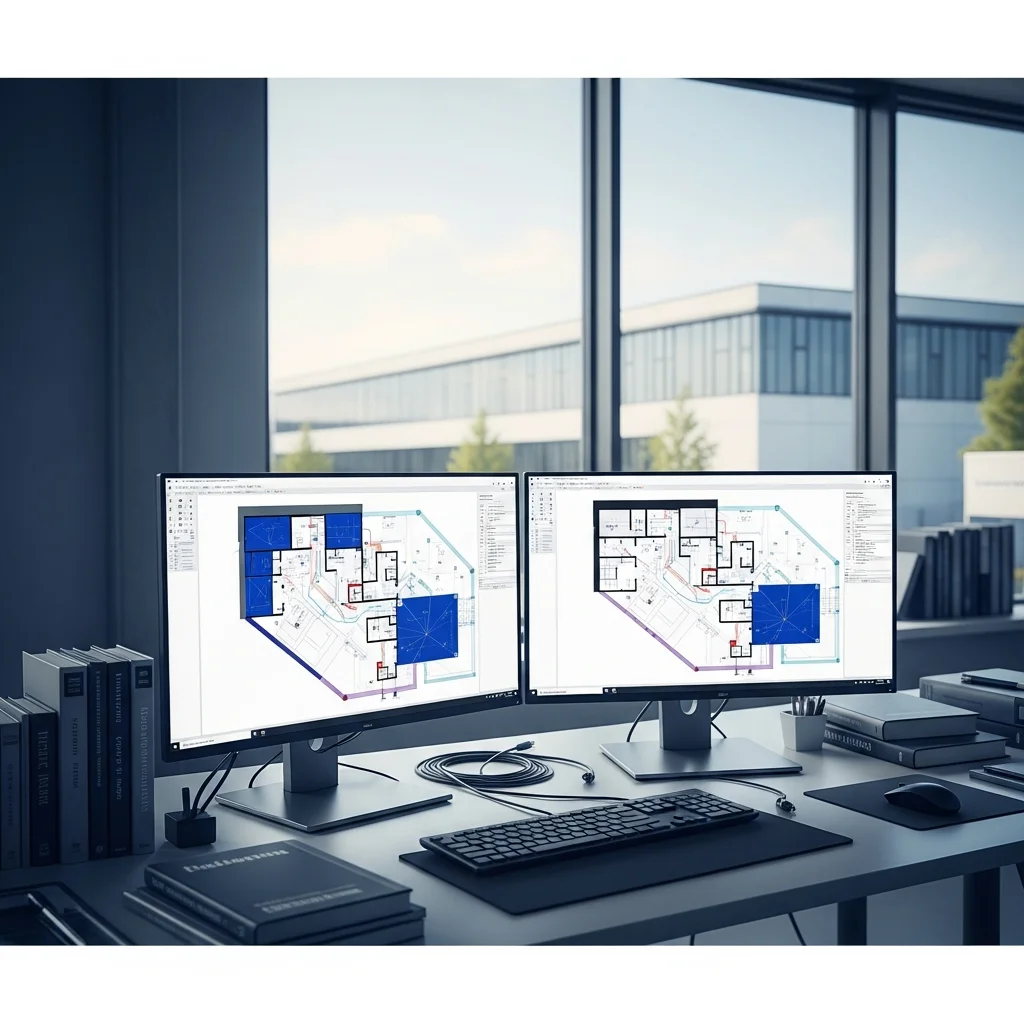
Specialist planning of a fire alarm system is far more than simply drawing circuit diagrams. It is the foundation for the system's entire service life and covers every step from needs assessment through to preparing the tender and supporting realisation. Under DIN 14675, the definitive standard for fire alarm systems, the process is divided into several phases that build on each other precisely. Careful planning in the early phases, in particular the preparation of a comprehensive fire alarm concept, is decisive for avoiding later problems and the associated cost increases. This concept must detail the specific protection objectives, the scope of monitoring, measures to avoid false alarms, the type of alerting, and the necessary control functions. Without such a foundation, even seemingly simple decisions can lead to defects in the overall system if actual usage requirements are not adequately considered.
Specialist planning takes into account not only the technical aspects of the fire alarm control panel, detectors and signalling devices, but also integration into existing building services and coordination with the local fire brigade. VdS 2095, an important guideline for automatic fire alarm systems, specifies the framework for planning, installation and maintenance, and sets out technical and insurance-related requirements. Early, comprehensive specialist planning ensures that all relevant standards and guidelines, such as DIN 14675, DIN VDE 0833 and, where applicable, VdS 2095, are considered from the outset. This is essential for legal compliance and for acceptance by authorities and insurers. Deficient planning can lead to safety risks and significant cost increases later on.
Key factors influencing the cost of BMA specialist planning
The cost of specialist planning for a fire alarm system is not a fixed figure but is influenced by a range of factors. The complexity of the building plays a central role: a simple office building requires less extensive planning than a complex industrial building with varying fire loads, hazardous zones, or special detection requirements. The size of the area to be monitored and the number of fire detectors required also directly affect the planning effort. Another key factor is the required scope of monitoring. Is only basic protection to be provided, or are extended protection objectives necessary, such as asset protection for high-value goods or technical equipment?
Compliance with specific standards and guidelines also drives up cost. While systems required under building law generally only need to implement DIN 14675 and DIN VDE 0833, an explicitly required VdS recognition by the insurer or client can bring additional requirements under VdS 2095, requiring even more intensive review and more detailed planning processes. Integrating the fire alarm system with other systems, such as voice alarm systems (SAA), access control or building management technology, also increases the planning effort, as interfaces must be precisely defined and coordinated. Finally, the experience and qualification of the specialist planner affects cost. A highly qualified, certified planner may command higher fees at first glance, but their expertise minimises the risk of errors and optimises the long-term economy of the system.
The phases of DIN 14675 and their significance for cost structure
DIN 14675 describes the entire lifecycle of a fire alarm system, from planning through installation to inspection and maintenance, and sets out clear requirements for cooperation between planners, installers and operators. The standard is divided into eleven phases, of which phases 6.1 (planning) and 6.2 (design) are particularly relevant for specialist planning. Each of these phases requires specific services and thus has a direct impact on the overall cost of specialist planning.
- Phase 1: Needs planning – here, the protection objectives and scope of monitoring are established. Precise needs planning avoids over-dimensioning or gaps in protection.
- Phase 2: Concept – preparation of a detailed fire alarm concept covering all technical and organisational measures. This is the foundation of the entire planning process.
- Phase 3: Preliminary planning – initial technical solution approaches and cost estimates.
- Phase 4: Design planning – detailed elaboration of the concept with system selection and functional descriptions.
- Phase 5: Approval planning – preparation of the documents for regulatory approval.
- Phase 6.1: Execution planning (planning) – manufacturer-neutral preparation of tender documents. This is a core service of independent specialist planning.
- Phase 6.2: Execution planning (design) – detailed planning with selection of a manufacturer and specific components.
- Phase 7: Preparing the award – preparation of the specifications of services.
- Phase 8: Support during the award – review and evaluation of tenders.
- Phase 9: Site supervision – overseeing installation and commissioning.
- Phase 10 & 11: Acceptance, operation and servicing – definition of the processes for ongoing operation and maintenance.
Each of these phases requires specific expertise and resources. Seamless, standard-compliant work is decisive for avoiding later defects, rework and the associated costs. Investing in careful planning in these early phases pays off through smooth realisation and reliable operation of the fire alarm system.
Long-term cost optimisation through independent specialist planning
The initial cost of specialist planning for a fire alarm system may at first glance appear to be an additional expense. Yet independent, competent planning is an investment that pays for itself over the entire lifecycle of the system and enables substantial long-term savings. The greatest lever lies in avoiding planning errors and unnecessary cost. A manufacturer-independent planner, such as PLANATEL®, is not tied to specific products or suppliers and can therefore select the objectively best and most economical solution for the customer's individual requirements. This prevents manufacturer dependency, which often comes with overpriced components, inflexible maintenance contracts, and limited scope for expansion.
A precise needs analysis and an optimised system design avoid over-dimensioning the system, leading to savings in both acquisition and operating costs. Sound planning also takes account of lifecycle costs, not only the investment, but also maintenance, energy and any repair costs over the entire service life. False alarms caused by deficient planning or unsuitable detector types can incur high costs through fire brigade call-outs and business interruption. Professional planning significantly minimises this risk. Independent specialist planning also ensures legal compliance, avoids fines, and safeguards insurance cover, which is invaluable in the event of a claim. Investing in independent expertise is therefore a strategic decision for sustainable safety and economy.
Risks of inadequate BMA planning and their financial consequences
The temptation to save cost on specialist planning for a fire alarm system can prove to be an expensive mistake. Inadequate or flawed planning carries substantial risks that go far beyond the initial savings and can lead to serious financial and legal consequences. One of the biggest risks is safety gaps. If the system is not optimally matched to the building structure, fire loads and usage, seats of fire can go undetected, or alerting can be delayed. This endangers lives and property and, in the worst case, can lead to total loss.
Financially, the consequences of poor planning manifest in several areas: frequent false alarms not only lead to unnecessary fire brigade call-outs, which can incur costs, but also to business interruption and lost productivity. Defects in planning often require costly rework or even a complete replacement of components or system parts, which considerably exceeds the original investment cost. In addition, a non-compliant system can lead to regulatory approvals being refused, or to insurance cover lapsing in the event of a claim. Ultimately, responsibility for compliance with standards lies with the operator. Deficient planning can also lead to poor integration with other security systems, impairing the effectiveness of overall building security and causing additional costs to resolve interface problems. The initial "saving" on planning is thus outweighed many times over by follow-on costs and risks.
The value of manufacturer-independent planning: independence as a cost advantage
Choosing a manufacturer-independent specialist planner is a decisive factor for optimising "fire alarm system specialist planning cost" in the long term and achieving the greatest possible added value. Unlike planners who are tied to particular manufacturers or receive commissions, an independent consultant acts solely in the interest of the client. This means that the choice of components and systems is determined not by sales interests but purely by technical suitability, economy and the specific requirements of the project. PLANATEL® has stood for this 100% manufacturer-independence and financial independence since 1992.
A key cost advantage arises from avoiding manufacturer dependency. If a planner is tied to a particular manufacturer, there is a risk that they will propose systems that work but do not represent the most cost-efficient or technically optimal solution. This can lead to overpriced components, inflexible maintenance contracts, and difficulties with future expansion or modernisation. Manufacturer-independent planning, by contrast, makes it possible to select the best products and solutions from the entire market, leading to better prices and greater flexibility. Independent planning also promotes fair competition among installers, since tenders are formulated objectively and in a product-neutral way. This generally leads to more competitive bids and thus lower investment costs for the fire alarm system itself. The expertise of an independent planner therefore secures not only technical quality but also the economic efficiency of the entire project.
PLANATEL®'s approach to cost optimisation in BMA specialist planning
For over 34 years, PLANATEL® has followed a proven approach to making the specialist planning of fire alarm systems not only legally compliant and technically excellent, but also maximally cost-efficient. Our core principle is complete manufacturer-independence and financial independence. We accept no commissions whatsoever from manufacturers or installers, which allows us to act solely in the best interest of our clients. This enables us to identify the optimal solution that precisely matches the requirements of the project and avoids unnecessary expense.
Our approach begins with a detailed needs analysis and the preparation of a precise fire alarm concept to DIN 14675 and VdS 2095. Here, we place the greatest importance on defining the protection objectives and scope of monitoring, to prevent over- or under-dimensioning of the system. By applying our many years of experience and in-depth technical understanding, we identify potential cost traps at an early stage and develop strategies to avoid them. We prepare detailed, manufacturer-neutral tender documents that enable transparent, fair competition among qualified installers. This generally leads to significantly better bids and thus a reduction in investment cost for the fire alarm system. In addition, our planning always takes account of the full lifecycle cost, to optimise not only the acquisition but also the long-term operation and maintenance of the system economically. Our goal is to enable our clients to have a future-proof, legally compliant and cost-efficient fire alarm system.
HOAI as a benchmark and the importance of qualified specialists
Although the Official Scale of Fees for Architects and Engineers (HOAI) has no longer been binding since 2021, it continues to serve as an important benchmark for determining an appropriate fee for planning services in Germany. The HOAI divides services into various phases and fee bands that classify the level of difficulty of the planning. For the specialist planning of fire alarm systems, the fee bands under section 56 HOAI can serve as a guide for appropriately assessing the effort and complexity of the project. This creates transparency and a traceable basis for the fee agreement between client and planner.
The importance of qualified specialists in BMA planning cannot be overstated. DIN 14675-2 sets specific requirements for the technical competence of firms that plan and operate fire alarm systems. Certification to DIN 14675 has been mandatory for specialist planners and engineering firms since 2003, to ensure the quality and legal compliance of the planning. PLANATEL® holds these necessary certifications and employs highly qualified engineers and consultants with extensive experience. This expertise is decisive for mastering the complex technical requirements of DIN 14675, DIN VDE 0833 and VdS 2095 and for developing an optimal, future-proof solution. Investing in qualified specialist planning is thus an investment in the safety and long-term value of your property, and it minimises the risk of errors that could have catastrophic consequences in an emergency.

Next Step
Contact us for a no-obligation initial consultation.
PLANATEL®: Independent planning and consulting since 1992
Tel: 040 / 23 73 02-30
Email: info@planatel.de
Frequently Asked Questions
What role does the HOAI play in calculating the specialist planning cost for fire alarm systems?
Although the HOAI has no longer been binding since 2021, it continues to serve as an important benchmark for calculating fees for planning services in Germany. It divides services into phases and fee bands that classify the level of difficulty of the planning. This provides a transparent, traceable basis for the fee agreement and helps to appropriately assess the effort involved in specialist planning for fire alarm systems.
How does a detailed needs analysis contribute to cost optimisation in BMA planning?
A detailed needs analysis is the first and decisive step towards cost optimisation. It ensures that the fire alarm system is precisely tailored to the specific protection objectives and conditions of the building. This avoids over- or under-dimensioning, which enables substantial savings in both acquisition and ongoing operating cost. A precise analysis also prevents unnecessary retrofits or adjustments later in the project.
Which certifications are relevant for specialist planners of fire alarm systems?
For specialist planners of fire alarm systems, certification to DIN 14675 is of central importance and has been mandatory since 2003. This standard ensures that the specialist firm has the necessary competence and processes for the planning, design, installation and servicing of fire alarm systems. In addition, certification to DIN EN ISO 9001 for quality management can be relevant.
How can false alarms be reduced through good specialist planning?
Good specialist planning reduces false alarms through the careful selection and placement of suitable detector types, matched to the specific environmental conditions. It takes account of potential sources of interference such as dust, vapours or temperature fluctuations, and implements measures to avoid false alarms. Precise configuration of the fire alarm control panel and the definition of clear alerting strategies also help minimise deceptive alarms and increase system reliability.
Why is taking account of lifecycle costs so important in BMA planning?
Taking account of lifecycle costs is decisive, as the initial acquisition cost often represents only a fraction of the total cost over the service life of a fire alarm system. Forward-looking planning optimises not only investment cost but also expenditure on maintenance, energy consumption, spare parts, and any modernisation. This leads to sustainable economy and ensures that the system can be operated cost-efficiently over its entire service life.
What are the main cost factors in specialist planning for fire alarm systems?
The main cost factors include the complexity of the building, the scope of monitoring, the standards to be complied with (e.g. DIN 14675, VdS 2095), integration with other systems, and the qualification of the specialist planner. The more specific and complex the requirements, the higher the planning effort and thus the cost.
Why is manufacturer-independent planning of fire alarm systems important?
Manufacturer-independent planning is decisive for ensuring an objective selection of the best and most economical system solution. It avoids manufacturer dependency, which can lead to overpriced components and inflexible contracts, and promotes fair competition among installers, which lowers investment cost.
What risks does deficient planning of fire alarm systems carry?
Deficient planning leads to safety gaps and increases the risk of false alarms with corresponding costs and business interruption. It can result in costly rework, loss of insurance cover, and legal consequences, since the system is not legally compliant.
How does DIN 14675 influence the cost of BMA specialist planning?
DIN 14675 defines the eleven phases of the lifecycle of a fire alarm system, of which phases 6.1 (planning) and 6.2 (design) are relevant for specialist planning. Each phase requires specific services and expertise, and careful handling of each is decisive for avoiding later defects and the associated cost.
Sources and further information
- tga-praxis.de
- amev-online.de
- uds-beratung.de
- schutzfabrik.de
- heinrich-brandmeldetechnik.de