


Fire Alarm Systems17 min read
Fire Alarm System Maintenance Obligation: Legal Foundations and Strategic Importance for Companies
Yet its full functionality depends critically on legally compliant, strategically planned maintenance. Neglect can have serious legal and financial consequences.
The maintenance of fire alarm systems is a statutory obligation in Germany, Austria and Switzerland, arising from building codes, special-building regulations, workplace ordinances and insurance requirements. It must be carried out by certified specialist firms at defined intervals in accordance with technical standards such as DIN 14675, DIN VDE 0833 and VdS 2095, and documented in full, in order to prevent injury and property damage and ensure legal compliance.
Why regular servicing of fire alarm systems is more than just a regulation – and how independent planning protects you.
Yet its full functionality depends critically on legally compliant, strategically planned maintenance. Neglect can have serious legal and financial consequences.
Key Takeaways
- Maintaining fire alarm systems is a statutory obligation, anchored in building codes, the Workplace Ordinance and insurance requirements, and non-compliance carries serious legal and financial consequences.
- Technical standards such as DIN 14675, DIN VDE 0833 and VdS 2095 define detailed intervals (monthly, quarterly, annual, recurring expert inspection) and inspection scopes that must be strictly observed.
- Manufacturer-independent planning by independent experts such as PLANATEL® not only optimises maintenance costs and avoids manufacturer dependency, but also secures the long-term operational safety and legal compliance of your fire alarm systems.
For companies, public institutions and property managers, ensuring the safety of people and property is the top priority. Fire alarm systems play a central role in this by detecting fires early and triggering an alarm. But a fire alarm system is only as reliable as its servicing. Maintaining fire alarm systems is not just a technical necessity but a strict legal obligation, and non-compliance can have far-reaching consequences. This article examines the comprehensive requirements for fire alarm system maintenance and shows how strategic, independent planning maximises operational safety while ensuring legal compliance.
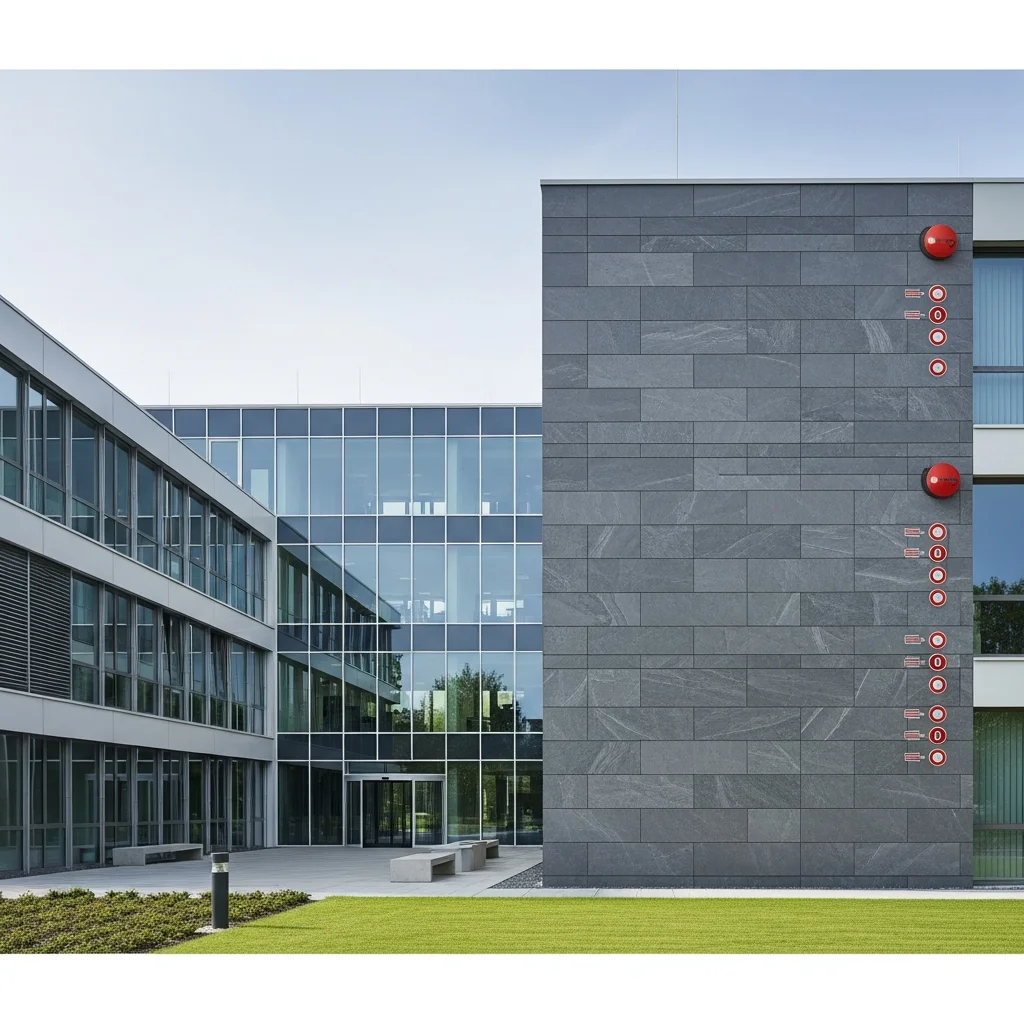
The Legal Basis for the Fire Alarm System Maintenance Obligation
The obligation to carry out regular maintenance of fire alarm systems is deeply anchored in various laws and regulations in Germany, Austria and Switzerland. It is not an optional measure but a mandatory requirement for operators of buildings in which fire alarm systems are installed. The primary legal basis is formed by the state building codes (Landesbauordnungen, LBO) of the German federal states, which mandate the installation and operation of fire alarm systems for certain building types, in particular so-called special-purpose buildings such as hospitals, hotels above a certain number of beds, schools, assembly venues or large industrial halls.
In addition, the Workplace Ordinance (Arbeitsstättenverordnung, ArbStättV) in Germany specifies the employer's obligations in more detail. Under Section 4(3) ArbStättV in conjunction with Annex Item 2.2 ArbStättV, the employer must have safety equipment for preventing or eliminating hazards – which includes fire alarm systems – properly maintained and checked for functionality at regular intervals. This underscores the employer's responsibility for protecting their staff. Beyond the statutory requirements, insurance requirements also play a decisive role. Many property insurers require the installation and regular maintenance of fire alarm systems in accordance with recognised engineering standards as a condition for taking out or maintaining insurance cover. Missing or inadequate maintenance can lead to the loss of insurance cover or significant reductions in benefits in the event of a loss.
The technical standards and guidelines, such as DIN 14675 or VdS 2095, acquire de facto legal force by being explicitly mentioned or referenced in these statutory regulations or building-supervisory provisions. Compliance with these requirements is therefore essential to ensure legal compliance and minimise potential liability risks for the operator.
Technical Standards and Guidelines: The Foundation of Fire Alarm System Servicing
The legally compliant maintenance of fire alarm systems is based on a complex web of technical standards and guidelines that define the framework for planning, installation, operation and, in particular, servicing. Central to this are DIN 14675, DIN VDE 0833-1 and -2, and VdS 2095. DIN 14675, often referred to as the "fire brigade standard", describes the proper design and operation of fire alarm systems and voice alarm systems. It contains fire-brigade-specific requirements for alarm forwarding and the installation of fire brigade peripheral equipment. For servicing, the requirements in DIN 14675-1:2020-01, Section 11.2.2.2, which describe inspection and maintenance work in detail, are particularly relevant.
The DIN VDE 0833 series of standards governs the technical requirements and safety standards for hazard alarm systems, which include fire alarm systems. Parts 1 and 2 of this standard are of great importance for the planning, installation, design and operation of fire alarm systems. They stipulate that operational safety of the fire alarm system is the operator's responsibility, and that the operator must ensure the system is functional at all times and meets the defined protection objectives. This also includes taking structural changes or new regulations into account.
VdS 2095 is an important guideline for installers, planners and operators of fire alarm systems, setting out technical and insurance-related requirements in detail. It mandates regular inspections and maintenance to ensure the functionality of fire alarm systems, and serves as the basis for evaluating and implementing fire alarm concepts, particularly in commercial and industrial installations. Compliance with these standards and guidelines is decisive not only for technical reliability but also for the certification of specialist firms under DIN 14675, which must be qualified for the planning, installation, acceptance and servicing of fire alarm systems.
The Importance of Regular Maintenance for Operational Safety and the Protection of People
Regular maintenance of fire alarm systems goes far beyond merely fulfilling legal requirements; it is a fundamental pillar of operational safety and the protection of people in any building. A fire alarm system that is not properly maintained can have fatal consequences in an emergency. Its main task is the early detection of fires at the outbreak stage, in order to enable rapid alerting of the people present and the fire brigade. Only a system functioning flawlessly can reliably fulfil this critical task.
Without regular inspection and maintenance, technical defects, contamination or signs of ageing can develop unnoticed in the detectors and the control panel. This can impair the response threshold of the detectors, lead to false alarms, or, in the worst case, mean that a fire is not detected at all or is detected too late. False alarms are not only costly due to unnecessary fire brigade call-outs, but can also lead to staff becoming desensitised, which delays the response in a genuine emergency.
Furthermore, fire alarm systems often control other safety-relevant systems, such as opening smoke vents, closing fire doors or evacuating lifts. The correct functioning of these fire event control functions depends directly on the reliability of the fire alarm system. Regular maintenance ensures that these complex interconnections function smoothly in the event of a fire, so that escape and rescue routes remain clear. Investing in careful and regular maintenance is therefore an investment in protecting human life, safeguarding property and maintaining business operations. It minimises the risk of business interruption and the associated economic losses that a fire can cause.

Common Mistakes and the Serious Consequences of Neglecting Fire Alarm System Maintenance
Neglecting fire alarm system maintenance is a common and costly mistake that can have far-reaching consequences for companies and operators. The consequences range from substantial fines to criminal relevance in the event of personal injury. A key risk is the loss of insurance cover. Insurance companies can reduce or entirely refuse benefits in the event of a loss if it is proven that the fire alarm system did not function properly due to inadequate maintenance. This can be classed as gross negligence, meaning significant financial losses for the operator.
Besides the financial risks, legal consequences loom. Violations of the state building codes or the Workplace Ordinance can be penalised with fines by the supervisory authorities. In the worst case, if people are harmed as a result of a malfunctioning fire alarm system, those responsible may even face criminal investigation for negligent bodily harm or manslaughter. Liability follows responsibility, and it is the operator's duty to ensure proper maintenance.
Operationally, neglected maintenance leads to an increased probability of system failure. Contaminated detectors, ageing batteries or undetected technical defects can lead to false alarms or, more critically, to the system failing in the event of a fire. False alarms not only cause unnecessary costs for fire brigade call-outs but also disrupt business operations and can reduce acceptance of the fire alarm system among staff and users. In the long term, undetected defects can also lead to higher repair costs, as small defects can escalate into larger damage to the entire system. Forward-looking, legally compliant maintenance is therefore not just an obligation but a strategic necessity for minimising risk and protecting the company.
Planning a Legally Compliant and Efficient Maintenance Concept for Fire Alarm Systems
Creating a legally compliant and, at the same time, efficient maintenance concept for fire alarm systems requires specialised expertise and a strategic approach. This is where PLANATEL®'s expertise comes in. As an independent planning and consulting company, we support you in developing a tailored concept that meets all legal and normative requirements while also taking cost-effectiveness into account. The first step is a detailed analysis of the existing system and the specific building use. This includes reviewing the system documentation, the fire alarm concepts and the local conditions to determine the precise maintenance requirements.
A central aspect of our work is the manufacturer-independent tendering of maintenance services. Many operators are tied to a particular installer or manufacturer, which often leads to suboptimal terms and a limited choice. PLANATEL® breaks this manufacturer dependency by tendering the maintenance services objectively and transparently. We define the precise scope of services, the required qualifications of the specialist firms (certification to DIN 14675 is essential here) and the intervals to be observed in accordance with DIN VDE 0833 and VdS 2095.
This process ensures that you receive bids from qualified, certified specialist firms that meet the highest standards. Our many years of experience enable us to identify the most cost-effective and technically sound solution for you. This leads not only to an optimisation of maintenance costs, but also to a long-term assurance of the functionality and legal compliance of your fire alarm systems. We plan maintenance concepts that not only meet the minimum requirements but also ensure high operational safety over the entire life cycle of the system.
Maintenance Intervals and Inspection Scope: What the Standards Require
Compliance with specific maintenance intervals and inspection scopes is essential for the functionality of fire alarm systems and is clearly defined by the relevant standards. Servicing a fire alarm system is generally organised into several stages:
- Monthly self-checks: These can be carried out by the operator or by an instructed person. They involve visual inspections of the system for external damage, checking the operations logbook for completeness, and verifying whether the surrounding conditions have changed (e.g. due to renovation or new use) in a way that could affect the fire alarm system's effectiveness.
- Quarterly inspection: This inspection must be carried out by a competent person (often also an instructed person from the operator's staff) or a specialist firm. The focus is on identifying contamination and damage to the system components. Often, a quarter of all detectors are function-tested during each of these inspections, so that all detectors have been tested once over the course of a year.
- Annual maintenance: Annual maintenance must be carried out by a specialist firm certified to DIN 14675 and DIN VDE 0833. It comprises a comprehensive visual inspection of the entire system, triggering all non-destructively testable detectors, checking the display on the fire brigade control panel, function tests of the alerting equipment and fire event control functions (e.g. lift control, ventilation shutdown, door closing), and checking fault detection and forwarding.
- Recurring expert inspection: In many German federal states, a recurring inspection by building-authority-recognised expert inspectors is required for fire alarm systems mandated under building law in special-purpose buildings, generally every three years. In Austria, annual servicing is required, along with a revision every two years by an accredited inspection body in accordance with ÖNORM F 3070.
In addition, wear parts must be replaced on schedule: batteries for the emergency power supply must be replaced according to manufacturer specifications, usually every four years. Fire detectors with contamination compensation must be replaced after eight years at the latest; detectors without this feature after five years at the latest.
Complete Documentation: The Operations Logbook as a Central Record
Complete documentation of all events relating to the fire alarm system is one of the most important operator obligations and a central element of legal compliance. The operations logbook for fire alarm systems is the key instrument here. Under DIN 14675 and DIN VDE 0833-1 and -2, every operator of a fire alarm system is legally required to keep such a logbook. It serves to document the condition of the system transparently and traceably over its entire operating period.
All relevant events and measures affecting the fire alarm system's operational readiness must be entered in the operations logbook. These include, among others:
- All inspections and maintenance, including the date, scope and identified defects, as well as their rectification.
- All alarms (genuine fires, false alarms), faults and system shutdowns, with the exact time, cause and measures taken.
- Changes to the system, such as extensions, modifications or the replacement of components.
- The results of the recurring expert inspections.
- The names of the instructed persons and specialists who have worked on the system.
Careful maintenance of the operations logbook is not only an obligation but also crucial evidence in the event of a fire incident or an official inspection. It proves that the operator has fulfilled their duty of care and that the system has been properly serviced. Missing or inadequate documentation can lead to significant liability risks and insurance problems in the event of a loss. Modern digital operations logbooks offer advantages here, enabling tamper-proof, automatic documentation of operational events and making it easier to monitor completeness.
Manufacturer-Independent Planning as the Key to Optimising Fire Alarm System Maintenance
Independent, manufacturer-independent planning of fire alarm system maintenance is a decisive factor for companies wanting to optimise costs, minimise risks and ensure maximum operational safety in the long term. PLANATEL® has stood for exactly this independence since 1992. We are 100% manufacturer-independent and financially independent, meaning we receive no commissions whatsoever from installers or manufacturers. This position allows us to act exclusively in the best interests of our clients.
The main advantage of our manufacturer-independent planning lies in avoiding manufacturer dependency. Without independent consulting, operators risk becoming tied to particular products or service providers, which often leads to inflated prices, suboptimal technical solutions and a lack of flexibility. PLANATEL® breaks this cycle by preparing detailed specifications of services for maintenance and putting them out to the market through a transparent tendering process. We evaluate the bids objectively according to technical criteria, cost-effectiveness and the qualifications of the specialist firms, to find the optimal solution for your specific requirements.
Our more than 34 years of experience in planning and consulting on complex system installations enable us not only to take current standards and guidelines into account, but also to integrate future developments and technologies into the maintenance concepts. This secures not only legal compliance but also the future viability and value retention of your fire alarm systems. By optimising maintenance processes, selecting the best certified installers, and ensuring a transparent cost structure, we make a significant contribution to reducing your operating costs and increasing the overall efficiency of your security infrastructure. With PLANATEL®, you gain independent expertise that pays off in the long run.
Next Step
Contact us for a no-obligation initial consultation.
PLANATEL®: Independent planning and consulting since 1992
Phone: 040 / 23 73 02-30
Email: info@planatel.de
Frequently Asked Questions
What is the difference between inspection and maintenance of a fire alarm system?
The inspection of a fire alarm system is a quarterly review that can also be carried out by a competent, instructed person from the operator's staff. It primarily serves to identify external damage and contamination, and to check whether the surrounding conditions have changed. Maintenance, on the other hand, is a more comprehensive annual measure that must be carried out by a specialist firm certified to DIN 14675. It includes detailed function tests of all detectors, alerting equipment and fire event control functions, as well as the replacement of wear parts such as batteries.
What role does the operations logbook play in fire alarm system maintenance?
The operations logbook is a legally required document under DIN 14675 and DIN VDE 0833-1 that documents in full all relevant events and measures relating to the fire alarm system. It serves as the central record of compliance with operator obligations and proper servicing. Inspections, maintenance, faults, alarms, shutdowns and changes to the system are recorded here. Careful maintenance of the operations logbook is crucial for legal compliance and can reduce liability risks in the event of a loss.
Can the costs of fire alarm system maintenance be passed on to tenants?
The costs of maintaining fire alarm systems can, under certain conditions, be passed on to tenants as operating costs. In Germany, this is possible under Section 2 No. 17 of the Operating Costs Ordinance (Betriebskostenverordnung, BetrKV), provided a corresponding agreement has been explicitly made in the lease. A transparent statement that clearly itemises the maintenance costs is essential. However, the costs of purchasing new equipment or replacing defective devices are not chargeable and remain with the owner. Independent planning can help optimise these costs.
Why is manufacturer-independent planning of fire alarm system maintenance advantageous?
Manufacturer-independent planning of fire alarm system maintenance, as offered by PLANATEL®, offers considerable advantages. It avoids being tied to a particular manufacturer or installer, which often leads to inflated prices and limited flexibility. Through independent tendering and objective evaluation of bids, it is ensured that the most cost-effective and technically best solution is selected. This optimises maintenance costs in the long term, guarantees the highest service quality through certified specialist firms, and secures the future viability and legal compliance of the fire alarm system.
What qualifications must a specialist firm have for fire alarm system maintenance?
A specialist firm carrying out maintenance work on fire alarm systems must be certified to DIN 14675. This certification confirms that the company has the necessary expertise, qualified personnel (e.g. a responsible person for fire alarm systems under DIN 14675) and the required processes to properly carry out the planning, installation, acceptance and servicing of fire alarm systems. Compliance with these qualification requirements is crucial for the system's operational safety and legal compliance.
Who is responsible for maintaining a fire alarm system?
Responsibility for maintaining a fire alarm system lies, in principle, with the operator of the building. Depending on the contractual arrangement, this can be the owner, the landlord or the tenant. The operator must ensure that the system is properly maintained, in order to guarantee the safety of building users and to comply with legal requirements. However, the actual maintenance must be carried out by a qualified, certified specialist firm to DIN 14675.
How often must a fire alarm system be maintained?
Maintenance of a fire alarm system is organised into various intervals: monthly self-checks by instructed staff, quarterly inspections by competent persons or specialist firms, and comprehensive annual maintenance by a certified specialist firm. In addition, recurring expert inspections – generally every three years in Germany, or revisions every two years in Austria – are required for many special-purpose buildings.
What happens if the fire alarm system is not maintained?
If a fire alarm system is not properly maintained, serious consequences threaten. These include the loss of insurance cover in the event of a loss, substantial fines from supervisory authorities, and, in the worst case, criminal consequences in the event of personal injury or property damage. The risk of false alarms or system failure in an emergency also increases, which significantly endangers the safety of people and property and can lead to business interruption.
Which standards govern the maintenance of fire alarm systems?
The maintenance of fire alarm systems is primarily governed by DIN 14675 (design and operation of fire alarm systems), DIN VDE 0833-1 and -2 (hazard alarm systems), and VdS 2095 (guidelines for fire alarm systems). These standards define the requirements for planning, installation, operation and, in particular, servicing, including the qualifications of specialist firms and the inspection and maintenance intervals to be observed.
Sources and Further Information
- nrw.de
- brandschutzdozenten.de
- lupus-electronics.de
- meister-brandschutz.de
- heinrich-brandmeldetechnik.de