


Access Management & Intrusion Detection17 min read
The Comprehensive Intrusion Detection System Planning Process: From Analysis to Acceptance
An effective intrusion detection system (EMA) is more than just technology - it is the result of precise planning. Missing or inadequate concepts can not only lead to security gaps, but also considerable costs and legal consequences. Learn how a structured, manufacturer-independent planning process lays the foundation for your optimal protection.
The planning process for an intrusion detection system (EMA) comprises several phases: from the detailed as-is analysis and requirements assessment, through concept development and detailed planning to VdS 2311 and DIN VDE 0833-3, to tendering, award and project support. Professional, independent planning ensures legal compliance, efficiency and the long-term protection of your properties.
Rethinking security: how independent planning protects your assets
An effective intrusion detection system (EMA) is more than just technology - it is the result of precise planning. Missing or inadequate concepts can not only lead to security gaps, but also considerable costs and legal consequences. Learn how a structured, manufacturer-independent planning process lays the foundation for your optimal protection.
Key Takeaways
- Professional, independent planning is the foundation for an effective, legally compliant and economical intrusion detection system (EMA) that provides long-term protection.
- Compliance with standards such as VdS 2311 and DIN VDE 0833-3 is essential for functional reliability, insurability and acceptance of your EMA by the authorities.
- Independent planning experts such as PLANATEL® guarantee manufacturer independence, cost optimisation and minimise risks through comprehensive expertise across the entire planning and realisation cycle.
But merely installing a system is not enough. The success and effectiveness of an EMA depend largely on well-founded, forward-looking planning. Without a well-thought-out concept that takes account of all relevant standards, risks and specific site conditions, expensive malfunctions, false alarms and, in the worst case, serious security gaps can arise. This article looks in detail at the intrusion detection system planning process and shows how independent expertise such as that of PLANATEL® helps you realise sustainable, legally compliant security solutions.
The importance of professional intrusion detection system planning
Planning an intrusion detection system (EMA) is a complex undertaking that goes far beyond selecting individual components. It is a strategic process that forms the basis for the long-term security of people, assets and sensitive data. Inadequate or faulty planning can have far-reaching consequences, from frequent false alarms that cause operational disruption and unnecessarily tie up emergency services, through to actual break-ins that cause considerable financial and non-material damage. In addition, poorly planned systems can lead to problems with insurers in the event of a claim, since the required security standards may not be met.
Professional planning takes account from the outset of the object's specific protection objectives, the structural conditions, the type of assets to be protected and the individual operational processes. It integrates the EMA seamlessly into the existing infrastructure and creates synergies with other security systems such as video surveillance or access control. The goal is not just the pure detection of a break-in, but a preventive effect and a fast, targeted response in an emergency. This requires a deep understanding of the technical possibilities, current threat scenarios and the relevant standards and guidelines. Only in this way can an EMA be realised that meets protection requirements not only today but also in future, while being economical to operate.
Investing in careful planning pays off in the long term. It minimises risks, optimises costs by avoiding wrong purchases and rework, and ensures the legal compliance of the system. An independent planner such as PLANATEL® brings the expertise and neutrality needed to develop the best possible solution for the customer, free from manufacturer interests and focused on individual needs.
Fundamentals and standards for EMA planning: VdS 2311 and DIN VDE 0833-3
The planning and installation of intrusion detection systems in Germany, Austria and Switzerland is subject to strict national and European standards and guidelines. The most important sets of rules, which serve as binding guides here, are VdS 2311 and DIN VDE 0833-3.
VdS 2311 "Guidelines for intrusion detection systems - planning and installation" is a central German set of rules published by VdS Schadenverhütung GmbH. It defines detailed technical and organisational minimum requirements for the planning, installation, operation and maintenance of EMAs of classes A, B and C. This classification is based on the degree of burglary risk and the assets to be protected. VdS 2311 is particularly relevant because many insurers require installation in line with these guidelines in order to guarantee full insurance cover in the event of a claim.
In addition, DIN VDE 0833-3 "Alarm systems for fire, intrusion and hold-up - Part 3: Requirements for intrusion and hold-up alarm systems" is of great importance. This standard sets out the technical requirements for EMAs and hold-up alarm systems and applies to the planning, installation, extension, modification and operation of such systems. It should be considered in conjunction with DIN VDE 0833-1 (general requirements for alarm systems) and the DIN EN 50131 series of standards. DIN EN 50131 is a European series of standards that defines general system requirements, requirements for components such as detectors and control units, and classification into security grades (Grade 1 to 4). While VdS 2311 and DIN VDE 0833-3 are closely linked, and the VdS guidelines often meet the requirements of DIN VDE 0833-3, a simple equivalence between the classifications is not always possible. An experienced planner takes account of the current version of these sets of rules, such as VdS 2311:2025-06 and DIN VDE 0833-3:2020-10, to ensure a legally compliant and future-proof system.
The as-is analysis and requirements assessment: the first step towards a tailor-made EMA
Every successful intrusion detection system planning process begins with a comprehensive as-is analysis and a precise requirements assessment. This is the critical first step in understanding an object's individual protection needs and risk factors and developing a genuinely tailor-made solution. There is no standard procedure here, as every building, every use and every area to be secured is unique.
First, a detailed site walk-through is carried out, during which all relevant structural conditions, potential weak points and access routes are recorded. This includes analysis of doors, windows, roofs, light wells and other openings, but also assessment of the surrounding infrastructure and potential sources of danger. In parallel, a comprehensive risk analysis is carried out, taking into account both external threats (e.g. burglary statistics in the region, type of crime) and internal risks (e.g. value of the goods to be protected, trade secrets, presence of people).
Based on this analysis, the concrete protection objectives are defined together with the client. This involves questions such as: What exactly is to be protected (people, assets, data)? What level of security is required (in line with VdS classes or DIN EN 50131 security grades)? Which areas should be monitored when (full protection, partial arming when occupied)? How should the system respond in the event of an alarm (silent alarm, audible/visual alarm on site, connection to an emergency and service control room)? The answers to these questions form the basis for further concept development and ensure that the planned EMA precisely matches the requirements of the object and the operator. PLANATEL® places the greatest emphasis at this stage on neutral and comprehensive consulting, to shed transparent light on every aspect and create a well-founded basis for decision-making.

Concept development and detailed planning of the intrusion detection system
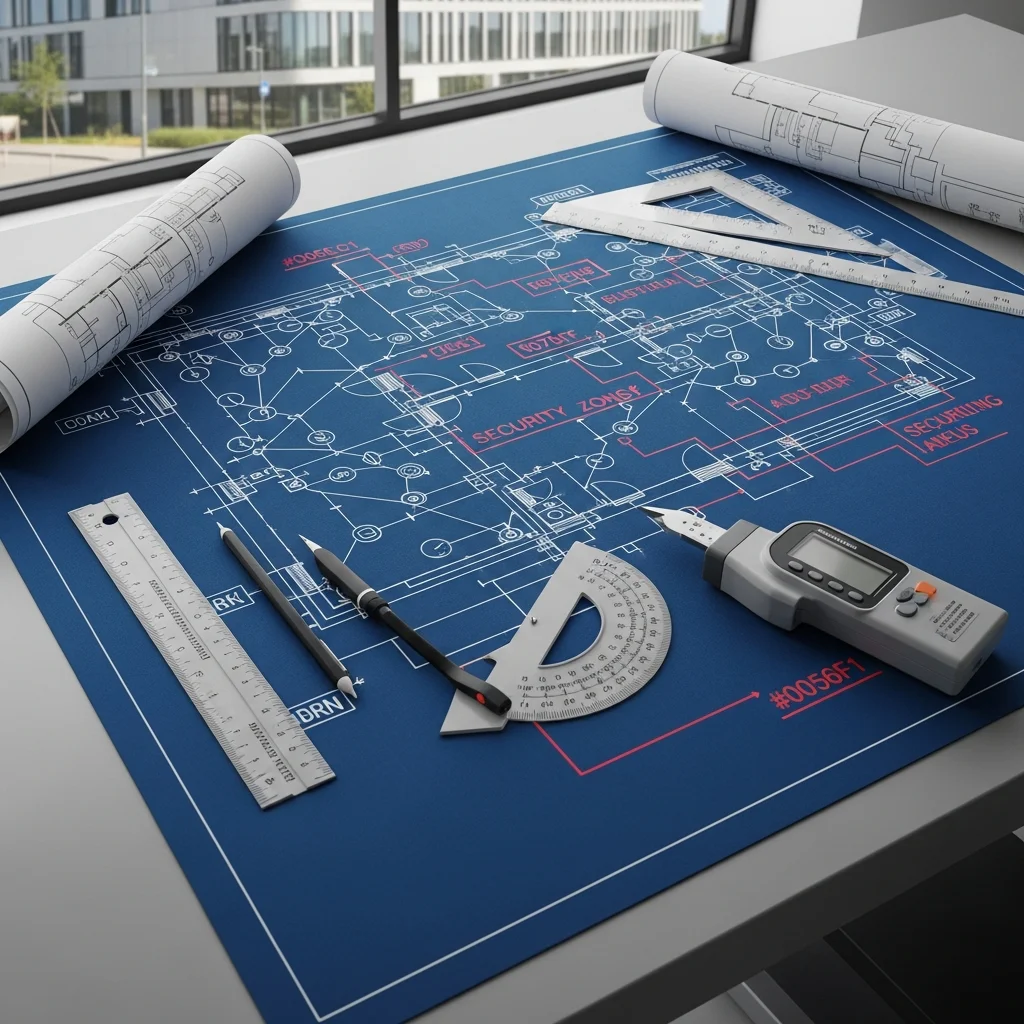
After the as-is analysis and requirements assessment comes the phase of concept development and detailed planning, in which the abstract protection objectives are translated into a concrete technical concept. Here, the object's various security zones are defined and the appropriate detector technologies are selected. A basic distinction is made between perimeter surveillance (protection of the building envelope), room surveillance (protection of the building interior) and object protection (protection of specific valuables or areas).
Selecting the right detectors is crucial to the effectiveness of the EMA. Various types are used, including:
- Magnetic contacts: monitor doors and windows for opening.
- Glass-break detectors: detect the breaking of panes (acoustically or seismically).
- Motion detectors: detect movement in a room (e.g. passive infrared (PIR), microwave or dual technology).
- Light barriers or curtain detectors: secure specific passageways or areas.
Detailed planning also includes determining the alarm control panel, the power supply (including standby power in accordance with VdS 2311 and DIN EN 50131-6), the signalling devices (audible and visual) and the transmission equipment to the emergency and service control room (NSL). Redundant transmission paths are often required for higher security classes to ensure fail-safety. The type of cabling (wired, wireless or hybrid) is also determined at this stage, with wired systems generally offering higher stability, while wireless systems are more flexible.
An essential part of detailed planning is also the creation of alarm plans and the definition of alarm routes. Who is alerted, when and how? What measures should be taken in the event of an alarm? These questions are answered precisely to ensure a fast, coordinated response. At this stage, PLANATEL® creates detailed planning documents that serve as the basis for tendering and subsequent installation and that take all relevant standards and guidelines into account.
Tendering, award and independent project support
Once concept development and detailed planning of the intrusion detection system are complete, the tendering and award phase follows. This step is crucial for finding qualified installers who can install the planned EMA in line with the technical specifications and applicable standards and guidelines. A professional tender minimises the risk of errors, unforeseen costs and poor workmanship.
For this, PLANATEL® creates detailed, manufacturer-independent specifications of services that precisely describe all technical requirements, component selection, installation guidelines and the required qualifications of installers. This ensures fair competition and allows providers to submit comparable, transparent offers. The specifications of services are based on the previously developed planning documents and take account of the requirements of VdS 2311 and DIN VDE 0833-3, to ensure the legal compliance and quality of the subsequent installation.
The subsequent award phase involves evaluating the offers received. This is not just about price, but also the technical suitability, references and certifications of potential installers. PLANATEL® supports its clients in this evaluation, conducts bidder discussions and gives a well-founded recommendation for selecting the most suitable partner. Our independence from manufacturers and installers is a decisive advantage here, since we act exclusively in the client's interest and receive no commissions.
Throughout the entire installation phase, PLANATEL® provides comprehensive project support. This includes monitoring construction progress, compliance with plan specifications and standards, coordination between the various trades, and quality assurance. Regular site meetings and documentation ensure that the project is completed on time and within budget. This independent support is essential to ensure the quality of the work and to identify and resolve potential problems at an early stage.
Commissioning, acceptance and comprehensive documentation
Commissioning and acceptance of an intrusion detection system are crucial steps that ensure the system is fully functional and meets the planned requirements as well as all relevant standards. This phase requires the utmost care and a systematic approach to ensure the long-term reliability and legal compliance of the EMA.
First, the installer carries out detailed commissioning of the system. All components are connected, configured and checked for correct function. This includes the sensors, the alarm control panel, the signalling devices and the transmission equipment to the emergency and service control room. Particular attention is paid to correctly parameterising the detectors, to minimise false alarms while ensuring a high level of detection reliability. Arming and disarming as well as the various operating modes are also thoroughly tested.
Acceptance of the EMA is a formal process in which the installed system's compliance with the planning documents, the specifications of services and the applicable standards (in particular VdS 2311 and DIN VDE 0833-3) is checked. PLANATEL® supports this process as an independent expert. This includes carrying out functional tests, checking the cabling and mounting, and monitoring the alarm routes. A detailed acceptance report is drawn up recording all test results, any defects and the agreed corrective measures. Final acceptance only takes place after successful rectification of defects and complete functionality.
A further critical aspect is comprehensive documentation. This must contain all relevant information about the system, such as wiring diagrams, detector location plans, configuration data, maintenance instructions and test records. Complete, up-to-date documentation is essential not only for legally compliant operation and servicing, but also for future extensions or in the event of a claim against insurers. PLANATEL® ensures that all required documents are handed over completely and correctly and comply with operator obligations.
Common mistakes in EMA planning and how to avoid them
Despite clear guidelines and the importance of intrusion detection systems, mistakes keep occurring in planning practice that can impair the effectiveness and cost-efficiency of the systems. Recognising and avoiding these pitfalls is crucial to the success of a security project.
A common mistake is inadequate risk analysis and requirements assessment. If the actual protection requirement is not precisely captured, this can lead to the system being over- or under-dimensioned. An oversized EMA causes unnecessary costs, while an undersized system has serious security gaps. An example would be exclusively monitoring the envelope of an object with a high need for asset protection, without taking additional room and object protection into account.
Another critical point is failure to observe relevant standards and guidelines. VdS 2311 and DIN VDE 0833-3 in particular are essential for the system's legal compliance and insurability. Mistakes in classifying the system or selecting non-certified components can mean that insurance cover lapses in the event of a claim, or that the system does not meet police requirements.
Often, manufacturer dependency is also not sufficiently taken into account. Planning that is too closely tied to a particular manufacturer can limit flexibility in procurement, make future extensions more difficult and lead to higher costs. Independent planning, as offered by PLANATEL®, avoids this dependency and allows the best components on the market to be selected.
Further mistakes include poor coordination with other trades (e.g. electrical, construction), which can lead to installation problems and delays, as well as neglecting documentation and maintenance planning. Missing or incomplete documentation makes servicing more difficult and can cause considerable problems with later adaptations. Early involvement of independent planning experts and a structured approach can proactively avoid these mistakes and realise a robust, future-proof EMA.
The role of independent planning experts: your advantage with PLANATEL®
The complexity of intrusion detection system planning, the multitude of technical possibilities and the constant updating of standards and guidelines require specialist expertise. This is where independent planning experts such as PLANATEL® come in, playing a decisive role in the success of your security project.
PLANATEL® has operated since 1992 as a manufacturer-independent and financially independent planning and consulting company. With over 34 years of experience in the conception and planning of security systems, we offer our clients expertise free from the interests of individual manufacturers or installers. Our sole focus is on developing the optimal, cost-efficient and legally compliant solution for your specific requirements.
Our services cover the entire intrusion detection system planning process: from the initial as-is analysis and requirements assessment, through detailed concept development and tendering, to independent project support and acceptance. We ensure that all relevant standards such as VdS 2311, DIN VDE 0833-3 and DIN EN 50131 are precisely observed. This gives you the certainty that your EMA not only functions technically flawlessly, but also meets the requirements of insurers and authorities.
By commissioning PLANATEL®, you benefit from:
- Manufacturer independence: we recommend the best products and technologies, regardless of brand ties.
- Cost optimisation: through precise planning and transparent tenders, we avoid unnecessary expenditure and find the most economical solution.
- Legal compliance: your system always meets current standards and guidelines.
- Risk minimisation: we identify and address potential weak points early on.
- Transparency and control: you always keep an overview of project progress and costs.
Trust the independent expertise of PLANATEL® to plan an intrusion detection system that optimally meets your protection needs and lasts for the long term. We plan maintenance concepts and select certified installers to ensure the quality of installation and operation.

Next step
Contact us for a no-obligation initial consultation.
PLANATEL®: Independent planning and consulting since 1992
Tel: 040 / 23 73 02-30
Email: info@planatel.de
Frequently Asked Questions
What advantages does a VdS-certified intrusion detection system offer?
A VdS-certified intrusion detection system offers a high level of security and reliability, as it is planned, installed and operated according to the strict guidelines of VdS Schadenverhütung GmbH. This ensures high quality of components and installation, minimises the risk of false alarms and increases resistance to attack. In addition, VdS certification is often a prerequisite for full insurance cover in the event of a claim and is recognised by many insurers and authorities as a mark of quality.
How long does the entire EMA planning process take?
The duration of the intrusion detection system planning process depends heavily on the complexity and size of the object to be protected. For smaller objects, planning can take a few weeks, while for large, complex industrial facilities or public buildings, several months is realistic. Factors such as the availability of existing plans, the speed of decision-making by the client and the complexity of coordination with other trades influence the timeline. Detailed scheduling is part of the initial project definition.
Can existing mechanical security measures be integrated into EMA planning?
Yes, existing mechanical security measures such as high-quality doors, windows, locks and grilles should definitely be integrated into the planning of an intrusion detection system. The police generally recommend a combination of mechanical and electronic burglary protection, since mechanical security measures form the primary barrier and increase the time it takes burglars to break in. The EMA complements this with detection and alerting. Careful coordination of both security levels maximises overall security and enables early intervention, often before the mechanical barriers have been overcome.
What should be considered when selecting an installer for the EMA?
When selecting an installer for your intrusion detection system, you should pay attention to their qualifications, certifications (e.g. VdS recognition), references and experience. It is crucial that the installer can install the system in line with the planned specifications and all relevant standards and guidelines. A manufacturer-independent tender and independent support from a planner such as PLANATEL® help you find the most suitable, qualified installer to guarantee high-quality, legally compliant installation.
What role does documentation play after acceptance of the EMA?
Comprehensive documentation after acceptance of an intrusion detection system is of crucial importance. It contains all relevant information about the system, such as wiring diagrams, detector location plans, configuration data, maintenance instructions and test records. This documentation is essential not only for legally compliant operation and regular servicing, but also for any future extensions, troubleshooting or claims against insurers and authorities. Complete documentation ensures traceability and preserves the value of your investment.
Which standards are relevant to the planning of intrusion detection systems?
For the planning of intrusion detection systems (EMA), VdS 2311 "Guidelines for intrusion detection systems - planning and installation" and DIN VDE 0833-3 "Alarm systems for fire, intrusion and hold-up - Part 3: Requirements for intrusion and hold-up alarm systems" are primarily relevant. In addition, the European DIN EN 50131 series of standards must be observed, which defines general system requirements and component standards. These sets of rules ensure the system's technical and insurance-related legal compliance.
What is the difference between VdS classes and DIN EN 50131 security grades?
VdS classes (A, B, C) and DIN EN 50131 security grades (Grade 1 to 4) are classification systems for intrusion detection systems that indicate the degree of protection and resistance to attack. The VdS classes are a German set of rules often required by insurers and place detailed requirements on planning, installation and operation. DIN EN 50131 is a European standard that defines technical requirements for systems and components. Although they pursue similar protection objectives, direct equivalence is not always possible, but the VdS classes generally meet the requirements of the corresponding DIN EN grades.
Why is independent planning important for intrusion detection systems?
Independent planning is crucial to ensure an objective intrusion detection system tailored to the customer's specific needs. Independent planners such as PLANATEL® are not tied to particular manufacturers or products and can therefore recommend the best and most cost-efficient solutions. This avoids manufacturer dependency, optimises the investment and ensures the system meets all relevant standards and guidelines, without conflicts of interest influencing decision-making.
What role does risk analysis play in EMA planning?
Risk analysis is the fundamental first step in planning an intrusion detection system. It identifies and assesses potential threats and weak points of an object, both external and internal. Based on this analysis, the concrete protection objectives are defined, the type and scope of the necessary security measures are determined, and the appropriate security class of the EMA is established. A precise risk analysis prevents over- or under-dimensioning of the system and forms the basis for a tailor-made, effective security solution.
Sources and further information
- 180-sicherheit.de
- dgwz.de
- bhe.de
- meister-brandschutz.de
- en50131.de