


Access Management & Intrusion Detection13 min read
Access Control Office Building Planning: Strategies for Security and Efficiency
Effective planning of access control systems is decisive for the security, efficiency and legal compliance of modern office buildings. This article looks at the essential aspects, from the needs analysis to system integration.
Planning access control for office buildings requires a detailed needs analysis, taking into account legal frameworks such as the GDPR and relevant standards such as DIN VDE 0833, as well as selecting suitable technologies. Manufacturer-independent consulting is essential here, to guarantee a tailored, scalable, future-proof system that integrates seamlessly with the existing building infrastructure.
Comprehensive planning of access control systems for modern office buildings
Effective planning of access control systems is decisive for the security, efficiency and legal compliance of modern office buildings. This article looks at the essential aspects, from the needs analysis to system integration.
Key Takeaways
- A comprehensive needs analysis and strict compliance with legal standards (GDPR, DIN VDE 0833, EN 60839-11-1) are the cornerstones of successful access control planning.
- Integrating access control with other building systems such as fire alarm systems, video surveillance and time-tracking maximises security and efficiency.
- Manufacturer-independent planning and consulting by experienced experts such as PLANATEL® secures a future-proof, economical, tailored solution free of manufacturer dependency.
Effective access control is therefore essential to protect employees, visitors and assets while keeping operations running smoothly. Planning such a system, however, is complex and requires deep expertise to meet both technical requirements and statutory rules. Forward-looking, manufacturer-independent planning lays the foundation for a secure, efficient, future-oriented office building. PLANATEL® has supported you in this since 1992, with over 34 years of experience.
Fundamentals of Access Control in Office Buildings: More Than Just Security
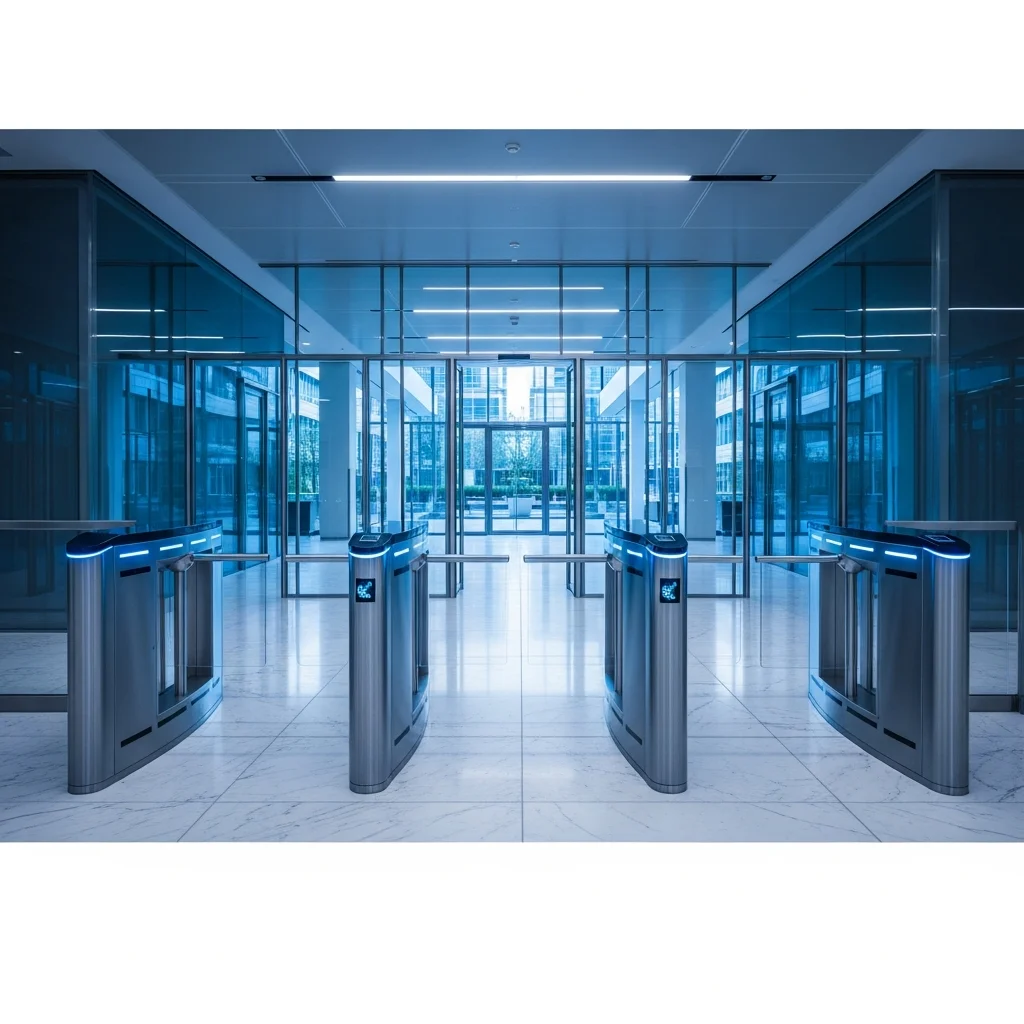
Implementing access control in office buildings goes far beyond simply protecting against unauthorised entry. It is an integral part of a comprehensive security concept covering the protection of people, data and assets. Modern access control systems allow precise control over who gets access, when, and where. This is especially relevant in environments with different security zones, for example server rooms, research and development departments or sensitive archive areas. A well-planned system not only improves physical security but also operational efficiency, by reducing manual processes and automating the traceability of access authorisations. It also makes a significant contribution to compliance with internal policies and external regulations.
A typical scenario is a company with flexible working hours and external service providers. Without electronic access control, keys would have to be managed and issued manually, and replacing them if lost would be a laborious process. A digital system allows authorisations to be time-limited, revoked immediately, and every entry logged in detail. This minimises risk and increases transparency. The initial investment in professional planning and implementation often pays for itself through reduced administrative costs, minimised security risk, and better overall organisation. PLANATEL® analyses your specific requirements to design a system that is optimally tailored to your office building's individual needs while allowing for future scalability.
Legal Framework and Standards for Access Control Systems
Planning and implementing access control systems in Germany, Austria and Switzerland must take into account a wide range of legal frameworks and technical standards, to guarantee legal compliance. Central to this is the General Data Protection Regulation (GDPR), since access control systems process personal data such as names, and access times and locations. Under Article 5 GDPR, this data must be processed according to the principles of lawfulness, purpose limitation, data minimisation and storage limitation. This means only the strictly necessary data may be collected and stored, and only for the defined purpose of access control.
Alongside the GDPR, technical standards and guidelines are of decisive importance. DIN VDE 0833-3, for example, sets requirements for danger alarm systems, a category that also includes access control systems, particularly when they are linked to other security disciplines such as intrusion detection systems (EMA) or fire alarm systems (BMA). The European standard EN 60839-11-1 specifies the system and component requirements for electronic access control systems and is authoritative for technical implementation. For fire protection, DIN 14675 for fire alarm systems and VdS 2095 guidelines for fire alarm systems are relevant, particularly when integrating access control into escape and rescue route concepts. Independent planning by PLANATEL® ensures that all relevant standards and statutory requirements are taken into account from the outset, to avoid costly rework and legal risk.
System Architectures and Technologies for Access Control
The market for access control systems offers a broad range of technologies and architectures that must be chosen according to the use case and security requirements. Systems can generally be divided into stand-alone, networked (online) and hybrid solutions. Stand-alone systems suit individual doors or smaller areas, while networked systems allow central administration and monitoring across an entire building or even multiple sites. Hybrid approaches combine the advantages of both worlds, monitoring critical areas online while operating less critical doors offline.
RFID transponders (cards, key fobs) remain the dominant identification technology, thanks to their reliability and cost-effectiveness. Biometric methods such as fingerprint, iris or facial recognition are, however, becoming increasingly important, offering a higher level of security since they are based on unique physical characteristics. Mobile access solutions, in which smartphones serve as the identification medium, are also establishing themselves as a flexible, user-friendly alternative. Choosing the right technology depends on factors such as the desired security level, ease of use, cost, and the ability to integrate with existing systems. PLANATEL® advises you on a manufacturer-independent basis on selecting the optimal system architecture and technology, to develop a future-proof, needs-based solution that meets not only current but also future requirements. The global market for access control systems is expected to exceed a volume of over 15 billion euros by 2028, with an annual growth rate (CAGR) of around 8-10%, underlining the dynamism and innovative strength of this sector.
The Planning Process for an Access Control System: From Needs Analysis to Detailed Planning
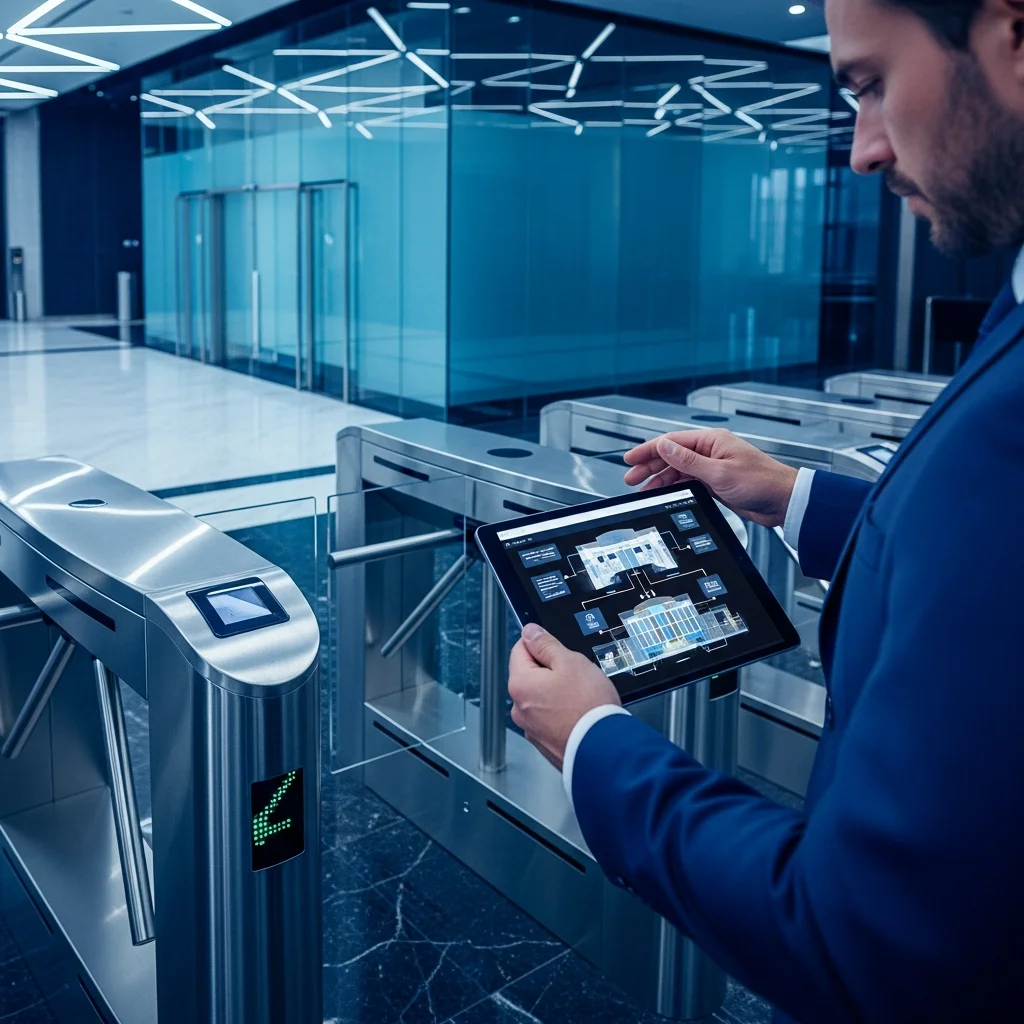
A successful planning process for an access control system is structured and runs through several phases, which PLANATEL® has successfully guided for over 34 years. It begins with a comprehensive as-is survey and needs analysis. This captures, in detail, the existing infrastructure, current security risks, the number of user groups (employees, visitors, service providers), protection objectives, and specific requirements for access control. It clarifies which areas particularly need protection, what access times should apply, and which interfaces to other systems (e.g. time-tracking, fire alarm systems) are needed.
Building on this, the target concept is developed, producing an outline concept for the future system. This includes selecting suitable technologies and system architectures, defining security zones and access authorisations, and initial considerations on integration. In the detailed planning phase, all technical specifications are finalised: from the exact positioning of readers and door terminals, through cabling plans, to software configuration and emergency strategies. This detailed planning forms the basis for a precise tender and award, in which PLANATEL® acts as an independent adviser, preparing the specifications of services and objectively evaluating installers' bids. Our goal is to find a solution that is technically optimal, economically advantageous, and fully legally compliant, without creating manufacturer dependency.
Integrating Access Control into Building Technology
The true strength of a modern access control system often only unfolds through its seamless integration into the building's overall technology. Such networking creates synergies, increases efficiency, and significantly improves the overall security of an office building. One of the most important integrations is the connection with fire alarm systems (BMA). In the event of a fire alarm, the access control system can automatically unlock doors on escape routes to enable rapid evacuation, while simultaneously locking doors to hazardous areas to prevent the spread of fire or smoke. This is done in strict compliance with DIN 14675 and VdS 2095.
Other important integration points are intrusion detection systems (EMA), where the access control system can serve as the arming/disarming device, and video surveillance systems. In the event of an unauthorised access attempt, video surveillance can be automatically activated and the corresponding footage recorded, significantly aiding the investigation of incidents. Linking with time-tracking systems also streamlines administrative processes, by using access data directly for time recording. Integration into higher-level building management systems allows central control and monitoring of all technical systems. PLANATEL® plans these complex interfaces precisely and on a manufacturer-independent basis, to deliver a harmonious, high-performing overall concept that optimises operations and maximises security.
Challenges and Common Mistakes in Planning Access Control Systems
Planning an access control system carries specific challenges and the risk of common mistakes that can, in the long run, lead to inefficiency, higher costs, or security gaps. One of the most serious mistakes is an inadequate needs analysis. Without a clear understanding of the actual requirements, risks and future developments, a system is often over-engineered or under-planned, leading to unnecessary spending or a lack of functionality. Another critical point is disregarding legal compliance, particularly the GDPR. Faulty data processing can result in substantial fines and reputational damage.
Manufacturer dependency is also often underestimated. Choosing a proprietary system can severely limit flexibility for future expansions or component replacement, and lead to higher operating costs. A lack of, or inadequate, scalability planning is also problematic; a system that fits today must still be expandable in five or ten years, without requiring a complete new investment. Last but not least, poor integration into existing building systems can lead to isolated solutions that increase administrative burden and leave the potential for synergies untapped. PLANATEL® identifies these potential pitfalls early and develops manufacturer-independent concepts designed for openness, flexibility and future-readiness, ruling out such mistakes from the outset.
Cost-Benefit Analysis and Cost-Effectiveness of Access Control Systems
Investing in an access control system is a strategic decision that requires a careful cost-benefit analysis to assess its cost-effectiveness. The pure acquisition cost of hardware and software is only part of the equation. Installation costs, commissioning costs, training, maintenance and potential expansions must also be considered over the system's entire lifecycle (total cost of ownership – TCO). Independent planning helps make these costs transparent and avoid unnecessary spending, by favouring manufacturer-independent, modular solutions.
On the benefit side, alongside the obvious increase in security, there are also significant efficiency gains. Automating access administration reduces the administrative burden of key management and saves on personnel costs. The ability to log access movements in detail improves traceability and can help investigate incidents. In addition, a modern access control system contributes to compliance with insurance requirements and statutory provisions, minimising potential penalties or liability risk. Improved security and the positive image of a well-protected office building can also boost its appeal to tenants and employees. PLANATEL® prepares detailed cost-effectiveness calculations and helps you objectively assess the return on investment (ROI) of your access control solution and make a well-founded investment decision.
The Role of Independent Planning and Consulting for Your Access Control
The complexity of modern access control systems and the sheer number of solutions available on the market require specialist expertise that goes beyond mere product knowledge. This is where an independent planning and consulting firm such as PLANATEL® comes in. Since 1992, we have offered our customers 100% manufacturer-independent, financially independent consulting. This means our recommendations are based solely on the best technical and economic solutions for your specific requirements, free of commissions or ties to particular manufacturers.
Our more than 34 years of experience planning access control systems and other security technology installations allow us to take a holistic view. We do not consider access control in isolation but integrate it into a comprehensive security concept that also covers fire alarm systems, intrusion detection systems and video surveillance. We support you through every phase of the project: from the initial needs analysis and target concept, through detailed planning and tendering, to support with the award and system acceptance. Our goal is to deliver a tailored, legally compliant, future-proof solution that protects your investment and optimises long-term operation. With PLANATEL®, you get a trustworthy partner who puts your interests first and helps you make the best possible decision for your office building.
Next Step
Contact us for a no-obligation initial consultation.
PLANATEL®: Independent planning and consulting since 1992
Tel: 040 / 23 73 02-30
E-Mail: info@planatel.de
Frequently Asked Questions
What role do standards such as DIN VDE 0833-3 play in planning access control systems?
DIN VDE 0833-3 is a central standard for danger alarm systems, a category that also includes access control systems, particularly when they are linked to other security disciplines. It defines requirements for planning, installation, operation and servicing, to guarantee technical safety and legal compliance. Complying with this standard is decisive for the system's reliability and acceptance, and it minimises liability risk for operators and planners. PLANATEL® ensures that your system meets these requirements.
How can access control increase efficiency in an office building?
A well-planned access control system increases efficiency by automating the manual processes of key management and reducing administrative burden. It allows access authorisations to be adjusted quickly, makes it easier to trace people's movements, and can be linked to time-tracking systems. This streamlines workflows, saves on personnel costs, and enables more flexible use of premises, all contributing to a more productive working environment overall.
What aspects should be considered when choosing an identification technology?
Several aspects should be considered when choosing an identification technology (e.g. RFID, biometrics, mobile access): the required security level, ease of use for different user groups, the cost per identification medium, the ability to integrate with existing IT infrastructure, and scalability for future expansion. Hygiene aspects of biometric systems, or staff acceptance, also play a role. A well-founded decision requires carefully weighing these factors as part of the needs analysis.
How does PLANATEL® guarantee the future-readiness of a planned access control system?
PLANATEL® guarantees the future-readiness of an access control system through manufacturer-independent planning based on open standards and modular architectures. We ensure the system can be flexibly expanded, can integrate new technologies, and is not dependent on a single provider. This protects your investment against rapid obsolescence and allows adjustments to changing requirements without a complete new investment. Our more than 34 years of experience go into every concept.
What role does integration into a building management system (BMS) play for access control?
Integrating access control into a building management system (BMS) allows central control and monitoring of all of a building's technical systems. This creates a holistic view of building security and efficiency. Through the BMS, access events can be linked to other systems (e.g. heating, ventilation, lighting) to save energy or respond to specific events. It simplifies administration, improves responsiveness to faults, and significantly optimises the office building's overall operation.
What types of access control systems are available for office buildings?
Various types of access control systems are available for office buildings, including mechanical locking systems, electronic systems with RFID transponders or mobile solutions, and biometric systems (fingerprint, iris scan). The choice depends on security requirements, budget, and integration options.
How does the GDPR affect the planning of access control systems?
The GDPR requires that the principles of data minimisation, purpose limitation and storage limitation be observed when planning access control systems. Only necessary personal data may be collected and processed, and this must be done transparently and traceably, to guarantee legal compliance.
What advantages does integrating access control with fire alarm systems offer?
Integrating access control with fire alarm systems allows escape routes to be automatically unlocked for rapid evacuation in the event of an alarm, while simultaneously locking hazardous areas. This significantly improves personal safety and supports compliance with relevant standards such as DIN 14675.
Why is manufacturer-independent consulting important when planning access control?
Manufacturer-independent consulting ensures that the choice of access control system is objective and based solely on the best technical and economic solutions. It avoids manufacturer dependency, fosters scalability, and secures a flexible, cost-efficient solution for the office building over the long term.