


Fire Alarm Systems17 min read
Selecting a Fire Alarm System Installer: Your Path to a Legally Compliant, Reliable Fire Alarm System
Selecting a fire alarm system installer without manufacturer lock-in: 8 selection criteria, typical contract pitfalls, and why independent specialist planning should take precedence over the installer.
Selecting a fire alarm system installer requires careful review of certifications such as DIN 14675 and VdS recognition, technical expertise and references. Independent preliminary planning by experienced advisors such as PLANATEL® is essential in order to avoid dependency on manufacturers, find the optimal solution, and ensure the long-term legal compliance and cost-effectiveness of the fire alarm system.
Independent planning as the key to the right installer choice and long-term security
Choosing the right installer for fire alarm systems is a complex decision with far-reaching consequences for safety, cost and legal compliance. This article examines the decisive criteria and the importance of manufacturer-independent planning.
Key Takeaways
- Selecting a fire alarm system installer is a strategic decision that must be based on comprehensive criteria such as certifications (DIN 14675, VdS), experience and technical competence, not on price alone.
- Manufacturer-independent, independent planning by experts such as PLANATEL® is essential to ensure a tailored, legally compliant and cost-efficient fire alarm system and to avoid dependency on manufacturers.
- Detailed specifications of services and careful contract drafting are essential to avoid pitfalls, clearly define the scope of services, and secure the long-term operational reliability and cost-effectiveness of the fire alarm system.
Implementing a fire alarm system (BMA) is, for many companies and public institutions, not just a statutory obligation but a fundamental investment in protecting lives and property. However, the complexity of the subject, shaped by a multitude of standards, guidelines and technical options, makes selecting the right fire alarm system installer a demanding task. A wrong decision can lead not only to unnecessary costs but, in an emergency, to serious safety gaps and legal consequences. This guide from PLANATEL®, your independent planning and consulting company, sets out what you need to consider when selecting a qualified fire alarm system installer, and shows how sound preliminary planning lays the foundation for a safe and legally compliant fire alarm system.
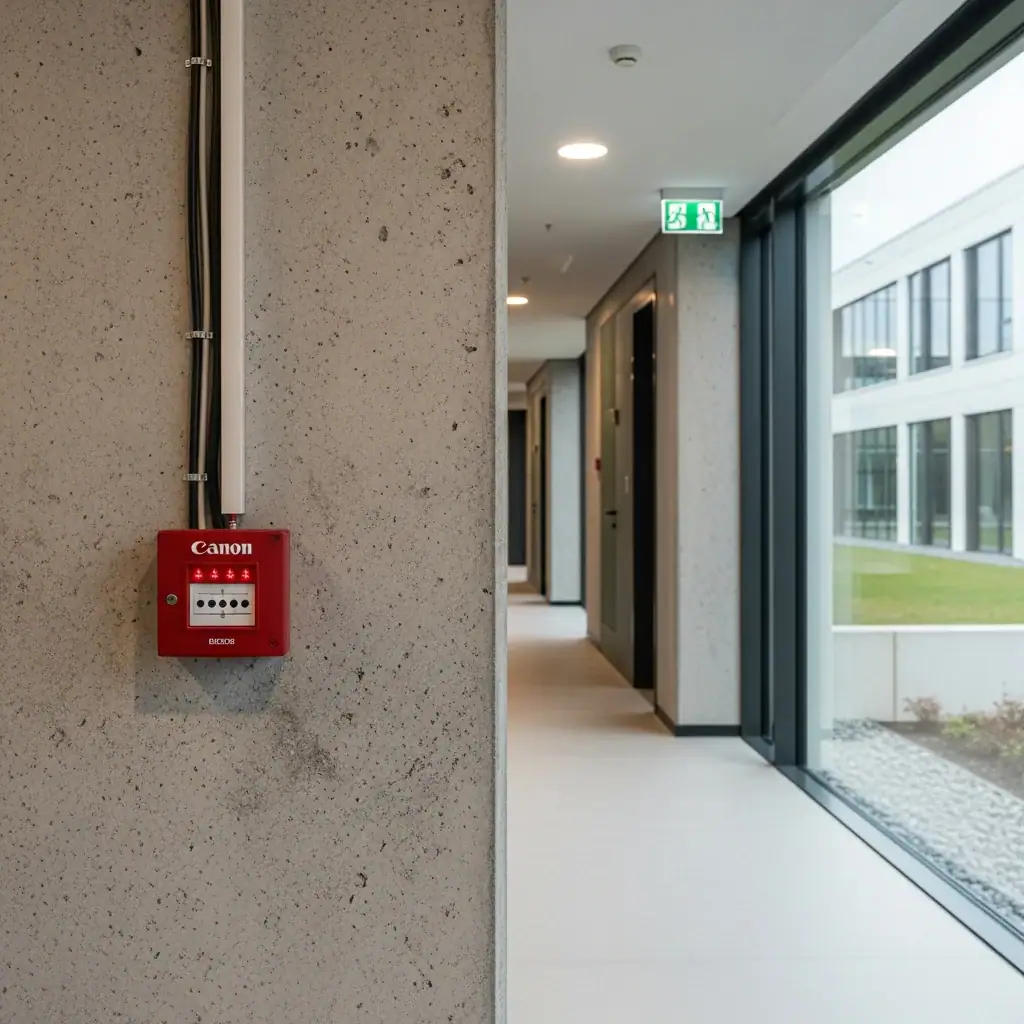
The fundamental importance of installer selection for fire alarm systems
The decision on a fire alarm system installer is far more than a technical commission; it is a strategic decision that shapes the safety of your property. A fire alarm system is a complex system that, in an emergency, must save lives and prevent immense material damage. Its reliability depends significantly on professional planning, installation, commissioning and servicing. An inadequately qualified installer can cause serious defects here, which often only come to light in the event of a fire or during official inspections. Such defects range from incorrectly placed detectors, which delay fire detection, to inadequate wiring that impairs the functionality of the entire system.
The consequences of faulty installation are far-reaching: alongside the immediate danger to people and property, severe penalties are possible for non-compliance with statutory requirements. In addition, insurance payouts may be reduced or refused entirely in the event of a claim if the fire alarm system does not meet the recognised rules of technology or the contractually agreed standards. Choosing a competent, certified installer is therefore an investment in legal compliance and the long-term operational safety of your system. It not only minimises risks but also builds trust among employees, tenants and business partners by guaranteeing the highest level of protection.
PLANATEL® has emphasised for over 34 years the need for careful installer selection based on sound, manufacturer-independent planning. Only in this way can it be ensured that the fire alarm system is optimally tailored to the specific requirements of the property and functions reliably over its entire life cycle.
Legal and normative requirements for fire alarm system installers
The planning, installation and operation of fire alarm systems are subject to strict statutory and normative requirements in Germany, Austria and Switzerland. For fire alarm system installers, DIN 14675, the VdS guidelines and the European EN 54 series of standards are of central importance. DIN 14675 describes the proper setup and operation of fire alarm systems and voice alarm systems (SAA). It sets out the requirements for specialist companies for all phases, from planning through design, installation and commissioning to acceptance and servicing.
Certification to DIN 14675-2 has been mandatory since 1 November 2003 for specialist companies that plan, design, install, commission, accept or service fire alarm systems connected to the fire brigade. This certification confirms that the company meets the high requirements for expertise and experience needed to ensure effective protection. The VdS guidelines, in particular VdS 2095, supplement the DIN standards and set out additional requirements for the planning and installation of fire alarm systems required for insurance purposes. VdS recognition as an installer company is a recognised quality mark and is often explicitly required by insurers or clients.
The European EN 54 series of standards defines the technical requirements, test procedures and performance criteria for the components of fire and smoke detection systems. It ensures that the components used are reliable and efficient. Compliance with these standards is not only a matter of legal compliance but also a decisive factor for the operational reliability and acceptance of the fire alarm system by authorities and insurers. In its planning, PLANATEL® ensures that all relevant national and European standards and guidelines are taken into account, to guarantee a future-proof, legally compliant solution.
Criteria for selecting a qualified fire alarm system installer
Selecting a fire alarm system installer should be based on a comprehensive evaluation of various criteria, in order to ensure a high-quality, reliable implementation of your fire alarm system. The most important aspects include:
- Certifications and recognitions: A qualified installer must be certified to DIN 14675-2. This certification is proof of competence in all phases of installing and servicing a fire alarm system. In addition, VdS recognition is a strong quality mark that is often required by insurers and provides additional assurance.
- Experience and references: Check the installer's experience with similar projects in terms of size, complexity and sector. References allow you to assess the quality of the work delivered and the satisfaction of previous customers. An established company with a long track record, such as PLANATEL® with over 34 years of experience, provides a solid basis here.
- Technical competence and specialist personnel: The installer should have qualified, regularly trained specialist personnel who are familiar with the latest technologies and standards. This includes knowledge of different types of detectors (smoke, heat, flame detectors), fire alarm control panels and alerting systems.
- Service offerings and maintenance concepts: Clarify what services the installer offers after installation, particularly in the area of servicing. Under DIN VDE 0833-1 and DIN 14675, the operator is obliged to carry out regular inspections and maintenance. A comprehensive maintenance concept, providing for quarterly inspections and at least annual servicing by qualified specialist personnel, is essential for long-term operational reliability.
- Manufacturer-independence: An installer tied to particular manufacturers may tend to favour that manufacturer's products, even where they are not the optimal solution for your specific property. Emphasising manufacturer-independence, as practised by PLANATEL®, is essential for an objective, needs-based selection of components.
Careful review of these criteria is crucial for making a well-founded decision and obtaining a fire alarm system that meets the highest safety standards.
The role of manufacturer-independence and independence in choosing an installer
Manufacturer-independence is a cornerstone of successfully planning and installing fire alarm systems. When a fire alarm system installer is tied to particular manufacturers, there is a risk that the selection of components and systems is not based primarily on the specific requirements of the property, but on commercial interests or existing partnerships. This can lead to a suboptimal solution that is inefficient, over-dimensioned or not future-proof. Such manufacturer dependency can take various forms, for example preferred product lines, limited compatibility with other systems, or a lack of flexibility for future extensions.
PLANATEL® has operated since its founding in 1992 as a 100% independent and financially neutral planning and consulting company. We receive no commissions or remuneration of any kind from manufacturers or installers. This strict independence allows us to act solely in our clients' interests. When selecting a fire alarm system installer, this means that we work with you to prepare a detailed service specification and tender documents precisely tailored to your needs. We evaluate installers' offers objectively, based on technical criteria, references, service offerings and a fair price-performance ratio, rather than being guided by manufacturer preferences.
The benefits of this manufacturer-independent approach are manifold: you receive a fire alarm system tailored precisely to your property, avoid unnecessary costs from superfluous functions or expensive proprietary solutions, and secure long-term flexibility. Our expertise ensures that the selected components and the installer meet the highest quality standards, and that the system can be operated efficiently and reliably over its entire life cycle, without you falling into unwanted dependency on a manufacturer.
The planning process as the foundation: why independent preliminary planning is crucial
Before a fire alarm system installer is even selected, sound and independent planning of the fire alarm system is of the greatest importance. This step forms the indispensable foundation for the entire project and minimises later risks and costs. DIN 14675-1 and DIN VDE 0833-2 provide for the creation of a fire alarm and alerting concept (BMAK) as the basis for the planning, installation and operation of fire alarm systems. This concept brings together all requirements for the system and serves as a detailed specification for the tender.
PLANATEL® undertakes the manufacturer-independent planning and design of your fire alarm system during this critical phase. This includes preparing a comprehensive fire alarm concept that sets out in detail the specific protection objectives, the scope of automatic monitoring, measures to prevent false alarms, the type of alerting and control functions, and the requirements for documentation and servicing. We analyse your property, assess potential hazards and define the optimal technical solution, without being tied to the products or systems of particular manufacturers. This independent preliminary planning ensures that the tender documents are precise and complete, giving installers a clear basis for their offers and significantly improving comparability.
A well-thought-out fire alarm concept not only helps to reduce false alarms during operation, but also to avoid costs during planning and execution and problems during acceptance. It enables transparent cost control, since all services are clearly defined, and protects you from unforeseen additional costs or reductions in scope. By involving PLANATEL® at an early stage, you ensure that your fire alarm system stands on a solid foundation from the outset, is legally compliant, and meets the highest safety requirements in the long term.
Common pitfalls in installer selection and how to avoid them
Selecting a fire alarm system installer carries various pitfalls that can delay or increase the cost of the project, or jeopardise the operational reliability of the fire alarm system. One of the most common mistakes is a purely price-driven decision. Although cost is an important factor, the lowest price should never be the sole selection criterion. An offer that is too cheap can indicate inferior components, inadequate planning, missing certifications or poor service, which often prove considerably more expensive in the long run.
Another pitfall is an inadequate specification of requirements. Without a detailed fire alarm concept and clear service descriptions, installers may interpret requirements differently, leading to offers that cannot be compared and later disputes about the scope of services. This can also mean that important functions or components are overlooked, compromising the safety of the system.
Neglecting references and proof of certifications is also a critical mistake. An installer without the required DIN 14675 certification or VdS recognition carries significant risks in terms of legal compliance and the quality of the work. In addition, poor contract drafting that fails to set out clear rules on warranty, maintenance and liability can lead to major problems in the event of a claim.
PLANATEL® helps you avoid these pitfalls. Through our independent planning, we prepare detailed specifications of services that enable transparent, comparable offers. We support you in carefully reviewing installer qualifications, evaluating references and drafting legally compliant contracts. Our expertise ensures that you choose an installer who is not only cost-efficient but, above all, reliable and qualified to implement your fire alarm system to the highest standards.
Cost considerations and long-term cost-effectiveness of fire alarm systems
The cost of a fire alarm system is a significant factor in decision-making, but should always be viewed in the context of long-term cost-effectiveness and overall benefit. The initial investment costs for a BMA vary considerably and depend on the size and complexity of the building, the type of system, the number of detectors and the wiring required. A small fire alarm system can cost in the upper four-figure euro range, while large systems can reach five- to six-figure amounts.
In addition to acquisition and installation costs, ongoing operating costs must also be taken into account. These include the costs of regular inspections and maintenance, which must be carried out quarterly and annually respectively under DIN VDE 0833-1 and DIN 14675. Maintenance costs per detector can, for example, range between 5 and 15 euros per year. Further operating costs can arise from replacing batteries (every 4 years) or detectors (every 8 years).
Independent planning by PLANATEL® contributes significantly to long-term cost-effectiveness. Through an optimised system design and the selection of energy-efficient components, operating costs can be reduced. A precise service specification in the tender prevents unnecessary investment in over-dimensioned or unsuitable technology. In addition, selecting a qualified installer minimises the risk of false alarms and faults, which not only incur costs but can also affect acceptance of the system.
Investing in a high-quality, legally compliant fire alarm system installed and maintained by a competent installer pays off in the long run. It protects not only against immense property damage and business interruptions but also against the financial and legal consequences of inadequate fire protection provision. A holistic cost assessment that takes into account the total cost of ownership (TCO) is therefore essential.
Contract drafting and service specifications: creating clarity
Precise, comprehensive contract drafting and a detailed service specification are crucial to the success of a fire alarm system project and to avoiding misunderstandings or disputes. The contract with the fire alarm system installer should clearly regulate all aspects of the project, from planning and installation to acceptance and servicing. It is important that all relevant standards and guidelines, such as DIN 14675, VdS 2095 and EN 54, are explicitly named in the contract and that compliance with them is guaranteed.
The service specification, ideally based on independent preliminary planning, must define the precise scope of the services to be provided. This includes:
- Detailed fire alarm concept: defining the protection objectives, monitoring areas, detector types and alerting concepts.
- Technical specifications: precise details of the components to be used, their properties and compatibility.
- Installation guidelines: requirements for mounting, wiring and integration into existing building technology.
- Commissioning and acceptance: a clear definition of the test procedures, test protocols and the formal acceptance by the operator and, where applicable, experts or the fire brigade.
- Servicing and support: agreements on inspection and maintenance intervals, response times for faults, availability of spare parts and the keeping of an operations log.
- Documentation: requirements for complete system documentation, including as-built drawings, operating instructions and test reports.
PLANATEL® supports you in preparing these comprehensive contract documents and service specifications. Our expertise ensures that all technical, legal and insurance-related requirements are taken into account and that the contract contains no unclear passages that could lead to problems later. By creating clarity from the outset, you lay the foundation for a smooth project process and a long-term, reliable fire alarm system.
Next step
Contact us for a no-obligation initial consultation.
PLANATEL®: Independent planning and consulting since 1992
Tel: 040 / 23 73 02-30
Email: info@planatel.de
Frequently asked questions
What risks does selecting a non-certified fire alarm system installer carry?
Commissioning a non-certified fire alarm system installer carries significant risks. These include serious safety deficiencies that can lead to personal injury and property damage in the event of a fire. Legally, non-compliance with DIN 14675 can result in severe penalties and the loss of insurance cover. In addition, malfunctions and poor workmanship can lead to high follow-up costs for rectification or replacement of the system. A lack of certification is a clear sign of insufficient technical competence and should be avoided at all costs.
How can PLANATEL® support installer selection?
PLANATEL® provides comprehensive support for installer selection through independent, manufacturer-neutral consulting. We prepare detailed fire alarm and alerting concepts as well as precise service specifications that serve as the basis for the tender. We evaluate installers' offers objectively, review their certifications and references, and support you in drafting contracts. Our goal is to find the optimal solution for your property that meets the highest safety standards and is economical in the long term, without you falling into dependency on a manufacturer.
What role does the fire alarm and alerting concept (BMAK) play in installer selection?
The fire alarm and alerting concept (BMAK) is the basis for any BMA planning and therefore also for installer selection. It defines the specific protection objectives, the scope of monitoring, the type of alerting and all further technical and organisational requirements for the fire alarm system. A detailed BMAK makes it possible to prepare precise tender documents, compare installers' offers objectively, and ensure that the chosen solution meets your needs exactly. Without a BMAK, a well-founded installer selection is barely possible.
How often must a fire alarm system be serviced, and who may carry this out?
Under DIN VDE 0833-1 and DIN 14675, the operator of a fire alarm system is obliged to have it inspected and serviced regularly. This includes quarterly inspections (visual and functional checks) and at least annual servicing (thorough testing and maintenance work). This work may only be carried out by qualified specialist personnel from a specialist company certified to DIN 14675. Regular, professional servicing is crucial for the system's operational safety and legal compliance.
What cost factors beyond installation must be considered for a fire alarm system?
Beyond the pure installation costs, numerous other cost factors must be considered for a fire alarm system in order to assess its long-term cost-effectiveness. These include the regular costs of inspections and servicing, the replacement of wearing parts such as batteries (approximately every 4 years) and detectors (approximately every 8 years), and possible costs for software updates or system extensions. Energy costs for operating the system and potential costs from false alarms should also be included in the overall assessment. Independent planning helps to optimise these costs.
What is a DIN 14675 certification?
DIN 14675 certification confirms that specialist companies are competent in all phases of fire alarm systems (BMA) and voice alarm systems (SAA), from planning through installation to servicing. It is a statutory requirement for companies installing BMA connected to the fire brigade, and evidence of expertise and quality.
What role does VdS play in fire alarm systems?
VdS Schadenverhütung GmbH is an independent testing and certification body. The VdS guidelines, in particular VdS 2095, set out additional requirements for the planning and installation of fire alarm systems required for insurance purposes. VdS recognition for installer companies is a recognised quality mark and is often required by insurers.
Why is manufacturer-independence important in BMA planning?
Manufacturer-independence in BMA planning is essential for finding an objective, needs-based solution. Without being tied to particular products or systems, the fire alarm system can be optimally tailored to the specific requirements of the property, which avoids unnecessary costs, secures flexibility and increases long-term efficiency and reliability.
What are the phases of DIN 14675?
DIN 14675 divides the activities relating to fire alarm systems into different phases: planning (manufacturer-independent), design (with manufacturer reference), installation, commissioning, acceptance and servicing. Specialist companies can be certified for individual phases or all of them, in order to demonstrate their competence.
Sources and further information
- tuvsud.com
- amev-online.de
- dekra-certification.de
- vds.de
- hekatron-brandschutz.de