


Fire Alarm Systems16 min read
Reviewing your fire alarm system maintenance contract: how to secure legal compliance and efficiency
A carefully reviewed maintenance contract for fire alarm systems is crucial for the operational safety, legal compliance and cost-efficiency of your infrastructure. Find out how to avoid pitfalls and optimise costs in the long term.
Reviewing a fire alarm system maintenance contract is essential to ensure the legally compliant function of your fire alarm system in accordance with DIN 14675 and DIN VDE 0833. The scope of services, intervals, qualification of specialist personnel and the manufacturer independence of the provider must all be examined closely, to avoid hidden costs and liability risks. Independent advice helps you negotiate optimal terms and ensure operational safety.
Independent expertise for your fire alarm systems - for over 34 years
A carefully reviewed maintenance contract for fire alarm systems is crucial for the operational safety, legal compliance and cost-efficiency of your infrastructure. Find out how to avoid pitfalls and optimise costs in the long term.
Key Takeaways
- A legally compliant BMA maintenance contract is essential for operational safety, liability protection and insurance cover.
- Pay attention to detailed scopes of service, clear response times, qualified personnel and transparent costs, to avoid pitfalls.
- Manufacturer independence in contract review and drafting secures long-term cost optimisation and technological flexibility.
Fire alarm systems (BMA) are the heart of the preventive security strategy in many companies and public institutions. Their flawless function is not only a question of protecting people and assets, but also a mandatory statutory and insurance-related requirement. A well-structured, legally compliant maintenance contract for your BMA is therefore of the utmost importance. Yet the complexity of the technical standards, the variety of providers and the often opaque contract terms make reviewing and drafting such contracts a demanding task. Without sound expertise, gaps, unnecessary costs or even considerable liability risks can quickly arise. This article looks at the critical aspects you should consider when reviewing your BMA maintenance contract, and shows how independent advice can help you ensure long-term safety and cost-efficiency.
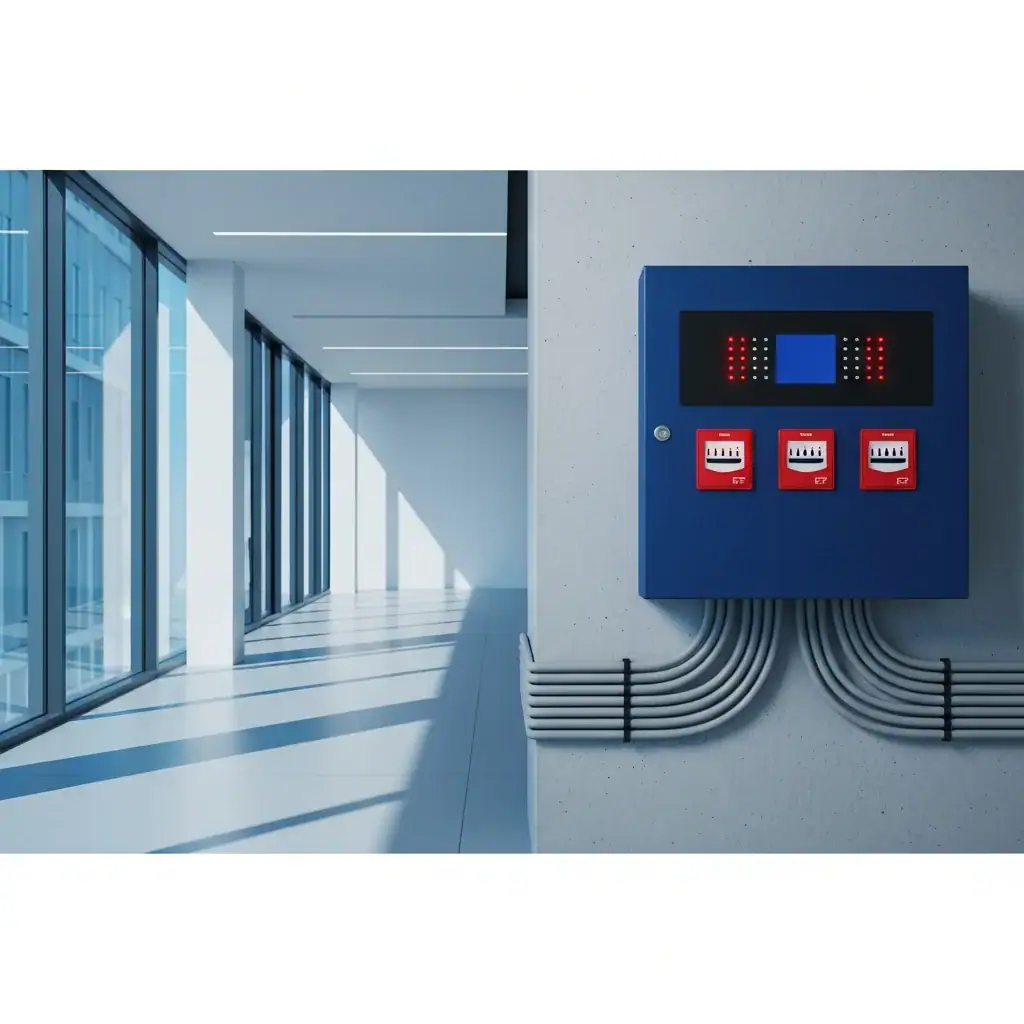
The fundamental importance of a legally compliant BMA maintenance contract
The operational readiness of fire alarm systems is not an option, but a mandatory necessity. A legally compliant maintenance contract forms the basis for your BMA to function reliably at all times, saving lives and protecting assets in an emergency. Responsibility for servicing lies primarily with the operator of the system. This means that companies and institutions must ensure that all prescribed inspections, maintenance and repairs are carried out in accordance with applicable standards and guidelines. Neglecting these obligations can have serious consequences: from substantial fines to loss of insurance cover, through to criminal consequences in the event of a claim.
A comprehensive maintenance contract goes beyond merely rectifying faults. It must include preventive measures that minimise wear and extend the system's service life. This includes regular visual and functional inspections, replacement of wearing parts such as batteries and detectors within prescribed periods, and updating of the system documentation. Compliance with these requirements is crucial not only for technical reliability, but also for demonstrating compliance to authorities, insurers and experts. A complete logbook, in which all measures are documented, is essential here. Without a solid, legally compliant maintenance contract, you expose your company to unnecessary risks and jeopardise the safety of your employees and customers.
Legal foundations and standards: what a BMA maintenance contract must deliver
The requirements for the maintenance of fire alarm systems in Germany, Austria and Switzerland are clearly defined through numerous standards and guidelines. The central sets of rules here are DIN 14675, DIN VDE 0833 (in particular parts 1 and 2) and VdS 2095. Although these standards are not laws in the strict sense, they de facto acquire the character of law when referenced in building regulations, special-building ordinances or insurance conditions.
DIN 14675 sets out the requirements for the planning, design, installation, commissioning, operation and maintenance of fire alarm systems. For maintenance, which covers inspection, servicing and repair, it is the authoritative guideline. DIN VDE 0833-1 specifies the requirements for alarm systems and, among other things, prescribes quarterly inspections and annual maintenance by qualified specialist personnel. The draft of DIN VDE 0833-1:2025-02 also emphasises the need for clearly defined duties, responsibilities and qualifications for legally secure operation. VdS 2095 supplements these standards by containing detailed requirements for the planning and installation of automatic fire alarm systems as well as their maintenance and testing, to increase operational safety and minimise insurance-related risks.
A maintenance contract must explicitly reference compliance with these standards and describe in detail the services required under them. This includes, for example, the intervals for inspections (quarterly) and maintenance (annually), the scope of the checks (visual inspection, functional testing of all detectors over a cycle, testing of the power supply, alerting devices and fire-response controls), and the qualification of the personnel carrying out the work, who must be certified under DIN 14675.
Core components of an optimal BMA maintenance contract: a checklist
An optimal maintenance contract for fire alarm systems is more than just a formal agreement; it is a detailed specification of services that covers every eventuality and guarantees maximum operational safety. When reviewing or redrafting one, you should examine the following core components closely:
- Scope of services and intervals: the contract must clearly define which services are provided at which intervals. This includes the quarterly inspection (visual check for contamination, damage, changes to the surroundings) and the annual maintenance (comprehensive functional testing of all detectors, testing of the fire alarm control panel, power supply, alerting devices, fire-response controls).
- Qualification of specialist personnel: it must be explicitly stated that maintenance work is carried out exclusively by qualified specialist personnel certified under DIN 14675.
- Response times and fault rectification: clear rules on response times in the event of a fault are essential. A 24/7 fault-clearance service with defined deadlines for rectifying faults (e.g. within 24 hours) is often decisive.
- Spare-parts availability and costs: the contract should create transparency about the availability of spare parts and their pricing. Rules on the replacement of wearing parts (e.g. batteries every 4 years, smoke detectors every 8 years in accordance with DIN 14675) must be included.
- Documentation and reporting: complete documentation of all measures carried out in the logbook is mandatory. The contract should provide for detailed maintenance records, defect lists and recommended actions that are ready for audit at all times.
- Contract terms and notice periods: pay attention to fair terms and notice periods, to avoid unnecessary manufacturer dependency. Automatic renewal clauses should be reviewed critically.
- Pricing and adjustment clauses: the cost structure must be transparent. Price-adjustment clauses should be clearly defined and tied to objective criteria.
A careful review of these points is crucial to securing the long-term functionality and cost-efficiency of your fire alarm systems.
Common pitfalls and hidden costs in BMA maintenance contracts
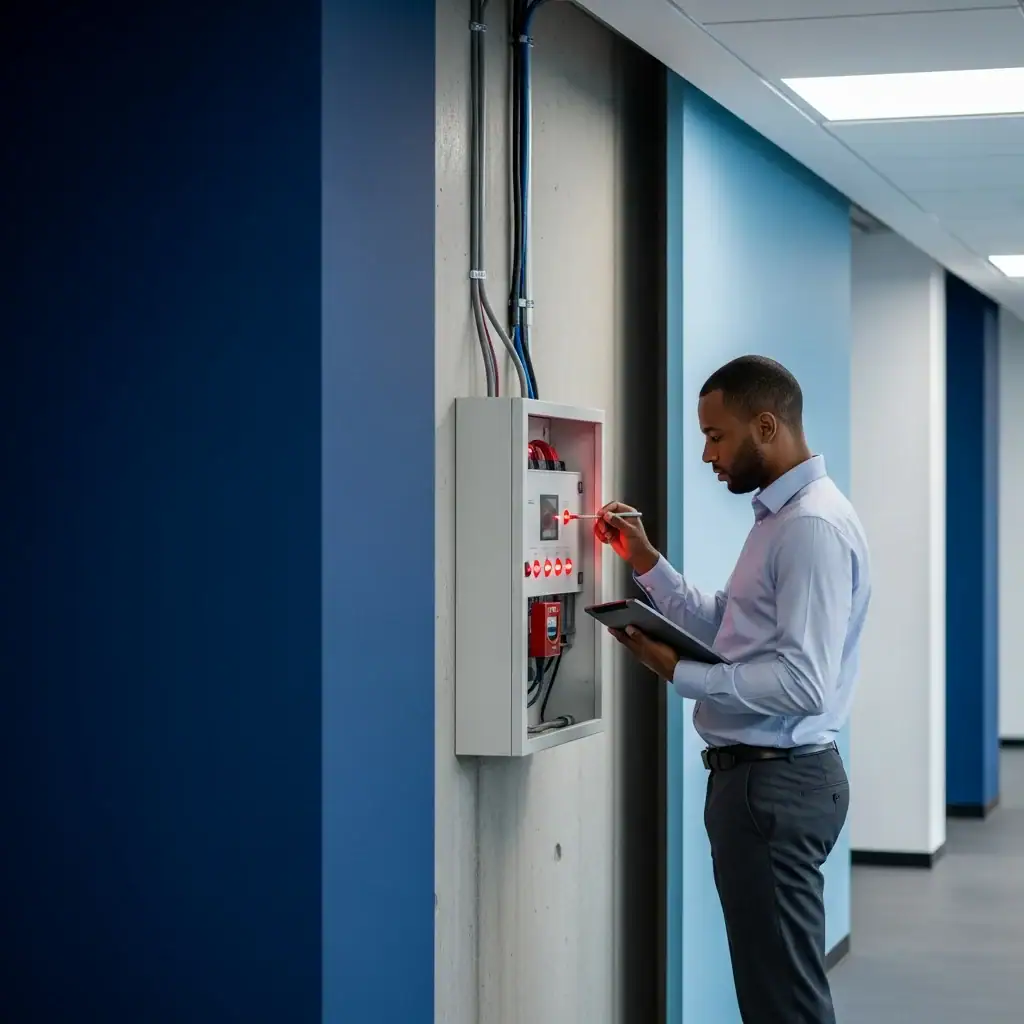
The complexity of BMA maintenance contracts harbours numerous pitfalls that can lead to unexpected costs and risks for operators. A common problem is unclear scopes of service. Contracts that only promise generic "maintenance", without listing in detail the specific tests and intervals required under DIN 14675 and DIN VDE 0833, leave room for interpretation and additional costs for services that should actually be included. This can mean that necessary tests are not carried out, or only inadequately, jeopardising legal compliance.
Another critical point is automatic contract renewals with long notice periods. Such clauses can tie operators to a service provider for years, even if the services are inadequate or prices are excessive. This severely restricts flexibility and makes it harder to switch to a more competitive provider. In addition, hidden costs for spare parts and repairs are a frequent source of frustration. If the contract does not contain clear price lists or rules for replacing wearing parts, these items can be billed at excessive rates when needed. Costs for rectifying faults outside regular working hours or for call-outs can also be inadequately specified.
The lack of manufacturer independence on the part of the maintenance provider is also a significant disadvantage. An installer tied to a particular manufacturer may tend to recommend unnecessary or overpriced components from that manufacturer, even if cheaper or technically superior alternatives are available. This leads to unwanted manufacturer dependency and can significantly increase long-term operating costs. Finally, poor documentation and missing records are a serious pitfall. Incomplete or faulty logbooks and maintenance records can cause considerable problems in the event of a claim or during official inspections, and make it harder to prove proper servicing.
The decisive role of manufacturer independence in contract drafting
The manufacturer independence of the planning and consulting company as well as the maintenance provider is a cornerstone of the long-term efficiency and safety of your fire alarm systems. A manufacturer-tied approach can quickly lead to unwanted manufacturer dependency, restricting your options and causing unnecessary costs. If a provider only services or favours the products of a particular manufacturer, there is a risk that recommendations will not be objective but made in the manufacturer's interest. This can manifest itself in various scenarios:
- Unnecessary or overpriced upgrades: a manufacturer-tied provider may tend to propose expensive system upgrades or component replacements that are not yet objectively necessary but benefit the manufacturer.
- Limited choice of spare parts: being tied to a manufacturer can limit the choice of spare parts, leading to higher prices and longer delivery times, particularly when older components are no longer produced.
- Lack of competitiveness: without the ability to compare offers from different manufacturers and providers, you lose the negotiating power essential for cost-efficient contract drafting.
- Technological stagnation: dependency on a single manufacturer can mean your system fails to benefit from the latest technological developments, which may come from other providers.
PLANATEL® has operated strictly on a manufacturer-independent and financially independent basis since 1992. This independence is our promise to you: we advise you exclusively in your best interest, without commissions or obligations to manufacturers. This allows us to identify the optimal solution for your specific requirements, whether in selecting new systems or optimising existing maintenance contracts. A manufacturer-independent review of your BMA maintenance contract ensures you receive the best possible services on fair terms, while remaining flexible in the long term.
The process of contract review and optimisation: a strategic approach
Reviewing and optimising a BMA maintenance contract requires a structured, strategic approach to take account of all relevant aspects and achieve the best possible result. As the operator, you bear responsibility for the functionality of your systems, but you can delegate the technical review to independent experts. The process is typically divided into the following steps:
- Inventory and document analysis: first, all existing documents are reviewed and analysed. This includes the current maintenance contract, the fire alarm system's logbook, previous maintenance records, revision documents, fire brigade access plans and all relevant building and usage permits. The aim is to capture the current state of the system and the contract's performance to date.
- Standards and legal compliance review: in this step, the contract is examined in detail for compliance with all relevant standards (DIN 14675, DIN VDE 0833, VdS 2095) and statutory requirements. It is established whether all prescribed services, intervals and personnel qualifications are anchored in the contract.
- Service and cost analysis: a detailed analysis of the scope of services and the associated costs is crucial. The services offered are compared against those actually needed and required by standards. Hidden costs, overpriced spare parts or unnecessary services are identified. A comparison with market-standard terms can provide valuable insights here.
- Risk assessment and manufacturer dependency: an assessment is made of potential risks, such as inadequate insurance cover, liability risks from poor maintenance, or excessive manufacturer dependency. It is checked whether the contract allows for fair, flexible arrangements.
- Development of optimisation recommendations: based on the analyses, concrete recommendations for contract optimisation are developed. This can include adjusting the scope of services, renegotiating prices, integrating clear rules for spare parts and response times, or recommending a change of provider.
- Support with negotiations and tenders: independent advisors such as PLANATEL® support you in communicating with the current service provider, renegotiating contracts, or conducting a manufacturer-independent tender to find the optimal partner to maintain your fire alarm systems.
This structured process ensures that your BMA maintenance contract is not only legally compliant, but also delivers maximum value at optimal cost.
Long-term cost and risk minimisation through strategic maintenance planning
A strategic approach to maintenance planning for fire alarm systems is far more than mere compliance with an obligation; it is an investment in the long-term safety and cost-efficiency of your company. Forward-looking contract review and drafting not only minimises acute risks, but also achieves substantial cost savings over the entire life cycle of the system. Minimising the risk of failure is a central aspect here: a well-maintained BMA reduces the likelihood of false alarms, which are not only disruptive but can also generate high costs from fire brigade call-outs. At the same time, functional reliability is guaranteed in an emergency, drastically reducing potential damage to people and assets.
Optimising operating costs is another decisive factor. A strategically negotiated maintenance contract avoids excessive prices for services and spare parts. By emphasising manufacturer independence, you can ensure you are not tied to expensive proprietary solutions, but always have access to competitive offers and technologies. This also includes the life-cycle costs of components: forward-looking planning of detector and battery replacement in line with standard requirements (e.g. smoke detectors every 8 years, batteries every 4 years) enables budget-friendly distribution of investment and avoids sudden, high expenditure.
In addition, strategic maintenance planning contributes to preserving the value of your entire infrastructure. A regularly and properly maintained fire alarm system retains not only its functionality, but also its value as an integral part of your building services. This is particularly relevant for property valuations or sales. Last but not least, transparent, legally compliant maintenance strengthens your position vis-à-vis insurers and authorities. Verifiable maintenance records and compliance with all regulations can lead to better insurance premiums and facilitate smooth processing in the event of a claim. Strategic maintenance planning, supported by independent expertise, is thus an indispensable part of responsible corporate management.
PLANATEL®: your independent partner for reviewing and optimising BMA maintenance contracts
Reviewing and optimising BMA maintenance contracts requires deep expertise and absolute independence. This is where PLANATEL®'s expertise comes in. Since our founding in 1992, we have offered manufacturer-independent and financially independent services as a planning and consulting company for medium-sized to large companies as well as public institutions. With over 34 years of experience in planning and advising on complex infrastructure projects, including fire alarm systems, we are your reliable partner.
Our role is to take the burden off you as the operator and ensure that your BMA maintenance contracts not only meet the highest technical standards, but are also economically optimal. We do not carry out any installations or maintenance work ourselves, but focus exclusively on independent analysis, planning and consulting. This guarantees that our recommendations are always objective and in your best interest, free from any obligations to manufacturers or installers. We scrutinise your existing contracts thoroughly, identify weak points, hidden costs and risks, and develop tailor-made optimisation strategies.
Our range of services includes a detailed analysis of the scope of services, verification of legal compliance under DIN 14675, DIN VDE 0833 and VdS 2095, evaluation of pricing, and identification of potential for cost reduction. We support you in preparing specifications of services for tenders, accompany you during negotiations, and help you select the optimal, certified installer for your specific requirements. With PLANATEL® at your side, you can be sure your fire alarm systems are operated reliably, legally compliantly and cost-efficiently for the long term. Our expertise protects you from unnecessary expenditure and secures the operational readiness of your critical security systems.
Next step
Contact us for a no-obligation initial consultation.
PLANATEL®: Independent planning and consulting since 1992
Tel: 040 / 23 73 02-30
Email: info@planatel.de
Frequently Asked Questions
Why is manufacturer independence so important when selecting a maintenance provider?
A manufacturer-tied provider may tend to recommend unnecessary or overpriced products from its own manufacturer, which can lead to unwanted manufacturer dependency and higher costs. An independent review secures access to the best technologies and terms on the market.
What role does the logbook play in BMA maintenance?
The logbook is a central document for BMA maintenance. It serves to provide complete documentation of all inspections, maintenance work, fault rectifications and changes to the system carried out. A fully and correctly maintained logbook is essential for demonstrating compliance to authorities and insurers, and serves as important evidence of the legal compliance of servicing.
What happens if my BMA maintenance contract does not comply with the standards?
A non-compliant BMA maintenance contract can have serious consequences. In an emergency, insurance cover can lapse, leading to considerable financial damage. In addition, fines may be imposed during official inspections, and in the event of a fire, criminal consequences may even be faced by those responsible. The operational safety of the system is also not guaranteed, which can endanger lives.
How can PLANATEL® help review my BMA maintenance contract?
PLANATEL®, as an independent planning and consulting company, offers a comprehensive review of your BMA maintenance contract. We analyse the contract for legal compliance, scope of services and costs, identify pitfalls and develop tailor-made optimisation recommendations. Our manufacturer-independent expertise secures the best terms for you and compliance with all relevant standards, without us carrying out any installations or maintenance ourselves.
Which cost factors should I pay particular attention to in a BMA maintenance contract?
You should pay particular attention to the costs for spare parts, the arrangements for fault rectification outside regular working hours, and call-out costs. Look for transparent price lists and avoid contracts that formulate these items vaguely. Automatic contract renewals and opaque price-adjustment clauses can also lead to unexpected costs.
Who is responsible for the maintenance of a fire alarm system?
Responsibility for the maintenance of a fire alarm system lies primarily with the operator of the system. The operator must ensure that all necessary inspections, maintenance and repairs are carried out by qualified specialist personnel in accordance with applicable standards such as DIN 14675 and DIN VDE 0833, and are fully documented.
How often must a fire alarm system be maintained?
In accordance with DIN VDE 0833-1 and DIN 14675, quarterly inspections (visual and functional checks) and at least annual maintenance (thorough testing and servicing work) must be carried out. In addition, inspections by an expert are required every three years.
Which standards govern the maintenance of fire alarm systems?
The central standards for the maintenance of fire alarm systems are DIN 14675 (requirements for planning, installation, operation and maintenance), DIN VDE 0833-1 and -2 (requirements for alarm systems), and VdS 2095 (guidelines for automatic fire alarm systems).
What are typical wearing parts in fire alarm systems?
Typical wearing parts in fire alarm systems are batteries for the standby power supply, which should be replaced at least every four years, and automatic fire detectors (e.g. smoke detectors), whose replacement intervals vary depending on the type and manufacturer specifications but are often eight years, in order to maintain the response threshold.
Sources and further information
- heinrich-brandmeldetechnik.de
- meister-brandschutz.de
- wito-sicherheitstechnik.de
- stsgmbh.com
- din-14675.de