


Fire Alarm Systems13 min read
Reducing Fire Alarm System Maintenance Costs: Strategies for Sustainable Efficiency
Reduce fire alarm system maintenance costs, without compromising security: 5 levers we regularly implement for banks and industry. Including contract traps that cost 30% on your own.
To reduce fire alarm system maintenance costs, manufacturer-neutral, independent planning is decisive. This includes optimising maintenance intervals in accordance with DIN 14675 and DIN VDE 0833, factoring in life-cycle costs when selecting a system, avoiding false alarms through precise planning, and using digital maintenance solutions. Early, competent advice secures long-term efficiency and legal compliance.
Independent planning as the key to cost optimisation for fire alarm systems
Maintaining fire alarm systems (BMA) is a necessity that can generate considerable operating costs. But with strategic, manufacturer-neutral planning, these costs can be reduced significantly and sustainably, without compromising security or legal compliance. Find out how forward-looking decisions and independent expertise can optimise your fire alarm system maintenance costs.
Key Takeaways
- Manufacturer-neutral planning of fire alarm systems from the outset is decisive for reducing maintenance costs over the long term and avoiding manufacturer dependency.
- Considering life-cycle costs (LCC) enables well-founded decisions on BMA systems that represent the most economical solution over the entire service life.
- Regular, standards-compliant maintenance and proactive false-alarm prevention are essential for reducing unexpected costs and ensuring the legal compliance of the BMA.
Fire alarm systems (BMA) are indispensable for protecting human life and property in companies and public institutions. Their flawless operation is not only a moral obligation but also a strict statutory requirement, governed by standards such as DIN 14675 and DIN VDE 0833. Regular maintenance of these complex systems is therefore essential. Yet it is precisely this maintenance that represents a considerable cost factor for many operators. Without a well-thought-out strategy, these expenses can add up over time and place a heavy burden on budgets. It is important to find ways to reduce maintenance costs without compromising on security or legal compliance. This is where independent planning comes in, aiming for efficiency and sustainability from the very start.
The importance of the initial planning phase for long-term costs
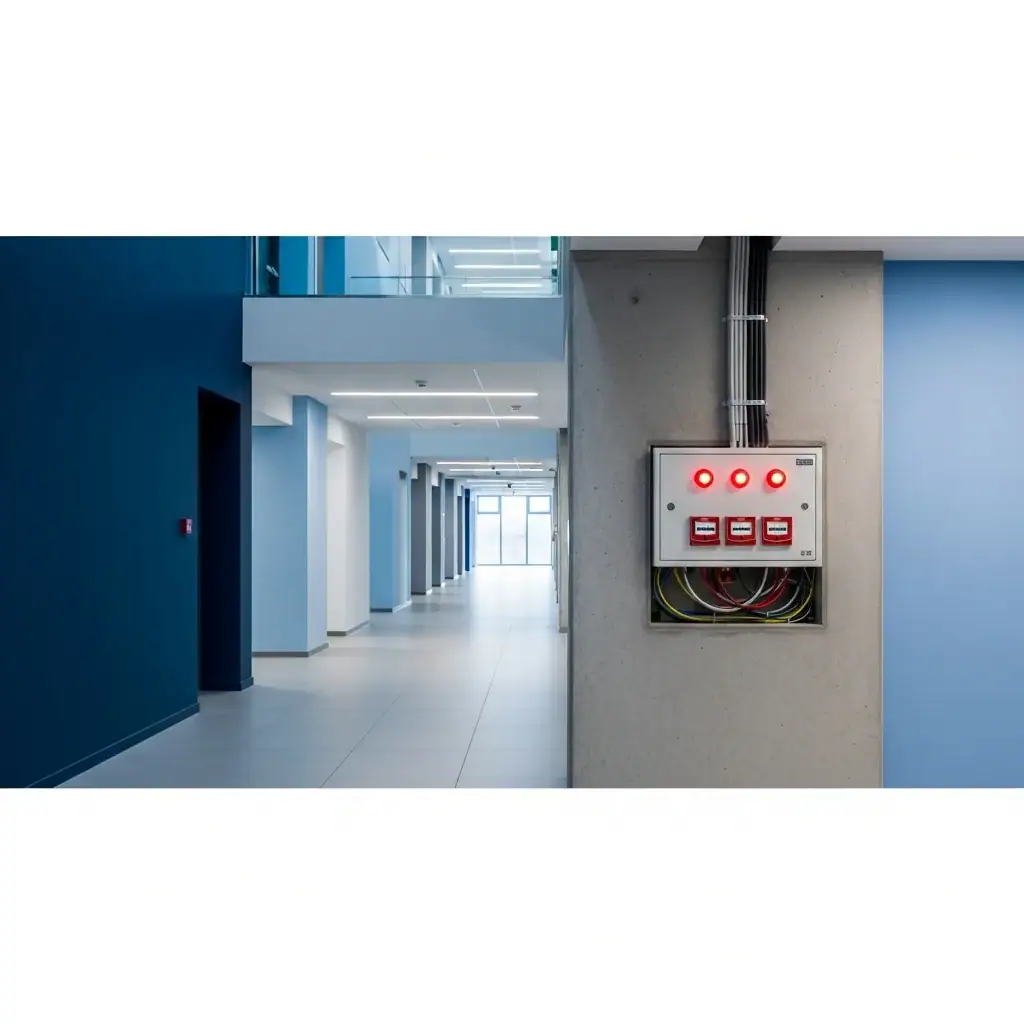
The course for a fire alarm system's maintenance costs is set already in the initial planning and design phase. Forward-looking, manufacturer-neutral planning is the decisive factor in avoiding unnecessary expenditure later in operation. Often the focus is placed primarily on the acquisition cost of a BMA, while the maintenance and operating costs incurred over the entire lifecycle are underestimated. This leads to suboptimal systems that may appear cheap initially but cause high follow-on costs in the long run. An independent planner such as PLANATEL® does not treat the BMA as an isolated product but as an integral part of the entire building infrastructure. Not only current requirements but also future developments and potential expansions are taken into account. Selecting the right detector technology, the optimal placement of components, and intelligent networking with other systems are decisive here. Precise planning minimises the effort required for later adjustments and reduces the risk of false alarms, which can incur considerable costs through fire brigade call-outs. Under DIN 14675 and DIN VDE 0833-2, the requirements for planning, installation and maintenance are clearly defined. Incorporating these standards into the planning at an early stage not only secures legal compliance but also creates the basis for cost-efficient servicing.
Life-cycle costs (LCC) as a basis for decision-making
Considering life-cycle costs (LCC) is an indispensable tool for making the true costs of a fire alarm system transparent over its entire service life. It covers not only the investment costs for acquisition and installation but also all follow-on costs such as operation, maintenance, servicing, energy consumption, repairs, and finally disposal. Many companies focus exclusively on the lowest purchase price when procuring a BMA, overlooking the fact that operating costs over the service life can amount to a multiple of the initial investment. A comprehensive LCC analysis, as carried out by PLANATEL®, enables a well-founded comparison of different system solutions and manufacturers. Factors such as the average service life of components, the energy consumption of the control panel and detectors, the frequency of necessary maintenance work, and the effort required for detector replacement are taken into account. For example, high-quality detectors with automatic calibration or contamination compensation may be more expensive to purchase, but through longer maintenance intervals and a lower susceptibility to false alarms they can significantly reduce LCC. DIN 276 serves as a basis for cost determination in construction and can also be used for the LCC assessment of technical systems. Such a holistic approach enables decisions that represent the most economical solution in the long run and reduce fire alarm system maintenance costs.
Manufacturer neutrality and system selection: independence pays off
Selecting the right BMA system and the appropriate components has a direct impact on maintenance costs. This is where manufacturer neutrality is of decisive importance. An independent planner with no financial ties to particular manufacturers can objectively recommend the most suitable technology and the most economical solution. This stands in contrast to installers, who are often tied to a specific product range and may not offer the optimal solution for an operator's specific requirements. PLANATEL® has operated since 1992 as a 100% independent and financially neutral planning and consulting company. This independence allows us to select systems and components that not only meet technical requirements and statutory standards (such as DIN 14675, VdS 2095, EN 54) but also have the lowest life-cycle costs. Manufacturer-dependent planning can lead to what is known as manufacturer dependency, in which operators are tied to expensive spare parts, specific software licences, or inflated maintenance contracts. Through free choice across the entire market, we can identify systems that ensure high compatibility, easy serviceability, and good spare-parts availability over long periods. This reduces not only direct maintenance costs but also the risk of operational interruptions and dependency on individual vendors.
Optimising maintenance contracts and intervals
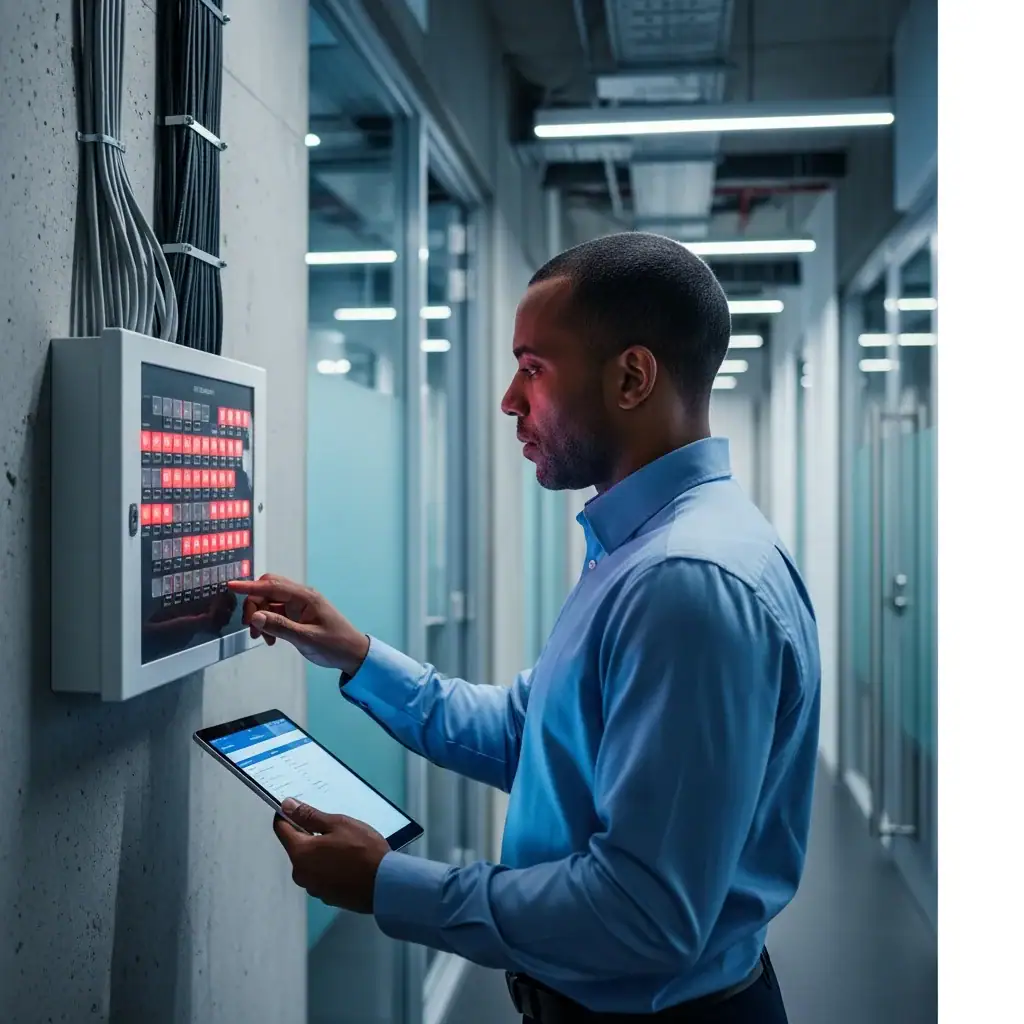
Designing maintenance contracts and setting maintenance intervals are further levers for reducing fire alarm system maintenance costs. DIN VDE 0833-1 and DIN 14675 prescribe a quarterly inspection and an annual maintenance service. These intervals are minimum requirements, which can be adjusted depending on building use, environmental conditions, and system type. A detailed analysis of the specific circumstances by an experienced planner can show whether adjusting the intervals, within the framework of the standards and taking the risk assessment into account, is possible and sensible. For example, in environments with low levels of contamination, or where highly modern detectors with self-monitoring functions are used, longer inspection intervals may be considered, provided this is substantiated by technical justification and documentation. In addition, negotiating maintenance contracts is a complex field. Many contracts contain flat-rate services that may not be optimally tailored to the actual needs of the system. PLANATEL® supports operators in producing detailed specifications of services for maintenance contracts and in selecting certified installers. This ensures that only the services actually needed are commissioned and that transparent, competitive prices are achieved. Precisely defining the scope of services, response times, and spare-parts management in the contract avoids unexpected costs and secures the quality of the maintenance.
Preventing false alarms as a direct cost factor
False alarms represent a considerable, often underestimated cost factor for fire alarm systems. Every unnecessary fire brigade call-out incurs not only direct fees charged by the municipality but also indirect costs through operational interruptions, evacuations, and the associated loss of productivity. A study from 2025 shows that fees for false alarms have risen markedly in many municipalities, to cover the fire brigades' call-out costs. Preventing false alarms starts already at the planning stage. Precisely selecting detector technology suited to the specific environmental conditions is decisive here. Optical smoke detectors, for example, are more prone to nuisance alarms in dusty production halls than multi-sensor or heat detectors. Careful zoning and the implementation of intelligent alarm strategies (for example, providing for delayed alarming or dependency on multiple detectors) can minimise the risk. In addition, regular maintenance and inspection of the BMA in accordance with DIN VDE 0833-1 and DIN 14675 is crucial for detecting and remedying technical defects or contamination that could lead to false alarms at an early stage. PLANATEL® advises on drawing up operating concepts that train operating personnel and define clear procedures for handling alarms, to reduce human error as a cause of false alarms. Investment in high-quality planning and regular, expert maintenance pays off directly in reduced operating costs here.
Digitalisation and remote maintenance: potential for efficiency gains
Digitalisation offers considerable potential for making the maintenance of fire alarm systems more efficient and thus more cost-effective. Modern BMA systems can be combined with digital solutions for remote access and maintenance management. This makes it possible to continuously monitor the system's condition, detect faults early, and plan maintenance work more precisely. What is known as one-person maintenance, supported by dedicated apps and transmission devices, can reduce on-site staffing needs and increase the efficiency of maintenance teams. Instead of carrying out extensive manual checks at every inspection, technicians can respond specifically to areas showing anomalies. Digital documentation of maintenance work, inspection reports, and events in the operations log is not only legally compliant but also considerably more efficient than paper-based processes. PLANATEL® plans and designs such digital maintenance concepts, which can be integrated on a manufacturer-neutral basis into existing or new BMA infrastructures. We analyse which digital tools and interfaces make sense for your specific system and how they can be optimally implemented to streamline maintenance workflows. This includes planning gateways for data transmission, selecting suitable software solutions, and defining processes for the digital capture and evaluation of system data. Digitalising BMA maintenance leads to better plannability, shorter response times in the event of faults, and overall more transparent, cost-efficient servicing.
The operator's role and the importance of documentation
The operator of a fire alarm system bears comprehensive responsibility for its proper operation and for compliance with all statutory requirements. DIN VDE 0833-1 and DIN 14675 set out detailed duties, ranging from appointing trained personnel to regular site inspections and keeping an operations log. Complete, legally compliant documentation of all activity on the BMA is not only decisive for audits by authorities or insurers but is also an important tool for cost control. A well-maintained operations log, in which all inspections, maintenance activities, faults, alarms and changes are recorded in detail, enables transparent tracking of the system's history. This helps identify recurring problems, monitor component wear, and assess the efficiency of maintenance measures. PLANATEL® advises operators on creating and implementing documentation systems that comply with the standards while also enabling efficient management. We support the definition of responsibilities, staff training, and the selection of tools for digital documentation. Proactively fulfilling operator obligations and careful documentation contribute significantly to avoiding unnecessary costs from defects, fines, or in the event of a claim, and to reducing fire alarm system maintenance costs over the long term. Regular review of the documentation is a fixed part of our planning and consulting services.
PLANATEL®: your independent partner for efficient BMA planning
Reducing fire alarm system maintenance costs requires a strategic approach and in-depth expertise. As an independent planning and consulting company, PLANATEL® has stood for expertise and manufacturer neutrality in planning fire alarm systems since 1992. With more than 34 years of experience, we support medium-sized to large companies as well as public institutions in making their BMA systems not only legally compliant and safe but also maximally cost-efficient. Our services cover a holistic view of your fire alarm system's lifecycle, from the initial needs analysis and concept development through manufacturer-neutral system selection to optimising maintenance strategies and implementing digital solutions. We plan maintenance concepts and select certified installers who meet our high quality standards. Our goal is to free you from manufacturer dependency and offer you tailored solutions that sustainably reduce your operating costs. We understand the complexity of the standards landscape, including DIN 14675, VdS 2095 and DIN VDE 0833, and ensure that your system always meets current requirements. Trust in the independent expertise of PLANATEL® to make your fire alarm systems future-proof and economical, and to effectively reduce your fire alarm system maintenance costs.
Next step
Contact us for a no-obligation initial consultation.
PLANATEL®: Independent planning and consulting since 1992
Tel: 040 / 23 73 02-30
Email: info@planatel.de
Frequently asked questions
Why is manufacturer-neutral planning so important for cost optimisation?
Manufacturer-neutral planning is crucial because it enables the free selection of the best and most cost-efficient components and systems, without being tied to a single vendor's products. This avoids manufacturer dependency, which often leads to inflated prices for spare parts, software or maintenance services. An independent planner such as PLANATEL® can objectively recommend the solution offering the lowest life-cycle costs at the highest level of security.
What role do life-cycle costs (LCC) play in deciding on a BMA?
Life-cycle costs (LCC) are the sum of all costs incurred over a BMA's entire service life, including acquisition, installation, operation, maintenance, repairs and disposal. An LCC assessment is essential for comparing the true cost-effectiveness of different BMA systems. It prevents an initially cheap system from becoming a cost trap through high operating costs over the long term, and enables a well-founded investment decision.
How can false alarms be actively prevented to save costs?
False alarms cause direct costs through fire brigade call-outs and indirect costs through operational interruptions. Preventing them starts with precise planning and the selection of suitable detector technologies matched to the specific environmental conditions. Intelligent alarm strategies, regular, standards-compliant maintenance to fix technical defects, and training operating personnel in handling the system are further important measures for minimising false alarms.
What advantages does digitalisation offer for BMA maintenance?
Digitalising BMA maintenance enables more efficient, cost-effective servicing. Advantages include continuous monitoring of the system's condition, early detection of faults, optimisation of maintenance intervals, and reduced staffing effort through digital tools and remote access. Digital documentation also improves transparency and legal compliance. PLANATEL® plans the integration of such solutions on a manufacturer-neutral basis.
Why is compliance with standards such as DIN 14675 and DIN VDE 0833 so important?
Compliance with standards such as DIN 14675 and DIN VDE 0833 is of the utmost importance for several reasons: it ensures the fire alarm system's functional reliability, protects human life and property, secures the operator's legal compliance, and is often a prerequisite for insurance cover. Deviations can lead to liability risks, fines, and serious consequences in the event of a claim. Standards-compliant planning and maintenance are therefore essential.
How often must a fire alarm system be maintained?
Under DIN VDE 0833-1 and DIN 14675, a fire alarm system must be inspected quarterly and undergo full maintenance at least once a year. These intervals are minimum requirements, which can be adjusted depending on the specific circumstances, provided this is technically justified and documented.
Which standards govern the maintenance of fire alarm systems?
Maintenance of fire alarm systems is governed primarily by DIN 14675 (fire alarm systems, design and operation) and the DIN VDE 0833 series (hazard alarm systems for fire, intrusion and hold-up), in particular DIN VDE 0833-1 and DIN VDE 0833-2. The VdS 2095 guidelines are also relevant.
What are the biggest cost factors in BMA maintenance?
The biggest cost factors in BMA maintenance include the staffing effort for inspections and maintenance, the replacement of wear parts such as detectors, the costs of false alarms and the associated fire brigade call-outs, and potential costs arising from a lack of legal compliance. Inefficient planning and manufacturer dependency can further increase these costs.
Can digitalisation reduce BMA maintenance costs?
Yes, digitalisation can significantly reduce BMA maintenance costs. Through remote access, digital maintenance apps and automated monitoring, maintenance workflows can be optimised, staffing effort reduced, and faults detected early. This leads to more efficient planning, shorter response times, and more transparent documentation.
Sources and further information
- din-14675.de
- ibau.de
- dgnb.de
- bnb-nachhaltigesbauen.de
- mvl-technik.de